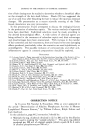
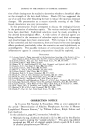
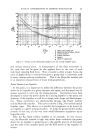
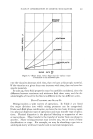
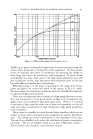
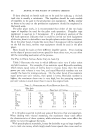
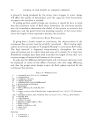
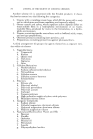
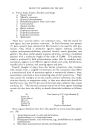
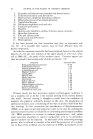
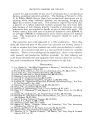
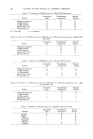
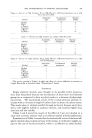
270 JOURNAL OF THE SOCIETY OF COSMETIC CHEMISTS is presently being produced by the mixer, then changes in mixer design will affect the quality of the product until the capacity of the formulation to support the emulsion is reached. In scaling up from small to large size systems, it should be born in mind that the maximum value of fluid shear determines the minimum particle size, the formulation determines the ability of the system to maintain this dispersion, and the power level and pumping capacity of the mixer deter- mines the length of time required to produce the emulsion. CoNTinUOUS FLOW PRocEssEs In going from a batch system to continuous, the characteristics of the continuous flow system must be carefully considered. Most mixing appli- cations involve the concept of "Complete Mixing" in continuous flow tanks. The feed material is dispersed instantaneously throughout the tank, some of it passes out in a short time and some of it remains for a long time. Probability methods have been used to predict the length of time that vari- ous percen tages of material will remain in the system. ]n scale-up, the difference between batch and continuous operation must be evaluated in terms of the effect of process rate and stage efficiency, and then the proper mixer design to give the fluid regime required for the continuous flow process. Kn = P = Ni, = .•. T = F = p T interl:acial area, (ft?/cu. ft. of volume) concentration centipoise, viscosity impeller diameter mathematical symbol of differential gravitational acceleration horsepower film coefficient, (lb. mols./hr./ft. =) power power number, ratio of inertia force to gravitational fi•rce, Pg/pNa/D •, dimension- less Reynolds number, ratio of inertia force to viscous force, ND=p/u, dimensionless impeller flow tank diameter volume of vessel distance at right angles to flow fluid velocity density of fluid or solid shear stress viscosity Subscripts I = Component 1 2 = Component 2

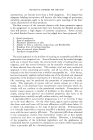
PROTECTIVE BARRIERS FOR THE SKIN By Gsov, cF• E. Os}•o•, P•.D. and Ro•r j. GERP.^tYGHTV, Pu.D.* Presented November 3, 2/960, Seminar New England Chapter, Storrs, Conn. EvEP.¾ LIV•[•G OP-GA•ISM maintains its identity by means of a covering which serves the dual purpose of enclosing the organism and its functions within its structure and of separating the organism from its environment. In unicellular life, the covering is a rather simple cell wall in higher plants and animals, it becomes a very complex and highly special organ, itself composed of several subordinate parts that function triply at this level of biological evolution to protect the organism, to eliminate waste products, and in many animals to regulate the temperature of the body. As a protective membrane, the skin ought not to permit substances to pass through it to the underlying tissues the healthy, intact skin should prevent the absorption of the many natural elements of the environment, such as moisture, gases, fumes, dirt, and germs, as well as the synthetic products more recently introduced into everyday human activity: chemi- cals, detergents, pharmaceuticals and commercially useful adaptations of natural products. At the same time, it must be recognized that the skin is not a totally exclusive barrier it is not whole, rather, it is holey both excretory and secretory products pass through it (but from the inside out and not vice versa) (1). To facilitate the performance of the skin as a protective and as a tem- perature regulating organ, man has, since before the beginning of the historical era, made use of extraneous outer clothing, at first, animal skins, and later, leathers and textiles. These heavy, loose, extra layers of pro- tection encumber the operation of the anatomical members, particularly the small-muscle functioning of the hands and, while there have always been available cosmetic products with protective properties, there has developed in the last quarter century a concentrated search for agents that can be incorporated into preparations that will enhance the barrier function of the skin and that can be applied directly to it. It is the purpose of this paper to discuss in general terms these barrier agents and their formulation into cosmetic products. * Dept. of Pharmacy, University of Rhode Island, Kingston, R. I. 271
Purchased for the exclusive use of nofirst nolast (unknown)
From: SCC Media Library & Resource Center (library.scconline.org)