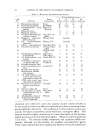
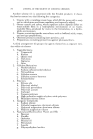
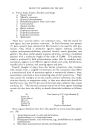
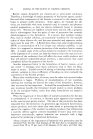
274 JOURNAL OF THE SOCIETY OF COSMETIC CHEMISTS Another scheme (5) is concerned with the finished product it classi- ties barrier creams into the following five categories: 1. Creams with a vanishing cream base, which fill the pores with a soap and to which gums and water repellents are frequently added 2. Greasy creams and salves, whose repellent action depends either on water-soluble films in a hydrophobic environment or on water- insoluble films, produced by resins in the formulation, in a hydro- philic environment 3. Creams containing specific neutralizers such as buffered acids, soaps, and anti-gas preparations 4. Ointment products containing inert powders and 5. Preparations containing protectives against photosensitizers. A third arrangement (6) groups the agents themselves as separate enti- ties within six classes: 1. Vegetable Gums a. Tragacanth b. Karaya c. Quince seed d. Irish moss e. Alginates f. Guar 2. Cellulose Derivatives a. Methylcellulose b. Sodium carboxymethylcellulose c. Nitrocellulose d. Cellulose acetate e. Cellulose acetate butyrate f. Ethylcellulose 3. Polymers a. Silicone oils b. Polyvinyl alcohol c. Polyvinyl pyrrolidone d. Polyvinyl acetate e. Carbopol f. Terpene polymers g. High molecular weight ethylene oxide polymers h. Butadiene-styrene latices 4. Inorganic Compounds a. Sodium silicate b. Colloidal magnesium aluminum silicate c. Hydrated magnesium aluminum silicate d. Hydrous magnesium silicate 5. Natural and Hydrocarbon Waxes and Oils ' a. Beeswax b. Paraffin c. Ozokerite d. Mineral oil e. Petrolatum f. Lanolin g. Polyoxyalkylene lanolins

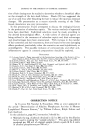
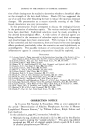
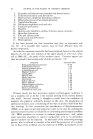
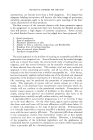
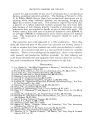
PROTECTIVE BARRIERS FOR THE SKIN :275 6. Fatty Acids, Esters, Alcohols and Soaps a. Stearic acid b. Metallic stearates c. Glyceryl monostearate d. Polyethylene glycol fatty acid esters e. Cetyl alcohol f. Stearyl alcohol g. Butyl stearate h. Isopropyl stearate i. Isopropyl palmirate j. Isopropyl myristate k. Spermaceti These lists--and the others--are impressive ones. And the search for new agents and new products continues. In East Germany two patents (7) have recently been obtained for film formers to be used for skin pro- tection. One, which is protective against organic solvents, contains sodium carboxyrnethylcellulose, polyvinyl alcohol, starch glycolate, and gelatin the other, useful against aqueous solutions, contains a butadiene polymer with a molecular weight of the order of 32,000. This polymer, which is produced by bulk polymerization rather than by emulsion poly- merization, appears to be effective against alkalis and acids, disinfectants, metallic salts in solution, and tanning agents and dyes. Usually thought of apart from the barrier protectives that interfere with attacks from a tangible environment are the sunscreens that effect a nonmechanical kind of protection against a nonmaterial element they, nevertheless, constitute a most interesting class of skin protectives. They may scatter the sunlight, as do talc, kaolin, calcium carbonate, zinc oxide• titanium dioxide, or magnesium oxide or they may selectively absorb the harmful sun's rays, that 0.2 per cent of the total solar radiation that causes erythema (8). The literature contains many lists of these agents including certain oils that have the ability to absorb ultraviolet radiation as follows: (9) Oil Total .'lmount of U. I/. Light .'lbsorbed, % Sesame oil 39 Cotton seed oil 26 Olive oil 23 Peanut oil 24 Coconut oil 23 Mineral oil Equal to or less than 0 Some organic chemicals that have the capacity to act as sunscreen agents are: (10) 1. Aminobenzoic acid, its salts and derivatives 2. Anthranilates, i.e.,o-aminobenzoates 3. Dihydroxycinnamic acid derivatives, e.g., umbelliferone or methyl- umbelliferone 4. Salicylates (amyl, phenyl, benzyl, menthyl, glyceryl)
Purchased for the exclusive use of nofirst nolast (unknown)
From: SCC Media Library & Resource Center (library.scconline.org)