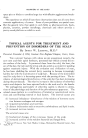
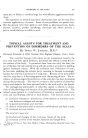
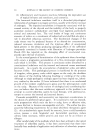
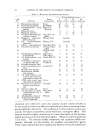
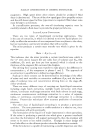
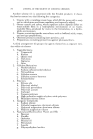
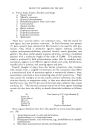
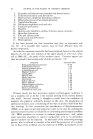
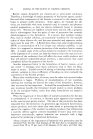
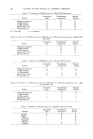
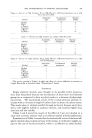
:276 JOURNAL OF THE SOCIETY OF COSMETIC CHEMISTS 5. Cinnamic acid derivatives (menthyl and benzyl esters) 6. Trihydroxycinnamic acid derivatives 7. Hydrocarbons (diphenyl butadiene, stilbene) 8. Dibenzalacetoneand benzalacetophenone 9. Naphtholsulfonates 10. Dihydroxo-naphthoic acid and salts 11. Coumarinderivatives 12. Diazoles 13. Quinine salts (bisulfate, sulfate, chlorate, oleate, tannate) 14. Quinoline derivatives 15. Uric and violuric acids 16. Tannic acid and derivatives 17. Hydroquinone It has been pointed out that isomerism may play an important role (11, 12). It is possible that isomers may be more effective than the parent compounds. An index for sunscreen materials has been proposed, based on the optical density of a 0.1 per cent solution of the agent placed in a 0.1 mm. silica cell at 3080 A.U., the peak of the sunburn curve. Common agents can then be ranked in decreasing order of index as follows: (13) Compound Sunscreen index Ethyl-p-dimethylaminobenzoate 14.80 Ethyl-p-aminobenzo ate 9.60 Isobutyl-p-aminobenzoate 9.20 p-Aminobenzoic acid 7.4 Digalloyl trioleate 2.3 Lauryl gallate 0.85 Salicylic acid 4.30 Methyl salicylate 4.00 Salicylamide 3.90 Sodium salicylate 2.40 Salicyl aldehyde 2.20 Dipropyleneglycol salicylate 1.90 p-Aminosalicylic acid 1.90 Methyl umbelliferone 7.70 Um belli fero ne acetic acid 6.00 Without doubt the best protection against erythemogenic radiation is not a cosmetic one at all but is the natural tanning of the normal human skin itself. Natural tanning is thought to result from the oxidation of melanin, the pigment ordinarily present in the skin, the production of additional melanin, and a thickening of the skin to protect itself from fur- ther burning. In this connection the introduction of dihydroxyacetone (DHA) as an agent imparting temporary color to the skin by staining the outermost layer has been attended by an interesting psychological problem (14). DHA produces no increase in melanin pigmentation and, unless some sunscreen absorbent is used in conjunction with it, no protection against sunburn can be expected. In the hands of the unknowing average person, who is inclined to transfer in his mind the protection of a natural tan to that of the artificial one, the wide use of DHA, particularly in the

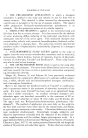
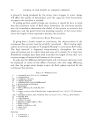
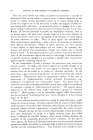
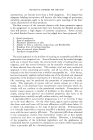
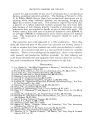
PROTECTIVE BARRIERS FOR THE SKIN 277 summertime, can become more than a little dangerous. It is hoped that adequate labeling instructions will destroy this false image of protection certainly, salespeople ought to be instructed to give warnings of the limi- tation of protection of these products. The first concern of the cosmetic chemist with these protective agents is his assignment to incorporate them into formulas for finished products that will possess a high degree of customer acceptance. Seven criteria by which finished barrier creams may be judged have been proposed (15). 1. Good consistency 2. Ease of application 3. Persistent adherence to skin 4. Ability to form a coherent, impervious and flexible film 5. Freedom from irritating properties 6. Ease of removal when desired 7. Aesthetic acceptability The usual approach to the problem of creating an acceptable and effective preparation is an empirical one. Several formulas may be worked through, until one is found that meets the criteria fairly well, or lacking that con- tingency, until the several formulas can be mutually evaluated and one of them selected from the series. This archaic, trial and error method of approach is time consuming and costly and all too often, the choice is reduced to the best formula from a wholly unacceptable lot. A far better, but less frequently applied method makes use of the physical and chemical properties of the proposed constituents of a formula, from which, by scien- tific reasoning, may be predicted the properties of preparations under study. 7['his approach, of course, will not ensure success on a first at- tempt, but it can eliminate from consideration some formulas which ob- viously will not conform to the preselected standards. Formulation of barrier creams presents a number of problems to the chemist. For ex- ample, among those physical and chemical properties that have to be considered most carefully are pH, surface activity, and rheology. A desirable pH for most barrier preparations is 5.5 to 5.6 (16), if they are to be most effective. On the other hand, agents used to protect the skin from acids and bases will be most efficacious at pH values below 5.5 or above 5.6, depending on the type of barrier desired. UnIbrtunately, it is virtually impossible to measure the pH of a finished cream accurately even with the most superior pH meter. The apparent pH values obtained in the nonaqueous systems that characterize creams are at best merely qualitative and have no quantitative validity. However, a knowledge of the properties of the individual ingredients and the application of established theories to predictive calculations can ensure within reasonable limits a particular pH for a finished product.
Purchased for the exclusive use of nofirst nolast (unknown)
From: SCC Media Library & Resource Center (library.scconline.org)