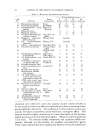
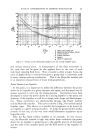
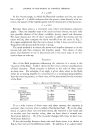
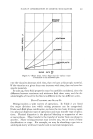
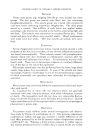
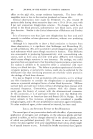
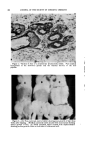
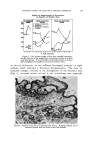
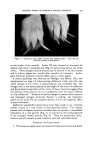
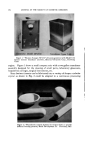
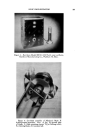
SYSTEMIC EFFECT OF TOPICALLY APPLIED COSMETICS 291 Figure 7.--Castrated male rabbit treated with alpha-estradiol. Note the ap- preciable increase of claw growth. at the border of the medulla. Sudan III stain showed an increased fat deposit with many vacuolized cells (Fig. 6), permeating almost the entire cortex. These changes could be already seen at the end of the first month and to a lesser degree four months after cessation of treatment. Andro- genic hormones produced a similar effect, but to a lesser degree. A similar pathology was observed by Mulligan and Becker (19), who experimented on dogs by administering stilbestrol orally and who also noted changes in the cortex of adrenal glands and concluded that "the changes seen in the adrenal glands at the height of the action of stilbestrol and the gradual recuperation of the cortex of these structures suggest that the adrenal cortex recovers, but not completely, from the injury inflicted on it by stilbestrol." Evidence of similar changes in humans after intensive and prolonged estrogen hormonal therapy is lacking. An important aspect of our study was the complete absence of any carcinogeneric effect or tumor formation. Additional unpublished observations have been made in six castrated rabbits treated in a way similar to that described before. Two rabbits treated with estrogenic hormones revealed after six months a remarkable stimulation of a claw growth (Fig. 7), in contrast to the normal growth of the androgen treated animals (Fig. 8). These are preliminary obser- vations, and will require a more extensive and well controlled study. SUMMARY AND CONCLUSION 1. Percutaneous applications of commercial cold wave lotion and black

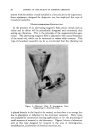
292 JOURNAL OF THE SOCIETY OF COSMETIC CHEMISTS Figure 8.--Castrated male rabbit treated with testosterone. Note the normal size of claws. hair dye were applied to guinea pigs once weekly during four months. Besides mild erythema in all cold wave lotion treated animals, and in three guinea pigs treated with commercial back hair dye, no pathological blood changes or any microscopic alterations in any vital organs could be observed. 2. A brief review is presented of the percutaneous application of estro- genic and androgenic hormones on hair growth, sebaceous glands, and growth of claws in rabbits. The structural changes of the adrenals pro- duced by these hormones is histologically demonstrated. atcknowledgment: Grateful acknowledgment is given to Dr. Robert Epstein and to Mr. John Storer for valuable assistance rendered in the hematolog- ical investigations to Dr. Alfred Schwartz, Chief of Pathology, Jewish Memorial Hospital for the examination of tissue sections and to Dr. Frank Kaldi and Dr. Victor Azueta, of the Department of Pathology, Jewish Memorial Hospital, for performing the animal autopsies connected with the thioglycolate and paraphenylenediamine experiments. The capable assistance of Leona Caroline, A.B., is gratefully acknowledged. REFERENCES (1) Reiss, F., "The I,ocal and Systemic Effect of Ammonium Thioglycolate and Parapheny- lenediamine," in press. (2) Reiss, F., Dermatologica, 116, 419 (1958). (3) Draize, J. H., Alvafez, E., and Whitesell, M. F., Proc. Sei. Sect. Toilet Goods •lssoc. No. 7, 36 (1947). (4) Lehman, A. F.,lbid., No. 3:3, 10 (1960). ß (5) Lehman, A. F., 7. •lm. Med. •lssoc., 141, 842 (1949). (6) Reiss, F., and Gerstl, B., ExptL .•/led. and Surgery, 4, 338 (1946). (7) Friederich, H. C., DermatoL Gutachten, 1, 73 (1952). (8) Behrman, H., Combes, F., and al., 7. •lm. Yled. •lssoc., 140, 1208 (1949). (9) Sulzberger, M. B., and Rostenberg, A., Jr., 7- ImmunoL, 36, 17 (1939).
Purchased for the exclusive use of nofirst nolast (unknown)
From: SCC Media Library & Resource Center (library.scconline.org)