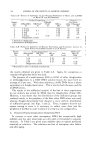
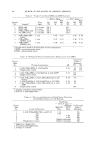
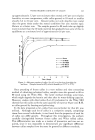
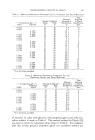
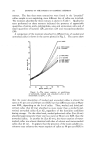
:278 JOURNAL OF THE SOCIETY OF COSMETIC CHEMISTS factors could well account for variations of moisture sorption reported for different lots of unwashed and washed callus. Our results single out sodium lactate, which is a natural constituent of epidermal tissue, as a most efficient humectant. The hygroscopicity of sodium lactate is demonstrable when one part of this material is mixed with nine parts of callus. Glycerol, however, when present in a low ratio, loses its hygroscopicity. While many of the water-soluble constituents in the stratum corneum are derived from the breakdown of living cells in the keratinization process, it should not be overlooked that many of these components, especially lactic acid, are supplied by sweat (40). Is it coin- cidental then that the skin is softest in warm weather when sweating pro- duces a high concentration of lactates on the skin and that it is driest during cold weather, when there is very little sweating and the lactate con- centration is low? In view of these findings and considerations, the authors would like to suggest that ]actares are important skin components responsible for the skin's water-holding capacity. IV. Summary and Conclusions 1. The effect of particle size and grinding on the moisture sorption of callus has been studied. 2. The moisture sorption of mixtures of relatively large quantities of glycerol, propylene glycol or crystalline sorbitol with callus has been studied at equilibrium. It has been shown that the total water absorbed is strictly an additive function. 3. The moisture sorption of washed and unwashed pulverized callus has been studied in constant humidity atmospheres, varying from 45 per cent R.H. to 90 per cent R.H. Widely different results were obtained with dif- ferent lots of callus. The history of the callus sample prior to work-up in the laboratory, however, may have an important bearing on these results. 4. The water sorption properties of equivalents of the major com- ponents in the water-soluble callus extracts have been measured indi- vidually. Among these, sodium lactate has more affinity for water than any of the other naturally occurring substances tested. 5. Glycerol, added to callus in small quantities, shows no hygroscopic effect. However, sodium lactate at low concentration enhances the water uptake of callus considerably. Atcknow/edgment: The authors wish to express their gratitude to Mr. J. Skillman for technical assistance in preparing graphs, etc. (Received May 8, 1962) References (1) Jacobi, O., Kol/oid-Z., 114, 88 (1949). (2) Blank, I. H., )t. Invest. DermatoL, 18, 433 (1952).

WATER HOLDING CAPACITY OF CALLUS 279 (3) Blank, I. H., Ibid., 21, 259 (1953). (4) Spier, H. W., and Pascher, G., •trch. Dermatol. u. Syphilis, 199, 411 (1955). (5) Spier, H. W., and Pascher, G., Ibid., 200, 59 (1955). (6) Spier, H. W., and Pascher, G., •trch. klin. u. exptl. Dermatol., 201, 181 (1955). (7) Pascher, G., Ibid., 203, 234 (1956). (8) Pascher, G., and Spier, H. W., Ibid., 203, 239 (1956). (9) Pascher, G., yon Steinr/ick, G., and Spier, H. W., Ibid., 204, 140 (1957). (10) Flesch, P., and Esoda, 1•. C. J., Nature, 178, 211 (1956). (11) Flesch, P., and Esoda, . C. J., 5 e. Invest. Dermatol., 28, 5 (1957). (12) Szakall, A., •trch. klin. u. exptl. Dermatol., 201, 331 (1955). (13) Szakall, A., •trzneimittel-Forsch., 7, 408 (1957). (14) Gr/ineberg, T., and Szakall, A., •trch. klin. u. exptl. Dermatol., 201,361 (1955). (15) Frazier, C. N., and Blank, I. H., "A Formulary for External Therapy of the Skin," Springfield, Charles C Thomas (1956) p. 55. (16) Powers, D. H., and Fox, C., Proc. Sci. Sect. Toilet Goods/lssoc., No. 28, 21 (1957). (17) Powers, D. H., and Fox, C., J. Soc. Cosv•Eqr•c CHEvy., 10, 109 (1959). (18) Blank, I. H., Proc. Sci. Sec. Toilet Goods •tssoc., No. 23, 19 (1955). (19) Pillsbury, D. M., Shelley, W. B., and Kligman, A.M., "A Manual of Cutaneous Medi- cine," Philadelphia and London, W. B. Saunders Co. (1961), p. 8. (20) Sulzberger, M. B., and Hermann, F., Dermatologica, 123, 1 (1961). (21) Shelmire, J. B., 7. Invest. DermatoL, 26, 105 (1956). (22) Flesch, P., Proc. Sci. Sec. Toilet Goods ?lssoc., No. 35, 1 (May 1961). (23) Edwards, B., and Routh, J. I., 7. Biol. Chem. 154, 593 (1944). (24) Miner, C. S., and Dalton, N. N., "Glycerol," A. C. S. Monograph No. 117, New York, Reinhold (1953), p. 269. (25) Curme, G. O., and Johnston, F., "Glycols," New York, Reinhold Publishing Co. (1952), pp. 210-240. (26) Lawrie, J. W., "Glycerol and the Glycols," New York, The Chemical Catalog Co., Inc. (1928), p. 176. (27) Atlas Powder Co., "Atlas Sorbitol and Related Polyols," Wilmington, Del. (1951), p. 6. (28) Barker, S. B., and Summerson, W. H., 7. Biol. Chem., 138, 535 (1941). (29) McRary, W. L., and Slattery, M. C., •trch. Biochem., 6, 151 (1945). (30) Boas, N. F., 5 e. Biol. Chem., 204 (1), 553 (1953). (31) Flesch, P., and Esoda, E. C. J., 7. Invest. Dermatol., 32, 437 (1959). (32) Dowling, G. B., and Naylor, P. F. D., Brit. 7. Dermatol., 72, 51 (1960) (33) Roe, D. A., Flesch, P., and Esoda, E. C. J., •trch. Dermatol., 84, 213 •1961). (34) Matoltsy, A. G., and Balsatoo, C. A., 7. Invest. Dermatol., 25, 71 (1955). (35) Matoltsy, A. G., and Balsatoo, C. A., 7. Biophys. Biochem. Cytol., 1, 339 (1955). (36) Bolliger, A., and Gross, R.,/lustralian 7. Exptl. Biol. Med. Sci., 34, 219 (1956). (37) Watt, I. C., and Kennett, R. H., Textile Research 7., 30, 489 (1960). (38) Feughelman, M., and Watt, I. C., Ibid., 31, 962 (1961). (39) Algie, J. E., and Watt, I. C., Nature, 193, 972 (1962). (40) Rothman, S., "Physiology and Biochemistry of the Skin," Chicago, The University of Chicago Press (1954).
Purchased for the exclusive use of nofirst nolast (unknown)
From: SCC Media Library & Resource Center (library.scconline.org)