IMPORTANCE OF pH IN ANHYDROUS AEROSOL HAIR SPRAY SYSTEMS By MoRRs J. Roo'r* Presented May 8, 1962, New York City HYDROOEN •ON CONCENTRATION or activity is of importance in a large number of reactions and processes. Sorensen (1) in 1909 introduced the pH notation to avoid unwieldy decimal or power expressions. He defined pH as pH = --log•0C•+ C•+ = 10-v• We now know that a hydrogen ion's effectiveness in solution, i.e., its ability to carry electricity, act as proton donor, etc., depends on the solvent and also what is in the solution around the proton. We, therefore, find that hydrogen ions in weak solutions are more active in this respect than in strong solutions. The nearby presence of a large number of hydrogen ions sets up strong electric repulsive fields of force in the vicinity of any particular hydrogen ion which interfere with its activity. Therefore, what is important in producing acidity is not the actual hydrogen ion concentration. It is this concentration multiplied by a correction factor known as the activity coefficient of the ion. The product is called the hydrogen ion activity, and can be represented as follows: C•+ = 3' C•+ where q/is the molal activity coefficient. Therefore, according to definition, pH as actually measured by a glass electrode is as follows: 1 pHa = log Cvt•+ The pH is generally determined by measuring the e.m.f. of a circuit composed of two half cells, the reference calomel electrode and the glass electrode. The relation is given by the Nernst expression: 2.3026 RT E = E•d F log C•+ * G. Barr Co., Div. Pittsburgh Railways Co., Chicago 9, 111. 300

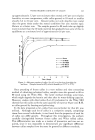
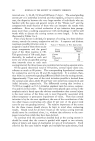
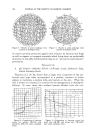
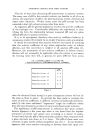
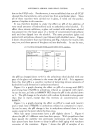
ANHYDROUS AEROSOL HAIR SPRAY SYSTEMS 301 Thus far we have been discussing pH measurement in aqueous systems. The many uses of pH in the cosmetic industry are familiar to all of us, as well as the importance of pH in the pharmaceutical, textile, chemical and many other industries. Within recent years the pH concept has been extended to deal with solvent systems other than water. As explained, pH tbr general application involves the activity coefficient of the hydrogen ion. Considerable difficulties are experienced in iden- tifying the form the relationship between measured pH and any given defined pH takes in aqueous solutions. It is to be anticipated, therefore, that activity coefficient behavior in nonaqueous media will certainly be no simpler if aqueous scales are adopted. It should be remembered that aqueous solutions are treated by assuming that the activity coefficient of any solute approaches unity at infinite dilution, and this convention is implicit in all aqueous pH scales (2). However, this assumption of unit activity coefficient at infinite (water) dilution will not necessarily be applicable when the solvent is not water the limiting value then will, in general, be quite different from unity, pH of PROPELLENTS 11/IZ 65%/35% :• EQUAL QUANTITY ANHYDROUS ETHYL ALCOHOL Manufacturer A Manufacturer B Manufacturer C Manufacturer D Figure 1. 6.6 6.5 since the electrical forces acting in a pure nonaqueous solvent will not be the same as those in water. An attempt has been made to compute the ratios of activity coefficients in different solvents by Gutbezahl and Grun- wald (3) who have calculated "degenerate" single ion coefficient values from the ratio of basicity constants in water and ethanol-water mixtures. The significance of pH measurement in anhydrous hair spray systems became apparent a few years ago when it was found that the tinplate containers of certain hair sprays were corroding in a matter of weeks. It was found that the pH of those particular products when measured with a glass electrode was down to 2 or lower. The pH of these same con- centrates in glass bottles without propellent was over 7. It was therefore apparent that some reaction was going on between these hair spray con-
Purchased for the exclusive use of nofirst nolast (unknown)
From: SCC Media Library & Resource Center (library.scconline.org)