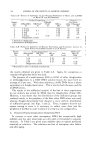
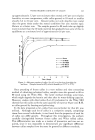
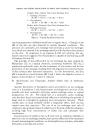
302 JOURNAL OF THE SOCIETY OF COSMETIC CHEMISTS centrates and the propellent to reduce materially the pH value as measured, if we assume that the tinplate does not enter the reaction as was later shown. After considerable fruitless investigation, it was finally decided to test the pH of a 50 per cent by weight solution of the propellent in anhydrous ethanol. The propellent containing 65 per cent trichlorofiuoromethane and 35 per cent dichlorodifiuoromethane was chilled to below its boiling point and poured into a glass bottle. An equivalent amount by weight of anhydrous ethanol was then added. The dichlorodifiuoromethane would within a few minutes boil off, leaving the alcohol and the trichlorofiuoro- methane in the bottle. A pH was then taken and the sample allowed to stand at room temperature for twenty-four hours, when a second pH was taken. The pH values as determined originally on samples of the four different manufacturers is shown on Fig. 1. After twenty-four hours it was found that propellent mixtures of CC12F2 and CClaF had dropped in pH to about 2 or less. Those lots of propellents that dropped in pH by this test invariably caused considerable corrosion in those products that contained anhydrous ethanol. As a result of this finding a stability spec- ification was established wherein the pH should not drop more than one unit after twenty-four hours in a 50 per cent solution in anhydrous ethanol. It has been shown by Sanders (4) that minute amounts of hydrochloric acid are liberated by a free radical reaction between anhydrous ethanol and trichlorofluoromethane. It was determined that in those instances where the pH dropped in mixtures of CCI•F and CC12F2 in anhydrous ethanol, the drop in pH was ...?.?: .• ::- '7: . .. ::7• ....• • :-.• -:. :.•X"•:: :: • ß •,. ,,.?'...- .. :. ... : •:.: {a• . .:: .:: f .r, ::,-e .... '•": ..... ß ':55'.. ::'. % ,• Fisure •.

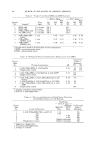
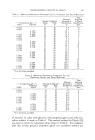
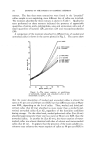
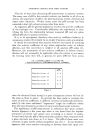
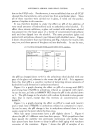
ANHYDROUS AEROSOL HAIR SPRAY SYSTEMS 303 due to the CClaF only. Furthermore, it was established that not all CClaF showed this characteristic, only certain lots from a particular plant. Since all of these reactions were carried out in glass, it ruled out the partici- pation of tinplate in this reaction. It was therefore decided to study the effect on pH of the addition of very small amounts of hydrochloric acid to anhydrous ethyl alcohol. To effect these minute additions, a glass rod wetted with anhydrous alcohol was passed into the head space of a bottle of concentrated hydrochloric acid and then dipped into the alcohol. The same procedure (glass rod wetted with anhydrous ethanol) was followed with distilled water. Figure 2 shows the procedure that was followed, and Fig. 3 shows the results with one, two, and three passes of the glass rod into the bottle. As can be seen, pH VALUES in DISTILLED WATER and ANHYDROUS ETHYL ALCOHI.)L Contact T•me of p H Glass Rod Over Top Anhydrous of Bottle Ethyl Distilled Concentrated HC1 Alcohol Water , , 0 * 7.8 7,0 1 0.9 4, l 2 0.6 3.9 3 O,5 3.6 Figure 3. the pH has dropped down to 0.9 in the anhydrous ethyl alcohol with one pass of the glass rod, whereas in the water the pH is 4.2. It is apparent from this that pH is a sensitive method of detecting minute amounts of hydrochloric acid formation in anhydrous ethanol. Figure 4 is a graph showing the effect on pH of a strong acid (HC1) and strong base (NaOH) in anhydrous ethanol as compared with water• As can be seen, as little as 0.00005N HC1 drops the pH in the alcohol down to 2. The pH change in the alcohol with sodium hydroxide is also greater than that in water, except that this reverses at concentrations over 0.0001N. Figure 5 is a graph showing the effect on pH of a weak acid (acetic) and a weak base (NH4OH) in anhydrous ethanol as compared to water. As can be seen, the pH change is less in anhydrous ethanol than it is in water, except at the point where the lines cross. Most hair spray concentrates have a pH slightly above 7. Figure 6 shows the pH of 5 different resin base hair sprays. With propellents that have passed the stability test previously mentioned, only shellac base hair sprays have been known to drop in pH on shelf aging with resultant corrosion of the container. Figure 7 shows the pH of samples of an
Purchased for the exclusive use of nofirst nolast (unknown)
From: SCC Media Library & Resource Center (library.scconline.org)