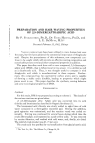
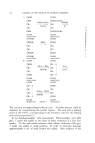
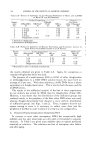
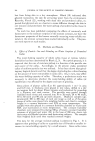
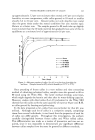
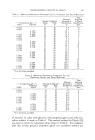
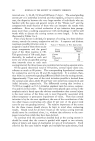
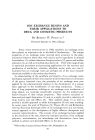
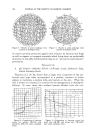
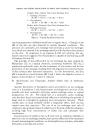
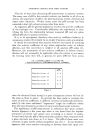
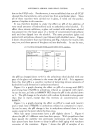
306 JOURNAL OF THE SOCIETY OF COSMETIC CHEMISTS Figure 8.--Corroded tinplate container. proton activity at the beginning decreases when water is replaced partly by ethanol, then it reaches a minimum and increases again, especially during the lemoval of the last percentages of the water. The alcoholic solution of HCl is much more strongly acidic than is the aqueous solution. Norio Yui (6) studied the effect of ethyl alcohol on the pH values deter- mined by the glass electrode and the association of ions in alcoholic hydro- ß ..... Figure 9.--Normal tinplate container.

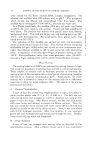
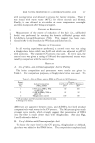
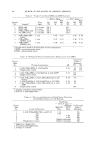
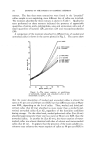
ANHYDROUS AEROSOL HAIR SPRAY SYSTEMS 307 chloric acid. He found that above 30 per cent ethyl alcohol there was an abrupt increase in pH values. This was explained on the basis of an association of the hydrogen and chloride ions according to Bjerrum's theory of ionic associations. LeBas and Day (7) measured the electromotive force in an ethanol- hydrochloric acid-water system. They used a hydrogen and an Ag-AgC1 electrode. The most significant change in e.m.f. occurred when small amounts of water were added to the pure ethyl alcohol-hydrochloric acid solyen t system. Cruse (8) states that if nonaqueous solutions are used, an additional factor is that the activity coefficients, as defined by Debye-Hiickel, depend proportionately all the more on the concentration as the dielectric constants of the solvent diminishes, as confirmed by measurements made by McInnes (9) in solutions of hydrochloric acid in water, ethanol and methanol. DII•LECTRI C CONSTANTS Water 78. 54 Methyl Alcohol 32. 63 Ethyl Alcohol 24. 30 N=Propyl Alcohol 20. 1 Figure 10. Figure 10 shows the dielectric constants of water, methanol, ethanol and N-propyl alcohol. When many pH measurements have been made in anhydrous ethanol, there is a tendency toward drifting of the measuring needle on the meter. It is therefore necessary to condition the glass electrode periodically in water. The need for some adsorbed water on the glass surfaces is well known (2), although with some lithium glasses less seems to be necessary for reproducible functioning than with the Mclnnes-Dole glass. Con- sequently, periodic soaking in water is less frequently required. Ac- cording to Dole (10), use of a glass electrode in media where the activity coefficient of water is considerably less than unity will give rise to inherent errors. However, this has been disputed by Izmailov (11) and Wynne- Jones (12) and their respective co-workers. The latter measured the e.m.f. values of cells incorporating Mclnnes-Dole glass electrodes: Pt H= [HC1. solvent Iglass electrode
Purchased for the exclusive use of nofirst nolast (unknown)
From: SCC Media Library & Resource Center (library.scconline.org)