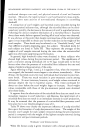
EFFECTS OF AFTER-SHAVE LOTIONS ON SKIN FLORA 747 value for comparative purposes. Likewise, formulations highly active against one species of micro6rganism may be far less effective against another. This also applies to various strains of the same test organism. The process of shaving even under the most ideal conditions involves significant skin trauma. The careful selection of a shaving instrument and a shaving preparation cannot always be depended upon to leave the face feeling refreshed and comfortable. After-shave lotions, an important part of a man's good-grooming kit, have been used, promoted and evaluated mainly on the basis of fragrance. Some lotions, of course, do contain moisturizers and other active ingredients to supplement and complement the shaving preparation. An ideal after-shave lotion should soothe minor cuts and abrasions, reduce the possibility of infection, and give the user an over-all sense of well-being. After-shave lotions usually are alcoholic, although, less frequently, emulsified versions have appeared. The popular after-shave lotions contain between 40 and 60% ethyl alcohol by volume, and in the United States specially denatured alcohol formulas #39 C and 40 C are the most widely used. Emolliency is imparted to after-shave lotions usually by the use of humec- rants. Low concentrations of polyols, such as glycerol, propylene glycol or sorbitol are generally employed. The use of bland antiseptics in all types of shaving preparations has been recommended as a prophylactic measure (10). Nonirritating and nonsensitizing antiseptics which are compatible with the formulations and are not inactivated by soap and other surfactants can be used. The use of topical antibiotics in preparations of this type should be discouraged because resistant strains of bacteria are likely to arise which may acquire cross-resistance to antibiotics of similar chemical structure used systematically. Finished formulations containing any antiseptic must, of course, be thoroughly tested for safety and effectiveness. As an aid in soothing the skin, a mild topical anesthetic, such as benzyl alcohol, may be added to the formulation. The most important portion of an after-shave lotion, and the hardest one to test, is the fragrance. What constitutes a suitable and intriguing perfume and, more important, which fragrance will find immediate and continuing consumer acceptance, are far more diMcult to determine than sensitivity, freedom from irritation and microbiological activity. In order to isolate the antimicrobial action of the perfume and to be sure that the measured effects were due to the fragrant portion of the lotion, a series of solutions were prepared containing the basic ingredients used in after-shave lotions in various combinations. Also measured were the effects obtained by adding antiseptics to these solutions, and a series of commercial after- shave lotions selected from among the top brands in this country and Europe were tested.

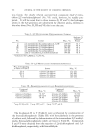
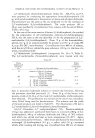
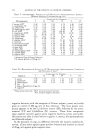
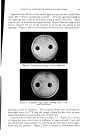
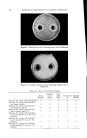
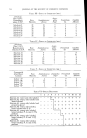
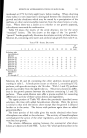
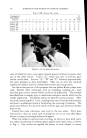
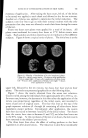
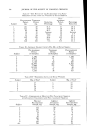
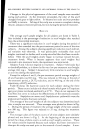
748 JOURNAL OF THE SOCIETY OF COSMETIC CHEMISTS METHOI)S AND RESULTS The compositions of the test lotions are shown in Table I. The ethyl alcohol content of 55% by weight was selected since it is in the upper limit of the commercial lotions tested, which ranged from 40 to.60%, with the majority being between 45 and 55%. The effectiveness of alcohol in reducing the number of viable organisms on the skin has been amply confirmed. According to Hatfield and Lockwood (11), however, the con- centration of alcohol necessary to accomplish degermation or disinfection ranges from 70 to 95% by weight. Of the aromatic alcohol, benzyl alcohol appears to be the only one tested in recent years. It is difficultly soluble in water, which may explain its limited antiseptic properties. Prombo and Tilden found that 4% benzyl alcohol by weight in water was less effective than 70% ethyl alcohol (12). TABLE I--TEsT SOLUTIONS Weight Percent Solution #1: Water 45.0 Ethyl alcohol 55.0 Solution #2: Benzyl alcohol 0.5 Water 44.5 Ethyl alcohol 55.0 Solution #3: Propylene glycol 4.5 Water 40.5 Ethyl alcohol 55.0 Solution #4: Benzyl alcohol 0.5 Propylene glycol 4.5 Water 40.0 Ethyl alcohol 55.0 Solution #5: Benzyl alcohol 0.50 Perfume 0.75 Propylene glycol 4.50 Water 39.25 Ethyl alcohol 55.00 Solution #6: Same as #5 with 1.5% perfume Solution #7: Same as #5 with 3.0% perfume Propylene glycol and other glycols are active as virucides, particularly in the vapor state. In solution they are not nearly as active, and it was found here that their addition to after-shave lotions does not add to the antiseptic properties of the solutions. The first of the in vitro methods used to measure the relative efficiencies of the test solutions and commercial lotions was a modification of Kliewe and Huthmacher's procedure (13). Sterile agar was seeded with various cultures of bacterial and fungi. Nutrient agar was used for the $taphy/ococcus aureus ATCC 6538 culture, and a mixed bacterial culture isolated from the face. Potato dextrose agar was used with •Ispergi//us niger ATCC 6275 and Penici//ium species. Sabouraud dextrose agar was used for Candida a/bicans ATCC 752 culture.
Purchased for the exclusive use of nofirst nolast (unknown)
From: SCC Media Library & Resource Center (library.scconline.org)