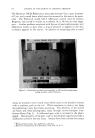
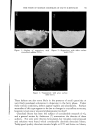
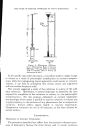
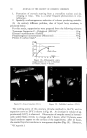
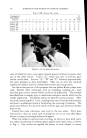
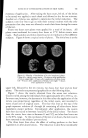
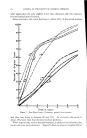
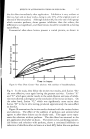
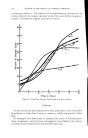
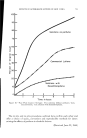
RELATIONSHIP BETWEEN DANDRUFF AND MICROBIAL FI,ORA OF THE SCALP 763 instead of tap water. This mixture was selected because it does not represent any known existing commercial preparation. It is both antibac- terial and antifungal, particularly against the yeasts which are known to inhabit the scalp. Neomycin sulfate 2.5 g. Nystatin* 500,000 units Distilled water 1000 ml. During this period samples of scurf were removed three times each week for four weeks. ¾. Post-treatment Period (26 Days). The application of the neomycin- nystatin mixture was discontinued, and the use of tap water was resumed. Samples were removed as before for a total of 11 samples. Method of Removing Scurf Samples. Scurf was removed from the scalp with the aid of the Oster HairVac Model 215. This hand type of electric vacuum cleaner is manufactured by the John Oster Manufacturing Co. of Milwaukee, Wisconsin. It is supplied with disposable, sterilizable filter pads which collect the sample. It also has replaceable plastic heads which can be chemically sterilized. When in operation the apparatus is passed over the scalp 24 times in such a way as to assure a uniform collection each time. Six passes through the scalp from temple and forehead to nape of neck are repeated four times. Each subject was permitted to collect his own sample. Samples for microbiological studies were collected and trans- ferred to culture media under sterile conditions. Observations on Scurf Samples. The weights of all samples were recorded. Smears were made, stained with Loe•er's methylene blue and examined microscopically for the presence of yeasts, principally Pityrosporum ovale and P. orbiculare (10). An evaluation of each sample was made on the basis of the average number of yeasts counted in each oil immersion objec- tive field. The effectiveness of the treatment in reducing or eliminating yeasts from the scalp during the treatment could thus be ascertained. A sample was rarely examined which did not show a few of the typical P. ovale yeast forms. During the period of treatment it was usual to find one to two yeasts per field. During the pre-treatment period it was normal to find 30 to 50 yeasts per field. Bacterial counts were made with Trypticase Soy agar (B.B.L.) as the medium. The scurf samples, after being weighed, were placed in a flask containing 100 ml. of sterile saline and a few glass beads. After being shaken for one-half hour, aliquot portions were piperted into sterile Petri plates, and the agar was added. During the period of treatment many samples showed plate counts of zero. Where colonies were seen, the num- ber of organisms per milligram of sample was recorded. * Nystatin is available as Mycostatin© and was supplied by E. R. Squibb & Sons, New York.

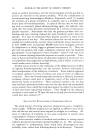
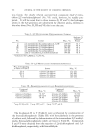
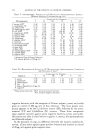
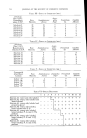
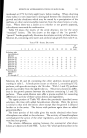
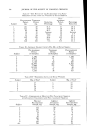
764 JOURNAL OF THE SOCIETY OF COSMETIC CHEMISTS TABLE I--THE EFFECT OF THE EI.IMINATION OF A SCALP MICROBIAL FI,ORA UPON THE WEIGHTS OF SCURF SAMPLES Subject Post- Pre-treatment Treatment treatment Period, Period, Reduction Period, mg. mg. Percentage mg. Percentage Reduction 1 101 49 51.5 31 68.4 2 121 55 55.0 74 38.9 3 82 48 41.2 29 64.5 4 14 19 Increase 20 Increase 5 35 35 None 34 2.9 6 32 29 8.6 15 53.6 7 162 113 30.4 115 29.3 8 69 52 24.1 47 31.9 9 168 152 9.3 115 31.6 TABLE II--AvE•AGE COLONY COUNTS PER MG. or Scu•,r SAMPLE Pre-treatment Treatment Post-treatment Period Period Period Subject (6 Samples) (12 Samples) ( 11 Samples) 1 1,340 93 1,184 2 8,817 11 175 3 1,718 8 83 4 5,188 80 600 5 22,970 113 9,931 6 3,800 175 670 7 14,529 3 48 8 2,275 91 116 9 7,385 38 417 TABLE III--THP, ES•OLD LEVELS OF SCU•,F WEIGHTS Subject Mg. of Scurf Subject Mg. of Scurf 1 27 6 13 2 37 7 70 3 30 8 33 4 18 9 95 5 34 ...... TABLE IV--CoMPARISON OF HEAVIEST PKE-TKEATMENT SAMPLES wI'rH I,IGHTEST TKEATMEN'r AND POST-TREATMENT SAMPLES Subject Heaviest Lightest Lightest Pre-treatment Treatment Post-treatment Sample, mg. Sample, mg. Sample, mg. 1 113 20 15 2 147 32 34 3 115 16 16 4 18 8 4 5 51 18 19 6 43 9 3 7 240 73 20 8 95 23 27 9 216 63 81 Av. 116 29 25
Purchased for the exclusive use of nofirst nolast (unknown)
From: SCC Media Library & Resource Center (library.scconline.org)