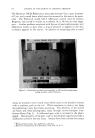
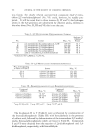
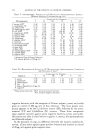
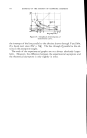
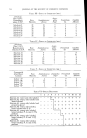
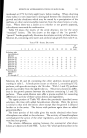
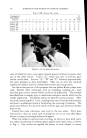
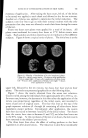
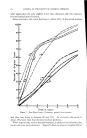
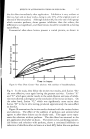
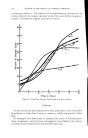
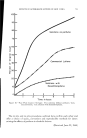
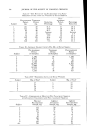
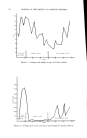
REI.ATIONSHIP BETWEEN DANDRUFF AND MICROBIAL FLORA OF THE SCAI,P 767 medicated shampoo was used, and physical removal of scurf and bacteria resulted. However, the rapid increase in scurf and bacterial values elnpha- sizes the short term activity of non-medicated shampoos in controlling dandruff. A comparison of scurf weights and bacterial counts recorded during the treatment period indicates that, although the microbial flora can be elimi- nated very quickly, the decrease in the amount of scurf is a gradual process. Following the almost complete elimination of a microbial flora it required about three weeks before a general leveling off of scurf values was observed. It was obvious at this point that despite continued use of the antimicrobial agent it was impossible to obtain any further reduction in the weight of the scurf samples. These levels may be referred to as "threshold levels," and they differed markedly depending upon the subject. Threshold levels for each subject are listed in Table III. They represent the averages of the weights of scurf samples removed during the time when the antimicrobial agent was obviously suppressing scurf formation. In general, high threshold values were obtained in those subjects who showed high values during the pre-treatment period. The significance of such a variation among individuals (13 to 95 mg.) would seem to be that factors other than the presence of a microbial flora influence the rate and degree of epidermal desquamation of the scalp. Again referring to Figs. 1 and 2, it is apparent that, when the treatment was stopped, the bacterial counts began to rise almost immediately. After 20 days the bacterial counts for most individuals had returned to pre-treat- ment levels. There was much variation in post-treatment counts among individuals. In most instances, however, scurf weight values continued to decrease despite the rise in bacterial counts. This trend continued for about ten days before the scurf weights began to increase. Scurf weight values comparable with those of the pre-treatment period were obtained after three weeks. It appears that the elimination of the microbial flora does not result in an immediate response in scurf reduction and likewise, the rapid return of a microbial flora does not result in an immediate increase in scurf production. It may be assumed that the presence of a microbial flora promotes scurf formation but is not the physiological cause of it. Table IV shows very clearly the important influence of a scalp microbial flora upon the formation of scalp desquamative tissue. The weight of the heaviest scurf sample for each subject removed during the pre-treatment period is compared with the weight of the lightest sample removed during the treatment and post-treatment periods. SUMMARY AND CONCLUSIONS When the human scalp is given treatment with a broad spectrum anti-

768 JOURNAL OF THE SOCIETY OF COSMETIC CHEMISTS microbial agent which restilts in a significant reduction of the microbial flora, a decrease in the amount of scalp desquamation occurs. b vidence fi r this decrease was obtained when samples of human dandruff were removed using a hand vacuum cleaner and weighed prior to, during and after treat- ment of the scalp. The average weights of scurf samples from nine subjects decreased Gllowing the application of an antimicrobial agent. A relationship exists between the presence of a scalp microbial flora and the extent of epidermal desquamation. The complete absence of a micro- bial flora does not result in an absolute cessation of scaling. The reduction varies for different individuals between 9 and 55%. It was possible to eliminate the microbial flora after one or two days of treatment. The result of this change was not manifested in measurable scurf reduction for two weeks. This lag indicated that the scalp epidermal desquamation is a physiological process which slowly adjusts itself to environmental changes. Furthermore, when treatment was stopped, scurf production remained at a low level for a much longer period than was required for the microbial flora to become re-established. It would appear that the most effective antidandruff preparations are those which have a twofold action: that of providing a microbiologically free scalp and that of physically removing adhering dandruff scales. A medicated shampoo has both of these actions. The daily application of a preparation containing an antimicrobial agent to supplement the action of the shampoo is recommended. All the subjects participating in the experi- ment described in this paper remarked upon the beneficial effects of the treatment. The scalp felt clean and was entirely free of irritation and itching as long as it was in a state free of any significant microbial flora. (Received June 26, 1964) REFERENCES (1) Roia, F. C., VanderWyk, R. W., and Beal, J. A., •. 8oc. Cosmetic Chemists, 14, 81 (1963). (2) Beal, J. A., Master of Science Thesis, Massachusetts College of Pharmacy, Boston (1962). (3) Epstein, J. M., J•id. (1963). (4) DiM•nna, M. E., y. Pathol. Bacteriol., 68, 98 (1954). (5) MacKee, G. M., and Lewis, G. M., y. Invest. Dermalol., 1, 131 (1938). (6) MacKee, G. M., Lewis, G. M., Pinkerton, E. M., and Hopper, M. E., J•id., 2, 31 (1939). (7) Pachtman, E. A., Vicher, E. E., and Brunner, M. J., J•id., 22, 389 (1954). (8) Lubowe, I. I., Proc. $ci. Sect. Toilet Goods •lssoc., 28, 18 (1957). (9) Spoor, H. J., I•id., 23, 27 (1955). (10) Gordon, M. A., M_ycolojria, 43, 524 (1951).
Purchased for the exclusive use of nofirst nolast (unknown)
From: SCC Media Library & Resource Center (library.scconline.org)