16 JOURNAL OF THE SOCIETY OF COSMETIC CHEMISTS metabolised by pseudomonads and other bacteria (13,14,15). Many emulsi- fying agents are liable to microbial attack. In low concentration many anionic emulgents can be used as energy sources (16,17), but the anio,nic soaps are normally used in creams in sufficient concentration to produce an unfavourably high pH for growth or indeed to be bactericidal. Sodium stearate is bactericidal at a concentration of 1 per cent, and other saturated and unsaturated fatty acid soaps at concentrations far below this level (18). Many nonionic emulgents, particularly the fatty acid ester type, can be utili. zed by a variety of organisms (19), but it is not certain whether this is due to the greater facility with which they can be metabolised or to their aqueous solutions being near to neutrality and less likely than aqueous solutions of anionic emulgent s to interfere with the functioning of bacterial enzymes. It is now well established that nonionic emulgents can inactivate a wide variety of commonly-used preservatives including the phydroxybenzoates (20,21), and phenols (22). The mechanism of inactivation may be complex formation due to hydrogen bonding (22) or solubilization within micelles (23), the latter process being established in the case of inactivation of bactericides by anionic soaps (24,25,26). Other important factors affecting the activity of preservatives in o/w systems are those controlling the availability of the preservative in the aqueous phase and in particular the o/w partition coefficient of the preservative, the phase-volume ratio and the temperature. It has long been known that phenols dissolved in oils and fats possess no antimicrobial activity except when the oil is in contact with water (27), and that the inclusion of water in phenol ointment markedly increases the activity of the phenol (28,29). These observations indicate that the activity of phenol in the presence of both oil and water is controlled by its partitioning between the two phases. Indeed, Solution of Chloroxy- lenol B.P.C. which contains 5 per cent chloroxylenol has a Rideal-Walker coefficient of about 3, but 5 per cent chloroxylenol has been found in- adequate to prevent mould growth in emulsified ointments (30). Whenever preservatives are more soluble in oil than in water, enough must be added to an o/w system to obtain a sufficient concentration in the aqueous phase (31). Thus a knowledge of the partition coefficient of the preservative is essential to ensure that the forementioned condition is met. A very useful table of partition coefficients of methyl phydroxybenzoate in oils commonly used in creams has been prepared by Hibbott and Monks ($2) but there is comparatively little data of this type in the literature.

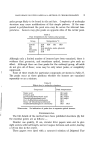
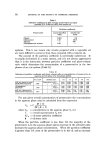
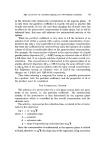
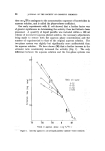
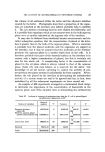
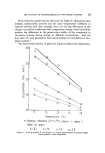
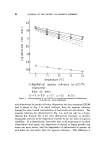
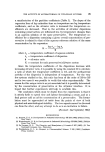
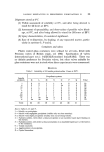
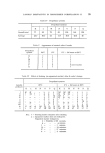
THE ACTIVITY OF ANTIBACTERIALS IN TWO-PHASE SYSTEMS Cutting oil emulsions used in the metal-working industry are parti- cularly prone to microbial attack and attempts have been made to preserve them and eliminate a large annual financial loss. Pivnick and Fotopoulos (33), and others (34) found that the concentration of preservative needed varied with the oil:water ratio, an observation which must be linked with the larger bacterial population which can develop in cutting oil emulsions (1). Obviously the effectiveness of a preservative in an emulsion must be controlled both by its partitioning between the two phases, and the phase-volume ratio since both factors will determine the concentration in the aqueous phase. Studies on the influence of temperature on chemical sterilization pro- cesses have been confined to aqueous solutions, but the literature reveals several studies on the influence of temperature on partition coefficients (31,35). In general, a rise in temperature produces an increase in the solubility of a preservative in both the oily and aqueous phases of an emulsion, but the partition coefficient must be presumed to change with temperature. Thus the overall effect of temperature on preservative activity in o/w systems will be determined, (i) by the normal influence of temperature on the disinfection rate, and (ii) by the alteration in the distribution of the preservative between the two phases. The experiments described in this paper were undertaken to gain an understanding of the major physical factors controlling the activity of preservatives in o [w systems and, in particular, of the interactions between them. To this end, simple o/w systems containing no emulsifying agent were used. This permitted a study of the major controlling factors, but it is acknowledged that when, at a later stage, emulgents are included, our conclusions about the relative importance of each factor may have to be modified and certainly additional factors will be introduced. Our assessments of antimicrobial activity of the systems were, for expedience, made using Escherichia coli but it is conceded that the results might have been of greater interest had we elected to use a mould. THE PARTITION COEFFICIENTS The very wide range of the partition coefficients of preservatives in some of the systems we have studied is shown in Table I. The range of coefficients is about 6600-fold or about 10 times the range recorded by Hibbott and Monks (32), for the partitioning of methyl phydroxybenzoate between water and a variety of oils. The partition coefficients for arachis 0il/water systems are high compared with those for liquid paraffin/water
Purchased for the exclusive use of nofirst nolast (unknown)
From: SCC Media Library & Resource Center (library.scconline.org)