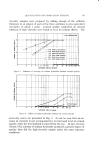
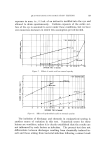
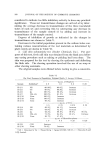
QUANTITATIVE EYE IRRITATION TESTING 131 V. SUMMARY AND CONCLUSIONS A new method is described which has several advantages over other methods presently employed in testing for eye irritancy, including greater sensitivity and precision. A corneal applicator is used in this method for the instillation of the test materials. By appropriate rinsing schedules, it is possible to vary the exposure conditions quantitatively between no-effect and maximum-effect levels. Interpretation and com- parison of data are reduced to a single meaningful number, namely, a time measurement for achieving whatever level of response is chosen. In addition, it is possible to obtain for a given test material an estimate of the maximum exposure (time) that will be tolerated by the eye. This information may be of great practical value in determining product hazard. It is recommended that response of each of the three areas of the eye be considered individually and that the maximum response alone, rather than the area involved, be used in estimating the level of ocular injury. In addition, a substance should be selected (presumably by the F.D.A.) which would be used as a standard irritant by all labora- tories carrying out eye tests. This substance need not be one which de- fines the point of maximal tolerance or the criteria for product accept- ance or rejection. Sodium hydroxide, hydrochloric acid and acetic acid have been studied by this method under various conditions of exposure and con- centration, and the results are presented. (Received July 8, 1964) REFERENCES (1) Russell, K. L., and Hoch, S.G., Proc. Sci. Sec. Toilet Goods Assoc., 37, 27 (1962). (2) Draize, J. H., Woodward, G., and Calvery, H. 0., J. Pharmacol., 82,377 (1944). (3) Appraisal of the Safety of Chemicals in Foods, Drugs and Cosmetics, by Staff of the Division of Pharmacology Food and Drug Administration Department of Health, Education and Welfare, Association of Food and Drug Officials of the United States, Austin, Texas, 1959. (4) Friedenwald, J. S., Hughes, W. F., and Herrmann, H., Arch. Ophth., 31,279 (1944). (5) Carpenter, C. P., and Smyth, H. F., Am. J. Ophthalmol., 29, 1363 (1946). (6) Kay, J. H., and Calandra, J. C., J. Soc. Cosmetic Chemists, 13,281 (1962). (7) Harley, R. D., Am. J. Ophthalmol., 35, 1653 (1952). (8) Buehler, E. V., and Newmann, E., Am. Ind. Hyg. Abstr. (1963).

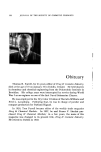
132 JOURNAL OF THE SOCIETY OF COSMETIC CHEMISTS Obituary Thomas R. Farrell, for 35 years editor of Drug & Cosmetic Industry, died at the age of 70 on January 19 in Dublin, Ireland. He held degrees in chemistry and chemical engineering from the Polytechnic Institute in Brooklyn. His college years were interrupted by service during World War I as an engineer on one of the first Naval Submarine Chasers. He was employed in the Dry Color Division of Sherwin-Williams and Fred L. Lavanburg. Following that, he was in charge of powder and compact production for Parrums Rigaud. In 1924, Tom Farrell became editor of the weekly trade magazine Drug & Chemical Markets. In 1927, he and Frazer V. Sinclair pur- chased Drug & Chemical Markets in a few years, the name of this magazine was changed to its present title, Drug • Cosmetic Industry. He retired to Dublin in 1959.
Purchased for the exclusive use of nofirst nolast (unknown)
From: SCC Media Library & Resource Center (library.scconline.org)