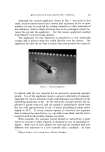
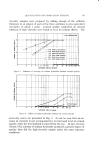
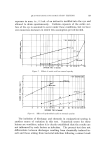
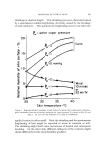
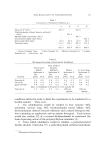
QUANTITATIVE EVE IRRITATION TESTING 123 Although the corneal applicator shown in Fig. 1 was used in this study, recent control studies have shown that exposures of five or more minutes (as may be required for testing cosmetics or other materials of low irritancy) result in slight irritation due to the prolonged contact be- tween the eye and the applicator. For this reason, applicators molded from Silastic*t are now being studied. The applicator (13 mm. diameter) is attached to a 1 ml. tuberculin syringe and is placed under the eyelid directly over the cornea. The applicator fits into the eye like a contact lens and permits the cornea to Figztre 1. Corneal applicator be bathed with the test material for an accurately measured exposure period. Use of the applicator insures a greater uniformity of exposure, especially for viscous solutions or gels, and eliminates any influence of the nictitating membrane or lid. At the end of the exposure period, the ap- plicator is gently removed, and the sample is immediately rinsed from the eye x•ith approximately •0 ml. of sterile physiological saline main- tained at 38øC. If severe corneal opacity is observed, the exposure time is reduced by some factor, e.g., one-half or one-third, and the test is repeated until no discernible changes are noted. When possible, the exposure period should be varied from a point where no corneal or iridic response is obtained to one of maximum re- sponse. 13oth eyes of each animal are used and are instilled with two different test materials or a test material and a standard. At least Silicone Rubber, Dow Corning Corp., Midland, Michigan.

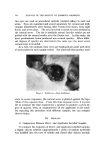
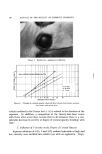
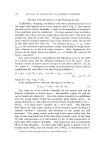
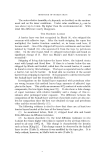
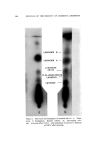
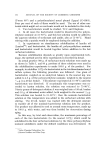
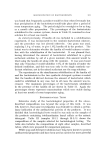
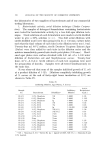
124 JOURNAL OF THE SOCIETY OF COSMETIC CHEMISTS two eyes are used as procedural controls (normal saline) in each test series. Eyes are examined and scored separately for corneal and iridic changes immediately after rinsing, after twenty-four hours, forty-eight hours, and seven days. The area involved is noted but not included in the corneal score. The iris is similarly scored, but the results are not pooled with the corneal results as in the Draize test. In this study, the most predominant lesion produced was corneal opacity. When differ- ent degrees of opacity are observed in the same eye, the most severe corneal score is recorded. As a rule, two animals (four eyes) are employed per point with three or more points for each sample tested. For materials that produce rood- .'"::.•:..•. '..'• ..... •" .... "•' •:•½.• •. ::• :-•.. ß .f•:-.:, •'. •.. Figure 2. Rabbit eye--direct instillation crate to severe responses, the corneal score is plotted against the' loga- rithm of the exposure time. From this time-response curve, it is possi- ble to estimate the time required for a product to produce a given de- gree of opacity, iritis, or conjunctivitis (if the applicator is not used). By repeating this procedure with different samples, one can compare their irritancy. III. RESULTS A. Comparison Between Direct- and Applicator-Dzstilled Samples To compare the responses of direct- and applicator-instilled samples, a highly viscous solution (approximately 1 poise) of sodium hydroxide was instilled into the eyes of rabbits and rinsed after sixteen seconds.
Purchased for the exclusive use of nofirst nolast (unknown)
From: SCC Media Library & Resource Center (library.scconline.org)