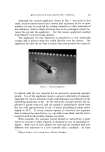
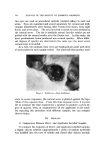
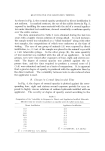
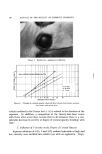
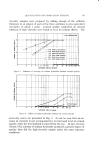
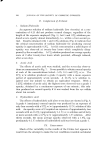
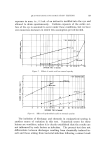
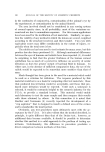
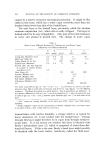
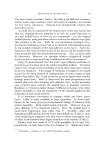
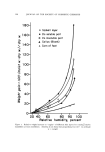
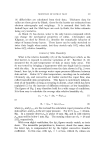
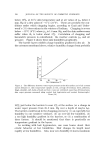
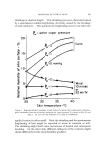
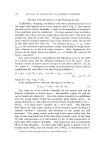
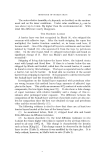
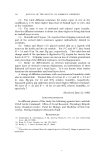
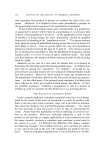
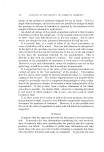
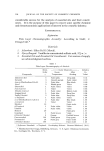
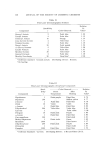
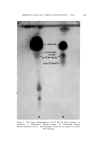
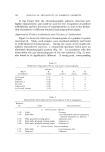
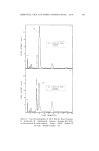
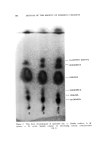
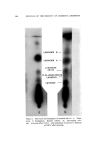
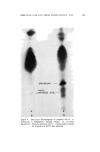
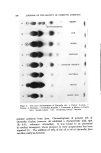
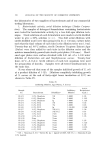
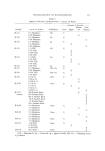
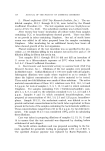
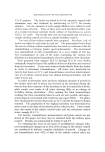
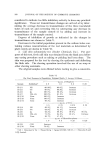
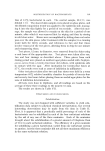
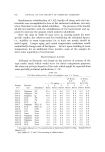
ESSENTIAL OILS AND THEIR CONSTITUENTS. XXV. 163 to about 15% of the essential oil, overlapped the position of the linalo61 oxides. Rigorous comparison of retention time data and infrared ex- amination of the effluent revealed that the compound responsible for this peak was 3,5,St-trimethyl hexanol. Thin layer chromatography of the alcohol along with the sample confirmed the observation. Recognition of Botanical and Geograph•'cal Origins The utility of thin layer chromatography as a practical method for distinguishing readily Mentha arvensis from M. piperita oils has been discussed (2), the test being based on the appearance of a bright red spot due to the presence of menthofuran in peppermint oils. Distinction of Spearmint Oils: Figure 3 shows thin layer chroma- tograms of authentic samples of spearmint oils derived from (i) Mentha cardiaca, (ii) M. spicata and (iii) M. viridis. Characteristic patterns were found to be displayed by each of these species as shown in Table IV. The technique thus offers a simple means for recognizing readily various spearmint species. Distinction of Palmarosa and Gingergrass Oils. Essential oils of palmarosa and gingergrass are derived from two morphologically simi- lar species of plants--Cymbopogon martini Stapf var. motia and C. martini Stapf var. sofia respectively. Thin layer chromatograms ooe the oils were obtained using (i) n-hexane-ether (10: 1) and (ii) benzene- methanol (10:1) as developing systems. Characteristic chromato- graphic patterns were obtained in each case, as shown in Figs. 4 and 5. The benzene-methanol system separated the alcohols from less polar constituents, which in turn were efficiently resolved by the n-hexane- ether system. Spots observed in the chromatogram of oil of ginger- grass but absent in that of oil of palmarosa are recorded in Table V. The occurrence of carvone, limonene oxide and trans-limonene diol in gingergrass oil has been reported (3, 4). The spot given by the un- known constituent (Rf 1.40 relative to limonene diol) is sufficiently in- tense to detect clearly the addition of 10% of oil of gingergrass to oil of palmarosa. Differentiation of Citronella Oils: These oils are derived from Cym- bopogon winterJanus (Citronella Java) or C. nardus (Citronella Ceylon). Oils produced in the Dominican Republic, Guatemala, Honduras, Mexico, Puerto Rico and Taiwan are derived from plants introduced into these regions from Java. As illustrated in Fig. 6, the thin layer chromatograms of the oils are practically identical to those given by

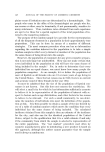
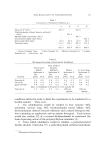
164 JOURNAL OF THE SOCIETY OF COSMETIC CHEMISTS . =• UNKNOWN B • •',i •. UNKNOWN A • • LIMONENE • • OXl DE •, •_ UN SATU R AT ED • •:• :.:. •:. •:.' :'• .•..• [ '• •-• ......... •:: .: • Figure 4. Thin layer chromatogram o[ •ss•ntial oils o•: a. Palm- arosa b. Gingergrass. Sample volume: lX. Developing solv- ent: n-hexane-ether (10:1). Chromatoplate heated for 5 minutes at 105øC after spraying
Purchased for the exclusive use of nofirst nolast (unknown)
From: SCC Media Library & Resource Center (library.scconline.org)