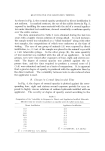
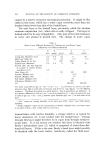
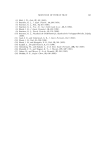
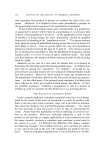
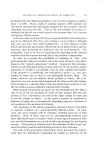
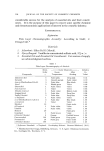
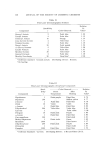
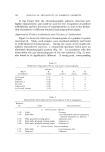
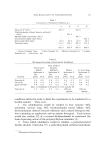
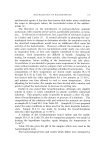
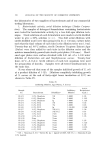
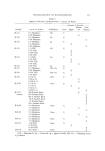
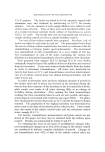
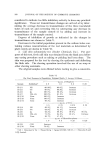
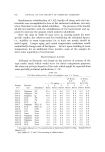
SOLUBILIZATION OF BACTERIOSTATS Table I Composition of Surfactant Solutions (g.) 171 A B C D 500.0 ... 192 0 .. Sipon LT-6 • (40%) Triethanolamine dodecyl benzene sulfonate s (60%) ... 333.3 Miranol C2M concentrate • (50•) ...... Concentrated liquid soap a (36•) ...... Schercomide SCO extra • 30 0 30.0 Deionized water 3', 0.0 536.7 ß . 181 0 . . . 30.0 497.0 ß . 555.5 30.0 314.5 900.0 900.0 900.0 900.0 a Alcolac Chemical Corp. •' Ultra Chemical Co. ,' Miranol Chemical Co. Palmolive Co. * Scher Bros., Inc. Table II Maximum Percentage of Bacteriostat Solubilized Colgate- Nonionic TEA Dodecyl TEA Lauryl Benzene, Sulfate, Sulfonate Surfactant A Surfactant B Dia- Dia- phene TCC phene TCC Mixed, K. Coco Soap, Surfactant C Surfactant D Dia- Dia- phene TCC phene TCC Nimcolan S 1.0 0.2 0.6 0.1 0.4 0.1 0.7 0.2 Tween 80 0.9 0.2 1.0 0.5 1.7 0.4 0.8 0.2 Igepal CO-630 0.9 0.3 0.7 0.2 0.9 0.3 0.8 0.2 Max. % Solubilized in Presence of 1.0% Lanolin Oil Nimcolan S 1.2 0.3 0.7 0.3 Will not Will not tolerate tolerate conditions defined in order to limit the experiments to be conducted to a feasible number. These were: 1. The solubilization would be studied in four systems--20% potassium coconut soap, 20% triethanolamine lauryl sulfate, 20% triethanolamine dodecyl benzene sulfonate and a mixed detergent solu- tion containing an amphoteric and an anionic detergent. Each system would also contain 3% of a coconut diethanolamide to counteract the foam depressing action of the polyoxyethylene nonionics (3). 2. Three added solubilizers would be studied--a polyethoxylated lanolin alcohols (Nimcolan S*), a polyethoxylated sorbitan monooleate * Maimstrom Chemical Corp.

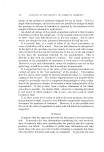
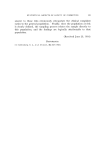
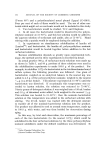
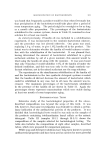
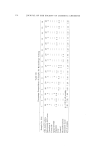
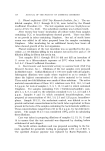
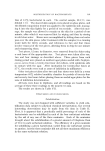
172 JOURNAL OF THE SOCIETY OF COSMETIC CHEMISTS (Tween 80*) and a polyethoxylated nonyl phenol (Igepal CO-630t). Four per cent of each of these would be used. The use of other ma- terials which might act as cosolvents would not be included in this study 3. Two bacteriostats would be studied, TCC and Diaphene. 4. In all cases the bacteriostat would be dissolved in the polyox- ethylene nonionic at 75-80øC, and this hot solution would be added to the aqueous solution of surfactant and amide, also at 75-80øC. Hand stirring with a spatula would be employed during the addition. 5. In experiments on simultaneous solubilization of lanolin oil (Lantrol ©*) and bacteriostat, the lanolin oil, polyoxyethylene nonionic and bacteriostat would be heated together before addition to the hot surfactant solution. Because solubilization depends so greatly upon experimental tech- nique, the method used in these experiments is described in detail. In actual practice 900 g. of surfactant stock solutions were made up as shown in Table I, and 90 g. portions of these solutions were used in the solubilization experiments to make 100.0 g. of the product. For example, to solubilize 1.0% of a bacteriostat in the triethanolamine lauryl sulfate system, the following procedure was followed: One gram of bacteriostat, weighed on an analytical balance to the nearest rag. was added to 4.0 g. of the polyoxyethylene nonionic, weighed to the nearest 1/10 g. in a 30 ml. beaker. This mixture was heated at 75-80øC until the bacteriostat was dissolved. If occasionally this temperature was ex- ceeded to hasten solution, the solution was returned to 75-80øC. Ninety grams of detergent solution A was weighed into a 150 mi. beaker and 5.0 g. of deionized water added, both weighed to the nearest 1/,0 g. This solution was heated to 75-80øC then the nonionic-bacteriostat solution at this temperature was added to the surfactant solution with stirring. The 30 mi. beaker was washed with the detergent mixture to transfer all of the nonionic-bacteriostat solution into the product. The product was allowed to cool to around room temperature, made up to 100.0 g. with water, and was then bottled for observation during aging. In this way, by trial and observation, the maximum percentage of each of the two bacteriostats (to the nearest 0.1%) which could be solubilized in the four surfactant solutions by the three polyoxyethylene nonionic solubilizers under the defined conditions was determined. It * Atlas Chemical Industries, Inc. t General Aniline and Film Corp.
Purchased for the exclusive use of nofirst nolast (unknown)
From: SCC Media Library & Resource Center (library.scconline.org)