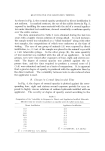
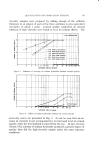
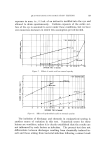
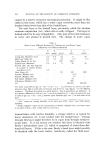
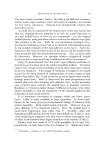
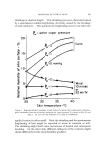
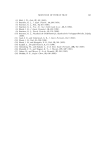
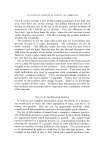
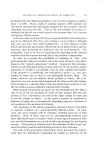
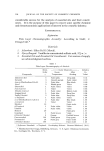
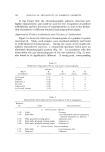
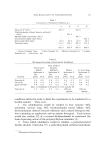
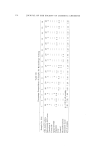
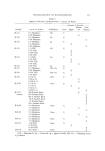
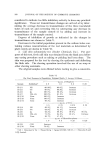
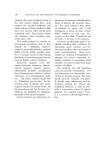
SOLUBILIZATION OF BACTERIOSTATS Table V Degrees of Growth, Nutrient Broth, S. A ureus, 24 Hours 177 Sample p.p.m. of Active Solubilizer • •----Amount of Growth----- Moder- None Slight ate Unin- hibited H-3/13 H-3/14 H-3/15 H-3/1 0.5 Diaphene NS X 0.25 Diaphene X H-3/2 0.5 Diaphene Tw X 0.25 Diaphene X H-3/3 1.0 Diaphene Ig X 0.5 Diaphene X 0.25 Diaphene X H-3/4 1.5 TCC NS X 0.75 TCC X o. 375 TCC X o. 18 TCC X H-3/5 1.5 TCC Tw X 0.75 TCC X 0.375 TCC X 0.18 TCC X H-3/0 0.18 TCC Ig X H-3/7 0.5 Diaphene NS(-]-L) X 0.25 Diaphene X H-3/8 0.375 TCC NS(q-L) X 0.18 TCC X H-3/9 0.5 G-11 (NS) X 0.25 G-11 X o. 125 G-11 x H-3/10 1.0 G-11 None X 0.5 G-11 X 0.25 G-11 X 0.125 G-11 X H-3/11 750 Product Basis X control 375 Product Basis X 187.5 Product Basis X 93.8 Product Basis X 47 Product Basis X 28.5 Product Basis X H-3/12 2.0 Diaphene None X 1.0 Diaphene X 0 5 Diaphene X 2 0 Diaphene 1 0 Diaphene 0 5 Diaphene 2 0 Diaphene 1 0 Diaphene 1 50 TCC 0.75 TCC X 0. 375 TCC X H-3/16 20.0 TCC None X None X None X None X X X X a NS = Nimcolan S, Tw = Tween 80, Ig = Igepal CO-630, NS(q-L) -- Nimcolan S and 1% Lantrol.

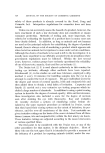
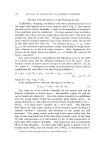
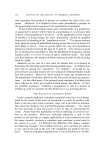
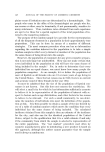
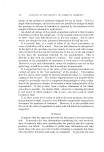
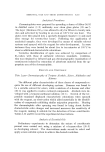
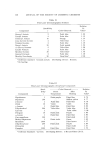
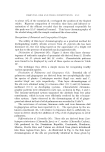
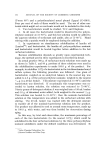
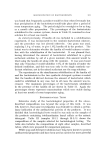
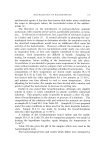
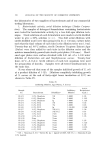
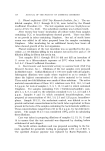
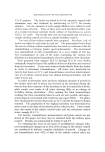
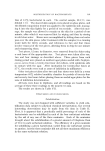
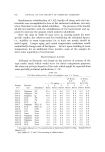
178 JOURNAL OF THE SOCIETY OF COSMETIC CHEMISTS 2. Phenol coe•cients (Ilill Top Research Institute, Inc.). The diluted samples, H-3/1 through H-3/16, were tested by the Phenol Coefficient Procedure (6). The test organism used was S•aphylococcus aureus ATCC No. 6538. The subculture medium was Letbeen broth. After twenty-four hours' incubation all culture tubes from samples containing TCC or hexachlorophene showed growth. There was little or no growth in tubes containing Diaphene. One ml. of sterile horse serum was added to all tubes prepared from the samples containing Diaphene. After incubating for an additional twenty-four hours all tubes showed growth of the test organisms. Phenol resistance of the test inoculum was as specified in the pro- cedure, a 1:60 dilution killing in ten minutes but not in five and a 1:70 dilution killing in fifteen but not in ten. Test samples H-3/1 through H-3/16 did not kill an inoculum of S. aureus in a fifteen-minute exposure at 20øC when tested by the A.O.A.C. Phenol Coefficient Procedure. 3. Bacterios•atic and bactericidal activity in nutrient broth (Hill Top Research Institute, Inc.). Dilutions of the test samples were prepared in distilled water. Initial dilutions of 1: 100 were made with all samples. Subsequent dilutions were made where required so as to contain 10 times the highest concentration of the active material to be tested. Three serial two-fold dilutions were made of these solutions. The active material concentrations of these 10 X solutions were 20.0, 10.0, 5.0 and 2.5 p.p.m. for tests of samples 1, 2, 3, 7, 12, 13 and 14, which contained Diaphene. For samples containing TCC (Trichlorocarbanilide), sam- ples 4, 5, 6, 8, 15 and 16, the solutions contained 15.0, 7.5, 3.75 and 1.8 p.p.m. Samples 9 and 10, which contained hexachlorophene, were prepared at concentrations of 10.0, 5.0, 2.5 and 1.25 p.p.m. hexachloro- phene. Sample H-3/11, the surfactant control, was diluted so as to provide surfactant concentrations in the broth tubes equivalent to those present in the tests of the samples containing the bacteriostatic additives. These concentrations ranged from 750 to 23.4 p.p.m. by two-fold incre- ments. The sample H-3/11 was considered 100% active in calculating these dilutions. Care was taken in preparing dilutions of samples 12, 13, 14, 15 and 16 to ensure that the test material was dispersed by shaking before withdrawal of each aliquot. The broth culture medium used was prepared according to the for- mula specified for germicide testing in paragraph 5.001 (a) of Ref. The specified Armour peptone was replaced by Bacto-Peptamin, a
Purchased for the exclusive use of nofirst nolast (unknown)
From: SCC Media Library & Resource Center (library.scconline.org)