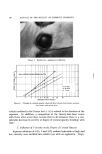
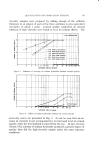
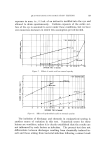
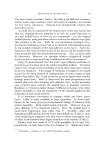
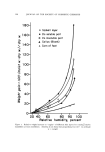
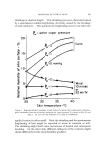
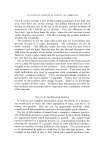
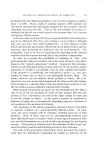
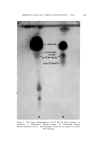
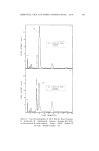
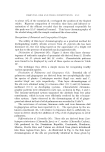
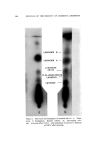
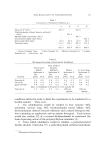
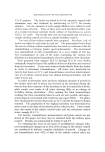
QUANTITATIVE EYE IRRITATION TESTING 127 viscosity samples were prepared by adding enough of the cellulose thickener to an aliquot of each of the three solutions to give equivalent viscosities of about 1 poise. Control studies conducted on neutral solutions of high viscosity were found to have no irritant effects. The -4 7 DAY OBSERVATIONS -- ,. - .- --/...../.. .• .................. .. • - ..--"1 /•'"" •' I/4% NoOH (Low Viscosity) • .., 0 I/4 % NaOH (High Viscosity) •.....,•'" o 5% NaOH (Low Viscosity) - .-. [] 5% NoOH (High Viscosity) ß I0% NoOH (Low Viscosity) ß I0% NaOH (High Viscosity) - ............. .......................... Figure 5. 2 3 4 5 6 7 8 910 15 20 30 40 50 60 70 80 NR EXPOSURE TIME (In Seconds) Influence of viscosity on sodium hydroxide induced corneal opacity ,• I% 24 Hours - • • 0.$% 24 Hours ^•_ • .... a,'• •.o • I ...... T ..... .= 0. 5% 7 Days. 2 3 4 5 6 7 8 9 I0 15 20 3,0 40 50 EXPOSURE TIME (In Seconds) Figure 6. Effect of sodium hydroxide solutions on eorneal opacity seven-day scores are presented in Fig. 5. It can be seen that an in- crease in viscosity is not accompanied by an increased level of eorneal opacity when the test material is rinsed from the eye. In fact, the less viscous 10% solution of sodium hydroxide produced a greater degree of opacity than did the high-viscosity sample under the same exposure conditions.

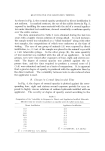
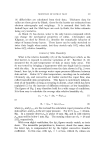
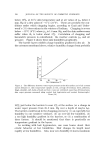
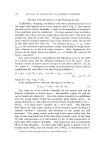
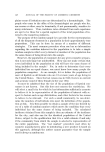
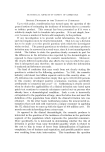
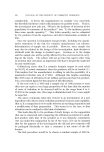
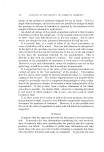
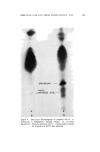
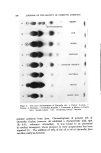
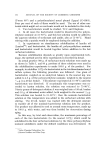
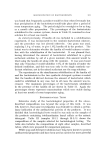
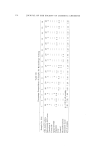
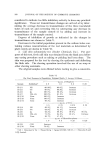
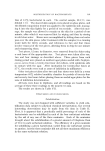
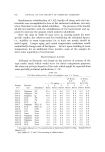
128 JOURNAL OF THE SOCIETY OF COSMETIC CHEMISTS D. Comparison of Irritants 1. Sodium Hydroxide An aqueous solution of sodium hydroxide (low viscosity) at a con- centration of 0.25 did not produce corneal changes, regardless of the length of the exposure employed (Fig. 5), but 5 and 10% solutions pro- duced severe opacity almost immediately, i.e., within a four-second pe- riod. Results obtained Mth 1 and 0.3% solutions (Fig. 6) indicate that the critical concentration of sodium hydroxide for producing corneal opacity is approximately 0.3%. At this concentration a mild degree of opacity was observed at twenty-four hours which completely disap- peared by the seventh day. A 1% solution produced an average opacity score of 2 after twenty-four hours which persisted, although reduced, after seven days. 2. Acetic Acid The effects of acetic acid were studied, and the seven-day observa- tions are summarized in Fig. 7. It was possible to obtain corneal opacity at each of the concentrations tested--5.25, 10.5 and 21% w/w. The 21% w/w solution produced a grade 2 opacity with a mean exposure period of approximately seven seconds. A 10.5% w/w solution re- quired over one minute to obtain an equivalent response. With a 5.25% solution of acetic acid, the highest score observed was a grade 1 opacity, obtained by a continuous exposure of one minute this solu- tion produced no corneal opacity if it was washed from the eye within about ten seconds. $. Hydrochloric Acid The effects of hydrochloric acid after seven days are shown in Fig. 8. A grade 4 (maximum) corneal opacity was produced by an exposure of only four seconds with a 37% w/w (approximately 12 N) solution of this acid. An opacity score of 2 required an exposure of approximately two seconds with an 18.5% (approximately 5.5 N) w/w solution and of forty or more seconds with a 3.7% w/w (approximately 1 N) solution. After thirty seconds, the mean average opacity observed with a 1.9% (ap- proximately 0.5 N) solution of hydrochloric acid was less than a grade 1. IV. Dmcuss•oN Much of the variability in the results of the Draize test appears to result from the attempt to make the test conditions resemble accidental
Purchased for the exclusive use of nofirst nolast (unknown)
From: SCC Media Library & Resource Center (library.scconline.org)