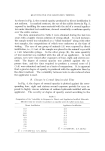
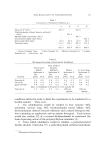
SOLUBILIZATION OF BACTERIOSTATS 175 antibacterial agents, it has also been known that under many conditions the soaps or detergents reduce the bactericidal action of the antibac- terials (4). The literature on the interference of polyoxyethylene nonionic surfactants with cosmetic preservatives, particularly phenolics, is exten- sive. It will not be reviewed here, but a good list of references is given by Charles and Carter (5). It seemed advisable in planning the bac- teriological tests to attempt to determine whether the nonionics used in the described compositions would have an additional effect upon the activity of the bacteriostats. However, without the nonionics, or pos- sibly some cosolvent, the two bacteriostats under study can exist only in suspended form, at best only slightly solubilized in the detergent solutions. Such suspensions are difficult to handle. Sampling for testing, for example, must be done quickly, after thorough agitation of the suspension, before settling of the bacteriostat can take place. Nevertheless, it was decided to prepare some suspensions of the bacterio- stats without nonionics and to compare their activities as accurately as possible with those of the corresponding solubilized bacteriostats. The compositions of these suspensions are shown under samples H-3/12 through H-3/16 in Table III. In their preparation, the bacteriostat was heated with the other ingredients for a few minutes at 75-80øC, and mixture was then allowed to cool to room temperature. After adjusting for lost water, the sample was then treated with a mortar and pestle to grind the bacteriostat to decrease its settling rate. Earlier it was stated that hexachlorophene, although only slightly soluble in water, is easily solubilized in anionic synthetic surfactant solutions. This property made it possible to prepare a clear 1% solu- tions of hexachlorophene in the absence or presence of a nonionic. The compositions of the solutions with and without the nonionic are shown as samples H-3/9 and H-3/10 in Table III. Sample H-3/9 was prepared under the same conditions as those used for the more insoluble bacterio- stats. Sample H-3/10 was made by heating the hexachlorophene with the other ingredients at 75-80øC. A solution of the triethanolamine lauryl sulfate and the amide, sample H-3/11 in Table III, also for comparison purposes, was made by heating the ingredients together, again bringing the temperature to 75-80 o C. Table III also gives the pH of the samples which were used in the bacteriological tests. The bacteriological tests and results which follow were obtained by

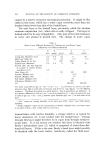
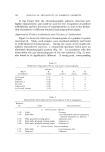
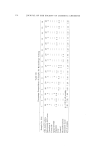
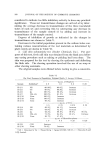
176 JOURNAL OF THE SOCIETY OF COSMETIC CHEMISTS the laboratories of two suppliers of bacteriostats and of one commercial testing laboratory. 1. Bacteriostatic activity, serial dilution technique (S•'ndar Corpora- tion). The samples of detergent formulations containing bacteriostats were tested for bacteriostatic activity by a two-fold agar dilution tech- nique. Stock solutions of each formulation were made in sterile distilled water to give a 20% solution (v./v.). Two-fold serial dilutions with sterile distilled water were then prepared in 25 X 150 mm. culture tubes such that the final volume of each tube in the dilution series was 1.0 ml. Twenty-four ml. 48øC molten, sterile Dextrose Tryprone Extract Agar (Dufco) were then added to each tube in the dilution series and the mixture immediately poured into sterile petri plates (100 mm.). Hard- ened agar plates were surface-streaked with 0.01 ml. of a 1-100 water dilution of Escherichia coli and Staphylococcus aureus. Twenty-four hour, 35øC, A.O.A.C. broth cultures of each test organism were used for preparation of inocula. Samples were all tested simultaneously on the same day. It was observed that none of the samples inhibited growth of E. coli at a product dilution of 1-125. Dilutions completely inhibiting growth of S. aureus at the end of forty-eight hours incubation at 35øC are shown in Table IV. Table IV Inhibiting Dilution, Agar Plates, S. Aureus p.p.m. Sample Inhibitory Bacteriostat No. Bacteriostat Solubilizer • Dilution (Calc.) H-3 H-3 H-3 H-3 H-3 H-3 H-3 H-3 H-3 H-3 H-3 H-3 H-3 H-3 H-3 H-3 /1 /2 /3 /4 /5 /6 /7 /8 /9 /10 /11 /12 /13 /14 /15 /16 i o% o 9% o 9% 0 2% o 2% 03% 1 2% 0 3% 1 0% 1 0% None 1.o% 0.o% 1.2% o.3% 0.2% Diaphene NS 1-8000 1.25 Diaphene Tw 1-8000 1.125 Diaphene Ig 1-8000 1.125 TCC NS 1-8000 O. 25 TCC Tw 1-8000 0.25 TCC Ig 1-16,000 0.188 Diaphene NS(-1-L) 1-8000 1.50 TCC NS(+L) 1-8000 0.37 G-11 (NS) 1-8000 1.25 G-11 None 1-8000 1.25 None 1-2000 ... Diaphene None 1-8000 1.25 Diaphene None 1-8000 1.125 Diaphene None 1-8000 1.50 TCC None 1-8000 0. 375 TCC None 1-8000 0.25 a NS = Nimcolan S, Tw--Tween 80, Ig = Igepal CO-630, NS(q-L) = Nimcolan S and 1 0?/c Lantrol.
Purchased for the exclusive use of nofirst nolast (unknown)
From: SCC Media Library & Resource Center (library.scconline.org)