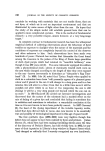
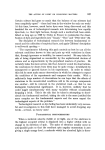
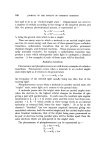
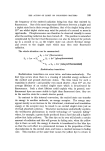
J. Soc. Cosmetic Chemists 18 207-214 (1967} ¸ 1967 Society of Cosmetic Chemists of Great Britain The distribution and activity of benzoic acid in some emulsified systems R. A. ANDERSON and CLARA E. CHOW* Synopsis--The distribution of benzoic acid between arachis oil, isopropyl myristate or liquid paraffin and water or 20 per cent glycerin in water has been investigated. The solute was found to dimerize in the liquid paraffin phase. The fungistatic activity against Aspergillus niger of benzoic acid in emulsified systems depends on the concentration free in the aqueous phase. The benzoate ion seems to have some activity. Increased concentrations of benzoic acid are required in the presence of glycerin. Propylene glycol enhances the activity of benzoic acid and at a concentration of 15 per cent prevents the growth of A. niger in the absence of benzoic acid. INTRODUCTION Many pharmaceutical and cosmetic emulsions require the inclusion of a preservative to prevent microbial deterioration. The activity of a pre- servative will be affected by its interaction with an emulsifying agent (1,2) and by its distribution between the oily and aqueous phases of the emulsion (3,4). (o Coil ) Bean et al (4) have calculated the partition coefficients K w -- C water for several preservatives and suggest that for any given overall concen- tration of preservative the concentration in the aqueous phase may be calculated from the expression, Cw = c (•+1) (Kw ø + 1) where Cw = concentration in the aqueous phase (per cent w/v), C = overall concentration (per cent w/v), *Pharmacy Department, University of Sydney, N.S.W., Australia. 207

2O8 JOURNAL OF THE SOCIETY OF COSMETIC CHEMISTS Kø • oil ' water partition coefficient, and w • = oil: water ratio. This expression is not appropriate when the preservative dimerizes in the oil phase, and does not allow for preservative inactivated by ionization or interaction with emulsifier molecules. EXPERIMENTAL Liquid paraffin, arachis oil, glycerin and propylene glycol complied with the requirements of the British Pharmacopoeia and isopropyl myristate with those of the British Pharmaceutical Codex. Brij $5 was used as received. Benzoic acid was recrystallized from water (m.p. 122ø). All chemicals were A.R. grade. Water was distilled from a Scorah all-glass still. Estimation of benzoic acid Aqueous solutions were diluted with 0.01 N HC1 and the absorbance measured in a Unicam S.P. 700 spectrophotometer at 274.5 m•. Beer's law was found to hold up to at least 1.0 x 10 -3 moles/i glycerin and surfactants in the concentrations present in the diluted solutions did not interfere with the estimations. The concentration of benzoic acid in the oil phase was usually calculated from the decrease in concentration of the aqueous phase. For liquid paraffin phases this procedure was shown to be valid by direct spectrophotometric determination after suitable dilution with isooctane. DETERMINATION OF PARTITION COEFFICIENT Suitable volumes of oil and aqueous phase containing an accurately known concentration of benzoic acid in 0.01 N HC1 were pipetted into glass-stoppered bottles and agitated by a wrist-action shaker for about 1 hr at room temperature. The bottles were then transferred to a water bath at 25 + 0.1 ø for at least 7 days, being shaken 3 or 4 times during this period, and then the concentration of benzoic acid remaining in each aqueous phase was determined. Concentrations were redetermined after shaking and standing for a further one to three days to establish that equilibrium had been attained. For arachis oil and isopropyl myristate equal volumes of oil and of aqueous phase were used. The original concentration of benzoic acid in the aqueous phase was usually 20 millimoles/l, but in some experiments was
Purchased for the exclusive use of nofirst nolast (unknown)
From: SCC Media Library & Resource Center (library.scconline.org)