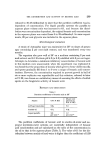
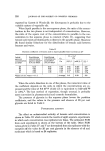
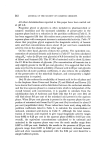
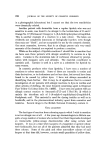
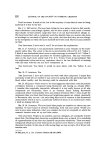
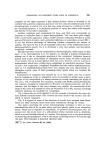
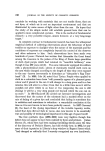
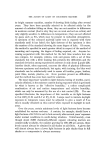
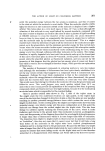
THE DISTRIBUTION AND ACTIVITY OF BENZOIC ACID 211 The activity of benzoic acid has been shown to vary with the pH of the system. The FC50s at pH 4.2 and 5.2 are listed in Table IV. The equivalent concentrations of unionized acid (using pK a = 4.2 in the Henderson buffer equation) have been calculated and are included in the table. These data Table III The determination of the fungistatic activity of benzoic acid against A. niger: at 25 ø and pH 4.2 Total Numbers of positive results from six Number of concentration replicates positive results of benzoic from total of acid added (%) Expt. Expt. Expt. Expt. Expt. Expt. E t. Expt. 48 inocula 1 2 3 4 5 6 •P 8 0.040 6 6 6 6 6 6 6 6 48 0.045 5 6 6 6 6 6 6 6 47 0.050 4 6 6 6 6 5 6 6 45 0.055 2 4 3 2 4 2 3 3 23 0.060 I 1 1 0 0 0 1 0 1 4 0.065 0 0 0 0 0 0 0 0 0 Estimated FC50 0.055 0.055 0.055 (percent) 0.053 0.057 0.055 0.053 0.057 0.052 I Table IV Fungistatic activities (as FC 50) of benzoic acid in the presence of propylene glycol or glycerin against A. niger at 25 ø FC 50 (per cent) pH Added agent and concentration Concentration Concentration of benzoic unbound and acid added unionized $.2 None 0.190 0.019 4.2 None 0.055 0.027 Propylene glycol 5 % 0.050 .... 10 ,, 0.035 ,, 15 ,, 0.000 Glycerin 20 ,, 0.072 0.040 support the conclusion of Evans and Dunbar (7) that less of the unionized acid is required at higher pH values because the benzoate ion also has some activity they do not agree with the findings of Winsley and Waiters (8) that the antimicrobial activity depends only on the unionized benzoic acid over the range of pH 2.2•5.1.

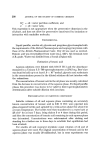
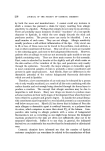
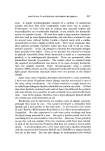
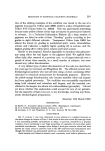
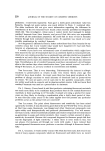
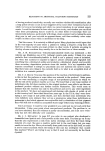
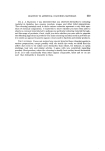
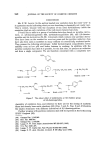
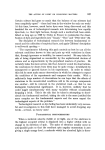
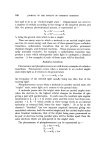
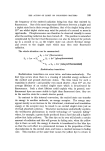
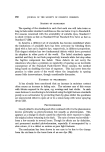
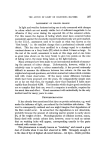
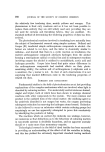
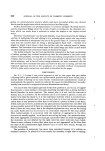
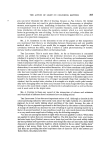
212 JOURNAL OF THE SOCIETY OF COSMETIC CHEMISTS All other determinations reported in this paper have been carried out at pH 4.2. Propylene glycol or glycerin is often included in pharmaceutical or cosmetic emulsions and the increased solubility of preservative in the aqueous phase leads to a reduction in the partition coefficient (Table I). It has been suggested (9) that this makes more preservative available in the aqueous phase with consequent increase in antimicrobial activity. Table IV shows that propylene glycol augments the fungistatic activity of benzoic acid, and that concentrations above about 15 per cent have considerable activity even in the absence of any other agent. On the other hand, glycerin reduces the activity. The equivalent con- centration of unionized benzoic acid shown in Table IV has been calculated using pK a' value (in 20 per cent glycerin) of 4.3 determined by the method of Albert and Serjeant (10). This FC 50 of unionized acid is about 1• times the FC 50 in the absence of glycerin. (The concentration of benzoate ion is only slightly greater in the 20 per cent glycerin.) It is suggested that in the same way that the increased solubility of benzoic acid in 20 per cent glycerin reduces the oil-water partition coefficients, it also reduces the availability of the preservative to the microbial biophase, and consequently a higher concentration is required. Brij $5 also reduces the availability of benzoic acid to the oil phase and to the biophase. Since Evans and Dunbar (7) and Mitchell and Brown (11) have shown that benzoic acid is distributed between the surfactant micelles and the true aqueous phase in a constant ratio which is independent of the overall benzoic acid concentration, it is possible to calculate from the solubilization data of Anderson and Slade {12) that 0.1 per cent Brij $5 will bind about 3.6 per cent of the unionized acid present in the aqueous phase. When 20 per cent glycerin is present in the aqueous phase the pro- portion of unionized acid bound by 0.1 per cent Brij is reduced to about 3 per cent {unpublished data). These values have been used, along with the partition coefficients listed in Table I, to calculate the concentrations of unbound, unionized acid shown in Table V. Although the total concen- tration of benzoic acid required to give equal fungistatic activity ranges from 0.062 to 0.23 per cent in the aqueous phase (0.032 to 0.115 per cent overall), the eqhivalent concentrations calculated to be unbound and unionized in the aqueous phase vary over the much smaller range from 0.027 to 0.03 per cent. Similarly the results in the presence of 20 per cent glycerin range from 0.037 to 0.042 per cent unionized, unbound benzoic acid and show reasonable agreement with the 0.04 per cent found for a simple buffered system.
Purchased for the exclusive use of nofirst nolast (unknown)
From: SCC Media Library & Resource Center (library.scconline.org)