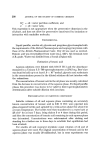
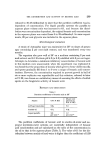
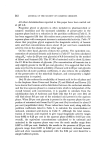
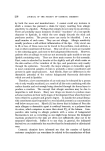
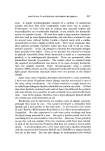
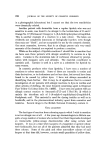
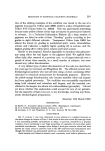
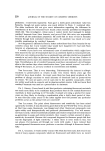
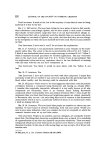
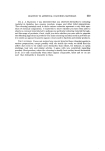
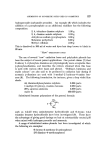
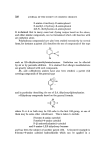
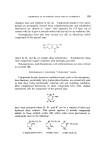
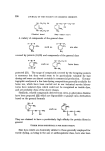
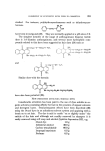
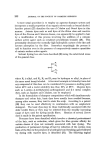
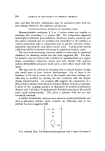
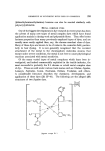
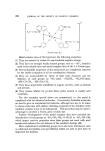
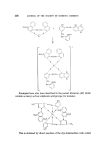
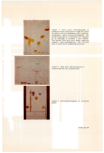
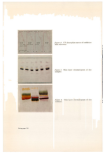
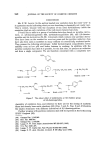
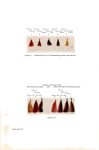
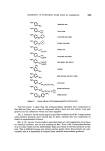
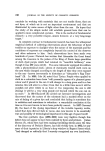
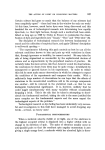
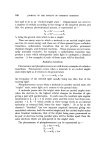
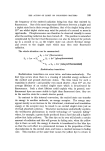
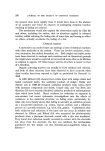
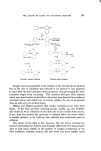
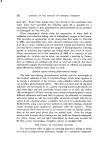
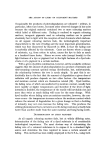
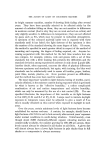
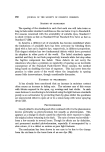
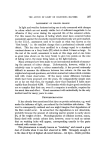
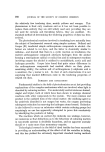
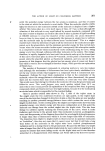
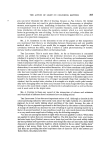
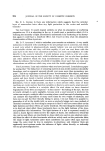
242 JOURNAL OF THE SOCIETY OF COSMETIC CHEMISTS DISCUSSION ]•/[R. F.-W. LANGE: In the section headed new oxidation dyes the word "new" is in quotation marks indicating what you are describing is chemically not really new. This is correct, because with the exception of the cited 5,6-dihydroxy indole the examples cited are only variations of the well-known benzoic hair-dyes. I would like to refer to a group of oxidation hair-dyes based on pyridine deriva- tives, i.e. 2,6-diaminopyridine (49), 2,6-dihydroxypyridine (50), and 2,5-diamino- pyridine and its derivatives (51-55). Colourants which contain only pyridine deriva- tives have been on the market for over two years and the pyridine oxidation dyes have also been used as modifiers in many millions of commercially marketed packs. They possess the following advantages: better dermatological compatibility better stability even at low pH and better fastness to washing. In addition, with the pyridine oxidation hair dyes it is possible, for the first time, to produce an oxidation red from a single compound. We are therefore concerned with a completely new HeN•NH2 H H H Reddish orange • Red =- '--I CH2'CH2' OH H Reddish violet -----*'- H3 --N CH2'CH2'CH2'N , •i'CH2 'cH2'OH I XCH-• H CH• CH3 i•/NH2 --NXXcH • H Bluish violet -----"- Brown Figure 7 The colour effect of substituents at the 2-amino group of 2,5-diaminopyridine. chemistry of oxidation dyes, and reference to their use for the dyeing of synthetic fibres has already been made elsewhere {54) (Figs. 7 and 8). Figs. 9 and 10 illustrate the shades obtainable with different derivatives of 2,5 diaminopyridine. Further progress with pyridine oxidation dyes will be reported at the forthcoming IFSCC Congress (55). (49) German Pat. 1,142,045. (50) Brit. Pat. 988 914. (51) German Pat. 1,149,496. (52) Lange, F. W. F•tt• S•if•r• Anstrichrnittd 67 222-227 (1965). (53) U.S. Pat. 3,231,471. (54) Lange, F. W. S•if•n Oel• F•tt• l, Vachs• 91 593-595 (1965). (55) Lange, F. W. Arch. Blochim. Cosrn•tol. 9 185 (May-June 1966).

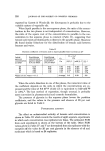
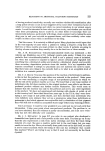
U • •. •/L.. H IJ _ • CH:• I.[. •.,[... CH:• tq. •_•.N.C•H,•0H 'N' 'NH 2 NN[C•i.q4OH 'N- 'N.'cH:• N I•I[C•i_GO H I•I •C•H,•OH I 2 3 4 5 i , Figure 0 Oxidation dyes of 2,$-diaminopyridine derivatives. Colours obtained with 2,$-hiaminopyridine and 2-hydroxyethyl-$-aminopyridine Figure 10 Facing page 243
Purchased for the exclusive use of nofirst nolast (unknown)
From: SCC Media Library & Resource Center (library.scconline.org)