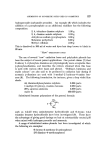
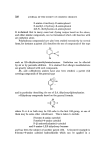
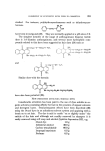
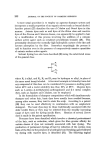
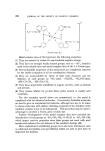
234 JOURNAL OF THE SOCIETY OF COSMETIC CHEMISTS ture, and that dye-fibre combination may be associated more with the ionic linkage offered by the sulphonic acid groups. UNCONVENTIONAL METHODS OF COLOURING HAIR Monosaccharides containing 2, 3 or 4 carbon atoms are capable of colouring hair according to a patent (33). The compounds suggested include glycol aidehyde, glyceraldehyde, dihydroxy acetone, erythrose, and the colours obtained may be modified and intensified by the' addition of various ammonium salts or compounds such as glycine, sarcosine, serine, acetamide, stearylamide, and amino benzoic acids. A preparation having a pH from 4.0-6.0 is obtained which may be applied by brush or comb. The use of colour-forming reactions similar to those used in analytical chemistry for detecting metals has also been suggested (34). The hair, for instance, may be treated with a solution of cuprammonium or a copper amine coordinated compound, rinsed and then treated with aqueous sodium diethyldithiocarbamate which gives a dull yellow shade with this metal. Hair may also be coloured by spraying with a coloured lacquer, though this would seem to have obvious disadvantages. One of these is the tendency of the dye to leach out of the lacquer and stain clothing, etc. This may be avoided by reacting the dye covalently with the lacquer during polymerization. An example (35) suggests the preparation of a 27% polymer solution from 76 parts vinylpyrrolidone, 19 parts acrylamide, 5 parts of the coupling product of diazotized N-acryloyl-p-phenylene diamine and 1-(2 chloro-5 sulphophenol)-3 methyl pyrazalone-(5) and 0.6 parts azodi-isobutyronitrile. This gives a polymer with the azo dye covalently attached. A similar intrinsically coloured resin based on polyacrylylchloride and nitro-p-phenylene diamim which contains the following units in the polymer has been suggested 36). __ -- -- CH•-- ?H --- CO I NH ••NO NHe It is claimed that 1,4-diaminoanthraquinone and 1-nitro-3-amino-4

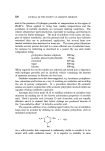
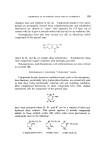
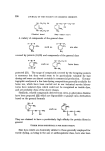
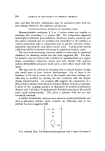
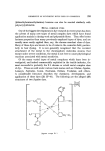
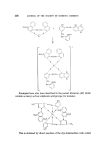
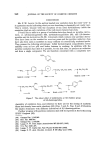
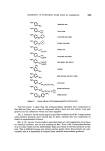
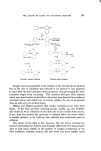
CHEMISTRY OF SYNTHETIC DYES USED IN COSMETICS 235 (•dimethylaminoethylamino) benzene can also be reacted similarly with polyacrylylchloride. METAL COMPLEX DYES One of the biggest developments in dye research in recent years has been the advent of many new types of metal complex dyes which have found application mainly in dyeing wool and polyamide fibres. They offer better fastness properties than many previously employed types of dyes, and are usually more easily applied than, say, the chrome mordant class of dyes. Many of these dyes are known to be of value in the cosmetics field, particu- larly in hair dyeing. It is now generally recognized that the covalent attachment of the metal to the chromophoric molecules ensures that except under severe conditions, the metal is not free to cause physiological reactions associated with metal sensitivity. Of the many varied types of metal complexes which haye been in- vestigated, and indeed commercially exploited in the textile industry, the most successful is probably the 2:1 chrome or cobalt metal complex class of dye. These are sold under various trade names such as C{balan, Irgalan, Lanasyn, Supralan, Isolan, Neutralan, Ortolan, Vondalan, and others. A considerable literature describes the chemistry, development, and application of these dyes (29, 37-41). The following are the alleged (29) structures of two Irgalan dyes. (lrgolon orange RL)
Purchased for the exclusive use of nofirst nolast (unknown)
From: SCC Media Library & Resource Center (library.scconline.org)