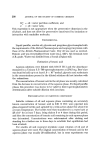
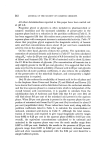
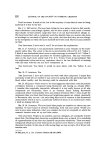
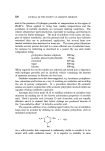
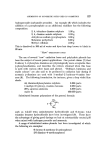
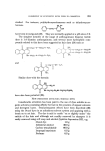
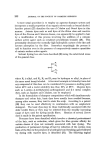
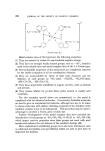
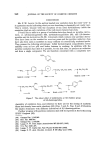
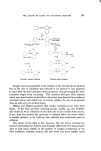
226 JOURNAL OF THE SOCIETY OF COSMETIC CHEMISTS and in the presence of hydrogen peroxide at temperatures in the region of 20-30øC. When applied to living hair, similar temperatures and the avoidance of metallic mordants are necessary limiting conditions. The colours obtained are particularly fast, especially to washing, and this leaves no room for faulty technique. The lack of stability of the bases, the dan- gers of subject sensitivity, and the general need for caution have hitherto restricted their use to professional application, but several firms now market oxidation base mixtures for home use. The recent patent literature includes several patents devoted to a more efficient use of oxidation bases, for instance by tabletting as described in a patent (2), one such tablet composition being p-toluylene diamine sulphate 500 mg m-amino phenol hydrochloride 75 mg resorcinol 475 mg sugar 400 mg talcum 300 mg. When required for use the tablets are selected and mixed into a dispersion with hydrogen peroxide and an alcoholic vehicle containing the amount of ammonia necessary to liberate the free base. Oxidative enzymes have also been suggested, e.g. tyrosinase, polypheno- lase, catacolase and lactase as a way of assisting air oxidation and avoiding the use of peroxy compounds. In a procedure described (3) aromatic amines are used in conjunction with aromatic polyhydric alcohols which are capable of being oxidized to quinones. Attempts have been made (4, 5) to stabilize solutions of oxidation base mixtures by making use of the known antioxidant properties of ascorbic acid. Both 1-ascorbic acid (vitamin C) and d-ascorbic acid are equally effective and it is claimed that better dyeings are produced because of the "pro-oxidative effect" of dehydro-ascorbic acid. The separate addition of an oxidizing agent before the use of oxidation bases may be avoided by utilizing an amino triazine perhydrate, such as melamine perhydrate •N HzN--C •'C--NHz II I +• Hzøz N•c•N I NH• As a solid powder this compound is sufficiently stable to enable it to be mixed with solid oxidation bases. It is superior in stability to urea

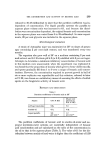
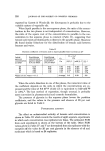
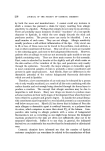
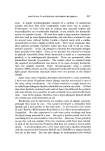
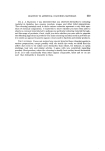
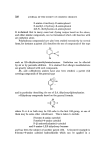
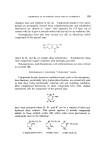
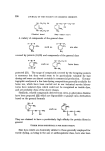
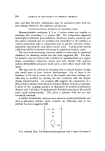
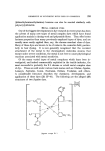
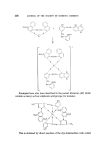
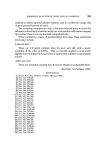
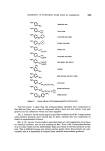
CHEMISTRY OF SYNTHETIC DYES USED IN COSMETICS 227 hydroperoxide (carbamide peroxide). An example (6) which includes the addition of a pyrophosphate as an additional stabilizer has the following composition: 2, 4, toluylene diamine sulphate 1.00 g 2, 4, diamino anisole sulphate 0.03 g Anhydrous sodium pyrophosphate 3.00 g Melamine perhydrate 8.00 g Methyl cellulose 2.00 g This is dissolved in 100 ml of water and dyes hair deep brown to black in 20 min. "NEW" OXIDATION DYES The use of several "new" oxidation bases and polyhydric phenols has been the subject of recent patent applications. One patent claims (7) that 2-alkoxy 1-4 phenylene diamines are physiologically more acceptable than p-phenylenediamine, and describes the colours obtained when this base is used with various other bases and phenol. "Brilliant, luminous and stable colours" are also said to be produced in oxidation hair dyeing if aromatic p-diamines are used with 1-methyl-2 hydroxy-4-amino ben- The following formulation, for instance, gives a deep violet blue zene (8). shade. 44, diaminodiphenylamine sulphate 0.594 parts 1 methyl-2 hydroxy, 4 amino benzene 0.250 parts 25% aqueous ammonia 3.500 parts water to 100.000 parts Substituted benzene polyamines of the general formula X '-'• NHz NHz such as 1,2,4,5 tetra aminobenzene hydrochloride and 6-bromo 1,2,4 triamino benzene hydrochloride have been investigated (9). These have the advantage of giving good dyeings on hair at substantially neutral pH when mixed with hydrogen peroxide and ammonia. A range of substituted amino phenols has been investigated of which the following are examples: 6-brome •. methoxy-2-aminophenol 2'6 diamine 4 methoxyphenol
Purchased for the exclusive use of nofirst nolast (unknown)
From: SCC Media Library & Resource Center (library.scconline.org)