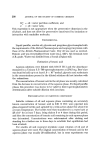
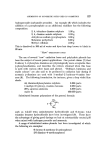
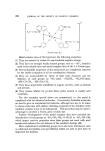
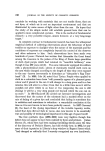
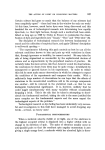
232 JOURNAL OF THE SOCIETY OF COSMETIC CHEMISTS A more usual procedure is to employ an aqueous shampoo system and incorporate a small proportion of an organic solvent such as benzyl alcohol. Another patent (27) describes the use of Cibalan and Orasol dyes in this manner. Anionic dyes such as acid dyes of the Kiton class and reactive dyes of the Procion and Cibacron classes, can apparently be applied to hair by a modification of this process involving the addition of a cationic surface active agent such as octadecyl pryridinium bromide (28). This presumably decreases the normally high hydrophilic nature of the dye and layours adsorption by the fibre. Somewhat surprisingly the process is said to function even in the presence of comparatively massive quantities of anionic surface active agents. Solvent dyeing has also been described (29) using the substituted ureas of the general class where R• is alkyl, and Rs, R• and R4 may be hydrogen or alkyl, in place of the more usual benzyl alcohol. A favoured example is tetraethyl urea but any compound of this class can be considered if it possesses a melting point below 40øC and a water solubility less than 10% at 25øC. Disperse dyes such as 1-amine 4 methylamino-anthraquinone and 2:1 metal complex dyes, such as Irgalans and Cibalans, can be employed. In the formulation of shampoo compositions which will simultaneously shampoo and colour hair, basic dyes have usually been avoided because, among other reasons, they tend to stain the scalp. According to a patent (30) they can be used effectively in combination with an amphoteric detergent. The basic dyes may be those traditionally associated with the older textile fibres or they may be selected from the steadily increasing range of dyes used for dyeing acrylic fibres. Mention of several Sevron dyes is made in the patent specification. Processes have been described which involve a chemical pretreatment of the hair, such as reduction, which gives the fibre greater affinity for certain classes of dyes not normally associated with hair dyeing. The production of permanent dyeings of hair by reduction of the cystine cross links of the fibre in the presence of a hydrogen bond breaking agent followed by dyeing with reactive dyes, is described (31). The following typical

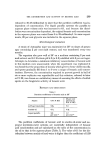
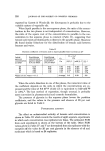
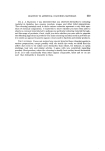
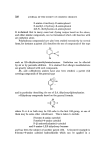
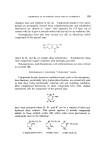
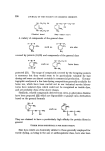
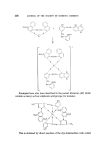
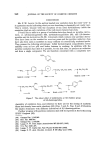
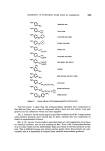
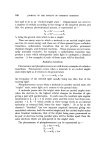
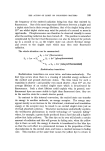
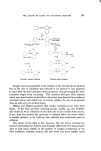
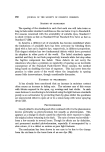
CHEMISTRY OF SYNTHETIC DYES USED IN COSMETICS 233 examples of the structures of the different classes or reactive dyes which may be employed are given (monochlorotriazme) Cibacron type Procion-H type •.CL /N--C% //---• HO NH C• /N 3 {dichlorotriozine) Procion type (trichloropyrimidine) Drimarine type Reactone type Remozol type (vinyl sulphone) This reactive group is thought to be formed in the bath from a dye with the structure R-NH-SO,-CH,-CH,-O-SO•H. Reduction may be effected by a solution containing 3.3% thioglycolic acid 3.0% urea 10.0% lithium bromide adjusted to pH 9.2 with ammonium hydroxide. It may be worth com- menting here that the Cibacrolan dyes carry similar reactive groups, and at the elevated temperatures associated with wool dyeing they give shades of a good fastness to washing without prior reduction of the cystine cross links. Perhaps the true function of the reduction and swelling treatment may be to render the fibre more accessible to the dyes at a lower tempera-
Purchased for the exclusive use of nofirst nolast (unknown)
From: SCC Media Library & Resource Center (library.scconline.org)