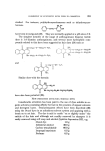
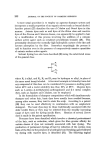
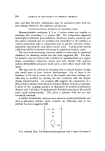
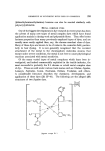
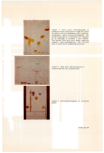
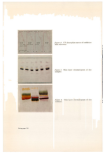
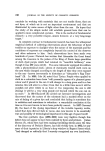
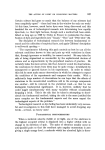
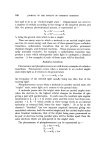
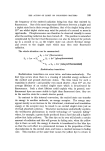
REACTIONS TO ARTIFICIAL COLOURING MATERIALS 219 One of the striking examples of the condition was traced to the use of a pigment Transparent Yellow Lake 16901 which is a lake of Naphthol Lake Yellow FYS (Colour Index No. 10316). This was particularly interesting because some yellow colours of this type are known to possess poor fastness to solvents. In a Technical Information Bulletin (2) a large number of pigments are listed in order of their "bleeding" quality according to five grades in eight different solvents. Transparent Yellow Lake 16091 has almost the lowest (1) grading in methylated spirit, water, nitrocellulose solvent and Cellosolve, a slightly higher grading (2) in acetone, and the highest grading (5) in white spirit, toluene and butyl acetate. Rather to my surprise I found it impossible to reproduce this phenome- non using either the nail laquer or the pigment itself. We applied them either daily after removal of a previous coat, or at longer intervals over a period of about three months, in a small number of subjects, but none showed any yellow discolouration. A very similar type of yellow discolouration of the nails was described a few years ago by Loveman and Fliegelman (3). The affected persons were dermatological patients who had all been using a lotion containing either resorcinol or resorcinol monoacetate for therapeutic purposes. However, the yellow-orange discolouration only became manifest when nail lacquer had been applied previously. The condition was successfully reproduced using both coloured and colourless nail lacquer, and the essential con- stituent in the lacquer was shown to be nitrocellulose (pyroxylin). I do not yet know whether this explanation could account for any of our patients, but the majority of them were not, to my knowledge, receiving any thera- peutic dermatological preparations. (Received: 25th March 1966) REFERENCES •1) Hjorth, N., Eczematous allergy to balsams (1961). (Munksgaard, Copenhagen.) (2) I.C.I. Technical Information Bulletin, Dyehouse No. 898. (3) Loveman, A. B. and Fliegelman, M. T., Arch. Dermatol. 72 153 {1955). DISCUSSION MR. F. ATKINS: I was very interested in your reference to coniferyl benzoate as the main allergen in balsam of Peru. I first heard of this ester about 130 years ago when I was examining possible antioxidants to delay, or prevent, rancidity in a popular cosmetic cream containing a very high proportion of vegetable oils and other easily rancifiable constituents. Amongst other things I tried gum benzoin which had been known for many years to preserve lard in the BP ointment base benzoinated lard, though the benzoin was presumably added as a medicament in the first place. Siam benzoin and Sumatra benzoin were commonly used both in pharmacy and

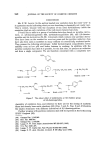
220 JOURNAL OF THE SOCIETY OF COSMETIC CHEMISTS perfumery. I tried both separately. Siam gave a fairly good antioxidant value but Sumatra, though not quite useless, was much inferior to Siam. I wondered why. The older textbooks did not give exact information regarding the difference in constitution of the two benzoins but I found a then recently published investigation which did. This investigator, whose name I cannot recall, had managed to isolate coniferyl benzoate from Siam benzoin, and proved that this ester was responsible for almost all the antioxidant properties. He could find no trace of this in Sumatra benzoin though both contained cinnamic esters. No question was raised as to any possible sensitization by coniferyl benzoate. As it happened I ultimately found a better antioxidant than Siam benzoin for my cosmetic cream but I now wonder what would have happened if I had used Siam benzoin or, alternatively, coniferyl benzoate? I wonder if you have ever encountered cases of sensitization which might have been traced to the use of benzoinated lard or an ointment based on benzoinated lard, which was very widely prescribed as an ointment base and also retailed as a household remedy in my early days in pharmacy before the 1914 war? At one time I believe it was the base used to make zinc ointment though it is not now the official zinc ointment base. Nevertheless a lot of coniferyl benzoate must have encountered a lot of human skin in the carefree days when sensitization from "pure natural sources" was still a thing of the future, or, at least, confined to strawberries and shellfish. THE LECTURER: That is very interesting. Unfortunately the interest in allergic reactions to preservatives in creams is only very recent thirty years ago this would not have been studied. In recent years there has been great emphasis on the problem of allergic reactions to small amounts of chemicals used as preservatives in creams. We now see quite a lot of cases due to the paraben compounds, which are widely used both in cosmetic and in pharmaceutical creams. I did not know that coniferyl benzoate was used as a preservative in ointment. DR. I. GIBSON: I have heard it said that products containing fluorescent materials are much more likely to be sensitizers than products that do not contain fluorescent materials is there anything in it? Secondly, if people are using a product for many years are they likely to develop a sensitization after a fairly short period of time, or may this take many years? If the latter applies does this present any particular problems as far as the animal tests are concerned? TI•E LEc'rURER: The point about fluorescence and sensitivity has been raised again fairly recently it was discussed a good deal in the pre-World War II era, because at that time eosin, fluorescein, rose Bengal and other fluorescent compounds were quite widely used therapeutically and produced photosensitivity. You will remem- ber that recently, when tetrachlorsalicylanilide and related compounds were introduced as germicides in soaps and similar products, they caused a certain amount of photo- sensitivity dermatitis. Because this compound happened to fluoresce people felt that was the fingerprint of light sensitivity. I think there is some truth in this, but not always. For instance, all through my work with eosins I have noticed that non-halogenated fluorescein never produces a reaction although it fluoresces beauti- fully. DR. L. GOb. BE}m: I would merely concur with what has been said first of all I can think of many organic compounds which are fluorescent and which have no record
Purchased for the exclusive use of nofirst nolast (unknown)
From: SCC Media Library & Resource Center (library.scconline.org)