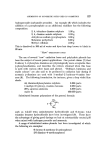
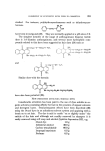
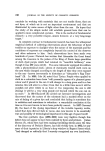
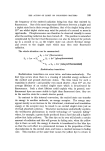
THE ACTION OF LIGHT ON COLOURING MATTERS 249 the frequency of the emitted radiation being less than that emitted by fluorescence. One of the most important differences between a singlet and a triplet state lies in their average lifetimes, that of the singlet being about 10 -8 sec whilst triplet states may exist for periods of a second or more in rigid media. Phosphorescence can therefore be observed visually to occur after the exciting radiation has been turned off. The position is somewhat complicated by the fact that fluorescence can also be delayed for periods up to a second or so, as the triplet state can absorb thermal energy and revert to the singlet state which may then emit fluorescent radiation. The whole situation can be summarized: /• So q- hv' (fluorescence) So + hv --* S• So + hv" (phosphorescence) '• S• --• So + hv' (delayed fluorescence) Radiationless transitions Radiationless transitions can occur intra- and inter-molecularly. The first type occurs when there is a crossing of potential energy surfaces of the excited and ground electronic states. The time taken for such a transition is shorter - and possibly very much shorter - than 10 -8 sec, the average lifetime of an excited singlet state which is de-activated by fluorescence. Such a short lifetime could explain why, in general, non- fluorescent dyes are more stable to light than fluorescent dyes they are in the reactive state for a much shorter period. In contrast to this internal conversion, the excited state can transfer its energy to another molecule, an energy acceptor. The energy may appear merely as an increase in the vibrational, rotational and translation energy or the acceptor may be raised to an excited singlet state just as if it had absorbed a photon. This latter mechanism undoubtedly explains the well-known phenomenon in textile technology of "catalytic fading" where, for example, a green shade produced from a fast blue and a fugitive yellow first fades yelloweL The blue dye on its own will absorb a certain amount of radiation and this will govern its fading rate when the yellow dye is there as well, the energy it absorbs is transferred to the blue dye so that the nett effect is a pronounced increase in the proportion of blue dye molecules in the excited state, and hence a marked increase in fading rate. This reaction at the same time causes the yellow dye to return to

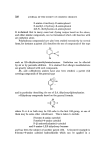
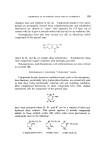
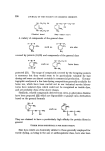
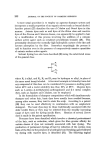
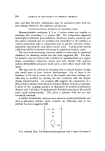
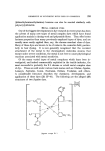
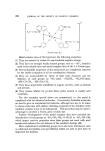
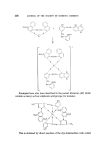
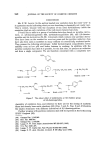
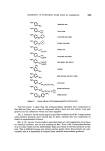
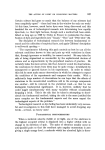
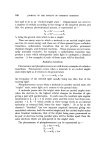
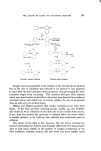
25O JOURNAL OF THE SOCIETY OF COSMETIC CHEMISTS the ground state more rapidly than it would have done in the absence of an acceptor and hence its chances of undergoing chemical reaction resulting in fading are reduced. This mechanism would also explain the observation made by Giles (9) and others, including the author, that uv absorbers applied to coloured textiles, whilst reducing the fading rate of some dyes and having no effect on others, actually accelerate the fading of a few. Chemical reactions A molecule in an excited state can undergo a host of chemical reactions with other molecules in the system. These can involve oxidation, reduc- tion, ionization, free radical formation, etc. Both singlet and triplet states have been observed to undergo such reactions and on theoretical grounds the triplet state would be expected to be involved more often as its lifetime in solution is approx. 104 times longer and its structure is nearer to that of a biradical. Organic colouring matters can usually be both oxidized and reduced, and both of these reactions have been observed to have occurred when dyed textiles have been exposed to light as postulated by Bancroft in 1813. In 1927 Hibbert (10) showed that cotton dyed with indigo which had faded contained isatin, the oxidation product of indigo Hailer and Ziersch (11) in 1929-30 obtained oxidation products from cotton dyed with monoazo compounds and faded Couper (12), and Van Beek and Heertjes (13) have recently identified oxidation products of anthraquinone dyes which have faded. Direct evidence for reduction on exposure is non-existent but recent systematic investigations into the effects of variations in dye molecular structure on fading rates, particularly by Giles (14), have clearly shown that fading is normally an oxidation process on a non-protein substrate, e.g. cotton, viscose, acetate, and a reduction process on a protein substrate, e.g. wool, silk, gelatin. Confirmation that both oxidation and reduction of the same dye can occur in solution was obtained by Hillson and Rideal (15) who measured the photocurrents produced when a platinum electrode coated with a dye was irradiated. They found that reduction usually occurred in contact with the electrode but away from the electrode, the dye was oxidized, the mechanisms postulated for the simple azo dye (benzene-azo-•-naphthol) being as follows :--
Purchased for the exclusive use of nofirst nolast (unknown)
From: SCC Media Library & Resource Center (library.scconline.org)