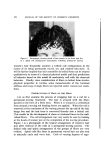
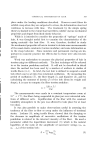
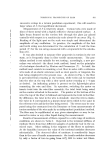
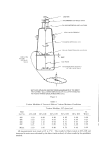
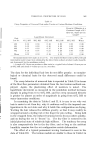
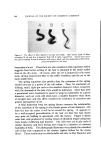
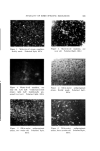
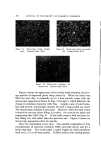
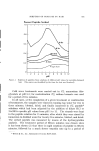
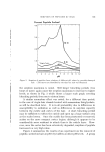
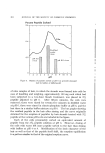
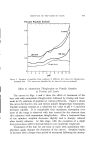
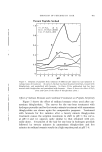
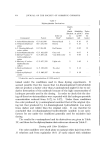
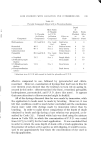
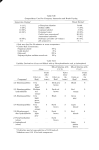
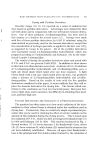
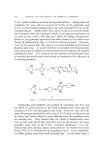
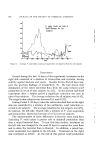
596 JOURNAL OF THE SOCIETY OF COSMETIC CHEMISTS Figure 13. Oil-in-water lotion, freshly made. Polarized light, 165) Figure 14. Oil-in-water lotion, one month old. Polarized light, 165 X Figure 15. Oil-in-water emulsion, six months old. Polarized light, 165 X Figure 4 shows the appearance of the freshly made emulsion, the aver- age particle of dispersed phase being about 6/•. When the batch was filled the next day, it gradually set to a firm smooth cream with the microscopic appearance shown in Figs. 5 through 7, which illustrate the change in emulsion character with time. Despite some crystal forma- tion and growth, microscopic changes for such a long period are small. The macroscopic stability is also good. However, when the bulk cream is stored for one day before filling, it is softer the crystals are larger and suspiciously like GMS (Fig. 8). If this bulk cream is held two days be- fore filling it is still softer than the previous one. Figure 9 shows its microscopic appearance after six months. Here, the mechanism is less clear. One possible explanation is that crystallization of material, probably GMS, proceeds slowly and for a fairly long time. The cream takes a rather fragile set which manifests itself over a 72 to 96-hour period. If filled early in this setting period,

STABiLITV OF SOME SPECIFIC EMULSIONS 597 stabilization occurs by gelation of the interface by GMS. If disturbed after this initial setting period, the interfacial film is less structured, al- lowing migration of dispersed GMS into the continuous phase at an ac- celerated rate with subsequent loss of the stabilizing effect of the gelled structure. A ntiperspirant Lotion The third example is an antiperspirant emulsion. This one is a rather viscous oil-in-water lotion. The viscosity builder and stabilizer con- sisted mainly of cetyl alcohol and a purified, high-melting glyceryl monostearate. The product was made in a Gifford-Wood Agi-Mixer.* Figure 10 shows the appearance of the freshly prepared bulk and Fig. 11 the S-day old packaged material. The viscosity at this point is about 3000 cps. It ig quite apparent that crystal growth is already consider- ably advanced. Figure 12 depicts a batch that is one year old. The large clumps or "rosettes," mainly disintegrated by now, appear to be GMS, and the rods may be cetyl alcohol. At this point the emulsion tends to separate slightly, and the viscosity has dropped to less than 500 cps. Attempts to improve this formula by process changes did not appear likely to succeed or to be economical. It did seem logical to attempt to retain the valuable viscosity-building characteristics of GMS and cetyl alcohol while impeding their tendency to crystallize. This was attempted through use of a lower-melting, less crystalline GMS, made from a "triple-pressed" stearie acid, and inclusion of other materials in the oil phase to act as plasticizers or improve solvency. Figures 13 through 15 illustrate the results. Figure 13 shows the fresh bulk product with an average particle size of about 10-13 u. After one month, some glyeeryl monostearate rosette formation has occurred, as shown in Fig. 14, but growth is slow, viscosity stationary, and prognosis for shelf life appears to be good. Figure 15, a photomierograph taken after six months, confirms the anticipated stability. The macroscopic stability, with respect to viscosity and visual characteristics, is also satisfactory. CONCLUDING COMMENTS In the foregoing examples, considerable additional information con- cerning stability tests, viscosity measurement, and analytical data were collected but were omitted from this report in the interest of clarity. * Gifford-Wood Co., Hudson, N.Y. 12534.
Purchased for the exclusive use of nofirst nolast (unknown)
From: SCC Media Library & Resource Center (library.scconline.org)