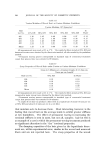
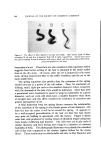
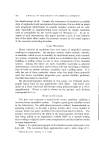
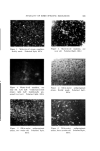
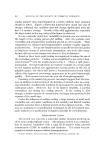
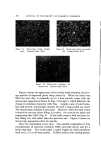
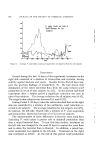
598 JOURNAL OF THE SOCIETY OF COSMETIC CHEMISTS However, these data were helpful in analyzing the problems and arriving at solutions. The points of importance are that solubility and crystallization char- acteristics of the viscosity builders and stabilizers were predominantly in- fluential in the long-range stability of the product. Where these char- acteristics offered problems, they were amenable to correction by process changes or modification by other agents in a logical manner. It should also be noted that photomicrography was particularly help- ful in clarifying the process of stability breakdown and predicting the eventual fate of the emulsion. ACKNOWLEDGMENT Thanks are due to Joseph Miglietta for the preparation of the photo- micrographs used in this work. (Received November 1, 1966) REFERENCE (1) Sherman, P., A method for predicting rheological changes in emulsion products when aged, J. Soc. Cosmetic Chemists, 16, 591-606 (1965).

J. Soc. Cosmetic Chemists, 18,599-608 (Sept. 16, 1967) The Effect of pH on the Sorption of Collagen-Derived Peptides by Hair S. A. KARJALA, Ph.D., A. KARLER, Ph.D., and J. E. WILLIAMSON, B.S.* Presented November 30, 1966, New York City Synopsis--Sorption of peptides increases very rapidly during the first few minutes to one-half hour of peroxide or thioglycolate treatment, after which sorption is essentially constant for a period, increasing rapidly again as the hair is damaged more extensively. The conclusion is drawn that the first action is on the cuticle which is readily removed by chemical treatment, and that increased sorption occurs after removal of the cuticle, only after extensive damage to the cortex. Oxidizing agents cause a maximum sorption of peptide at neutral pH values, while thioglycolate causes maximum sorption at high pH levels. Sorption appears to be an equilibrium phenomenon governed by the pH value of the peptide solution. INTRODUCTION A procedure for the objective evaluation of sorption of peptides to human hair was described in a previous publication (1). The method is based on the fact that collagens and peptides derived from collagen or gelatin contain hydroxyproline which is not present in keratin or in any of the other common proteins which at one time or another have been suggested in cosmetic formulations. The presence of hydroxyproline in hydrolyzed samples of hair after immersion in collagen-derived peptide solution and rinsing is definite proof of sorption of the peptide on the hair. This analytical method used is applicable only to collagen and to pep- tides derived from collagen. Different procedures, based on the use of radioactive peptides or some dye-binding procedure, would have to be * Wilson & Co., Inc., Research and Technical Div., Chicago, Ill. 60609. 599
Purchased for the exclusive use of nofirst nolast (unknown)
From: SCC Media Library & Resource Center (library.scconline.org)