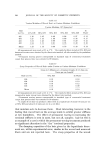
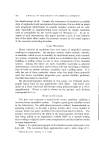
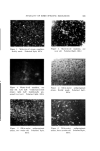
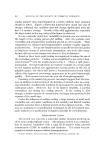
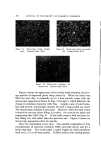
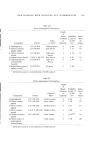
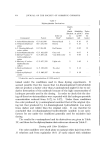
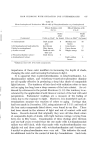
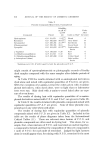
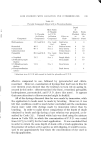
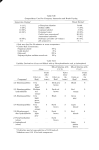
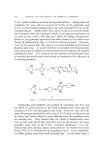
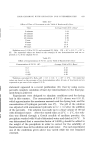
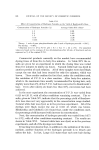
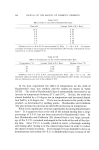
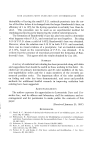
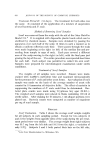
600 JOURNAL OF THE SOCIETY OF COSMETIC CHEMISTS used for peptides other than those from collagen. The method is sensi- tive, and analytical differences arise primarily from the high variability of the hair itself. In a further study of the parameters affecting sorption (2), it was shown that, in general, protein sorption is rapid for the first fifteen min- utes of treatment of virgin or bleached hair thereafter the sorption in- creases more slowly over a one-hour period. Peptide sorption is in- creased markedly by two one-hour bleach periods, while a third one-hour bleach has relatively little effect. Within the concentration range of 5- 20% of peptide there is relatively little difference in the amount of pep- tide sorbed. Weight increases of the hair strands demonstrated that there was considerable water sorption along with peptide sorption. Some preliminary investigations which have been made relative to the binding and elution of dyes at high and low pH levels led to the present study on the effect of pH on peptide sorption by human hair. A few rather limited studies have been made on the effect of pH on several aspects of hair treatment. Heiling6tter (3) studied the effect of thioglycolate solutions on the swelling of hair in the pH range 7.0 to 9.8, and Freytag (4) extended this type of study to bleached hair as well as virgin hair over the pH range 3 to 10. Swelling was found to increase with increase in pH and was greater for bleached hair than for virgin hair. Laden and Finkelstein (5), using dye solutions, showed that the rate and extent of sorption could be modified by changing the pH of the system from which sorption occurs: An acid pH induces a positive charge on keratin favoring the uptake of anionic materials, whereas a basic pH value favors the sorption of eationic materials. METHODS AND RESULTS The hair used in all of the tests was dark brown DeMeo Blue String* virgin human hair. It was shampooed in a nonionic detergent (Triton X-100 t) at 1% concentration, after which the hair was rinsed thoroughly in distilled water and dried. For the bleach treatments, 100 mg tresses of the shampooed hair were immersed for varying periods of time in 6,070 hydrogen peroxide, prepared by treating 50 parts of 6% H202 with 1 part of concentrated ammonium hydroxide. * DeMeo Company, 135 Fifth Ave., New York, N.Y. 10010. } A product of Rohm and Haas, Philadelphia, Pa.

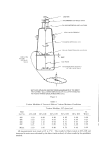
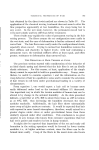
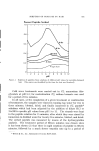
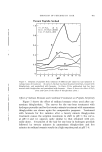
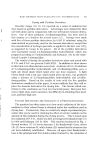
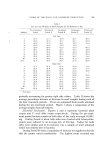
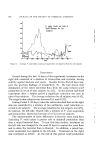
SORPTION OF PEPTIDES BY HAIR 601 Percent Peptide Sorbed 1,0 I I I I I I I I I I 0.8-- -- 0.6 0.4 0.2 m,n in hair 0 I I I I I I I I I I 2 3 4 s 6 7 8 9 lo ll 2 pH Figure 1. Sorption of peptides from solutions of different pH values by peroxide-damaged hair. (The curves are identified by the time the hair was bleached) Cold wave treatments were carried out in 5% ammonium thio- glycolate at pH 9.3 for neutralization 3/•/o sodium bromate was used for a period of five minutes. In all cases, at the completion of a given treatment or combination of treatments, the samples were rinsed in running tap water for two to three minutes, blotted, dried, and finally immersed in 5• peptide* solutions which had been adjusted by the addition of dilute HC1 or NaOH to specific pH values from pH 1 to 12. The strands were kept in the peptide solution for 15 minutes, after which they were rinsed by immersion in distilled water for twenty-five minutes, blotted, and dried. The sorbed peptide was measured by means of the hydroxyproline analysis. The treatment period of fifteen minutes was chosen since it has been shown (2) that there is rapid sorption of peptide in fifteen minutes, followed by a much slower sorption rate up to a period of * Wilson & Co., Inc., Substantive Proteins WSP-X250.
Purchased for the exclusive use of nofirst nolast (unknown)
From: SCC Media Library & Resource Center (library.scconline.org)