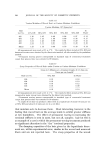
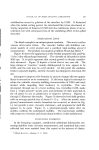
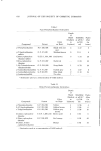
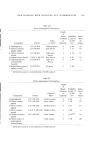
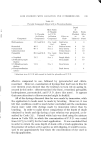
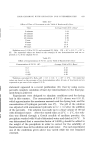
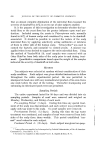
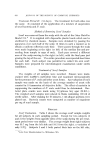
614 JOURNAL OF THE SOCIETY OF COSMETIC CHEMISTS Table V Diphenylamine Derivatives Compound Patent Color on Hair • Depth of Shade Solubility Fad es (Darkest at pH 9.7 After to (g/100 (in Lightest) ml) hours) 4-Aminodiphenylamine G.P. 92,006 2,4-Diaminodiphenyl B.P. 270,075 amine 4,4'-Diaminodiphenyl- G.P. 98,431 amine sulfate 2-Aminodiphenylamine G.P. 162,625 3-Methyl-4-amino-4'- G.P. 209,121 hydroxydiphenyl- amine 4-Methoxy-4'-amino- G.P. 257,763 diphenylamine sulfate 4-Hydroxydiphenyl- G.P. 162,625 amine 3-Hydroxydiphenyl- G.P. 286,337 amine Brown black 1 0.10 15 Brown 3 0.15 7 Red brown 2 0.65 10 Grey red 4 0.07 6 Very little color 6 0.09 2 Light ash 5 1.06 4 No color 8 0.15 No color 7 0.16 Derivative used a concentration of 0.005 moles/1. tained under the conditions used in these dyeins experiments. It seemed possible that the reason that 2,4-diaminophenol hydrochloride did not produce a darker color than p-aminophenol might be due to oxi- dative destruction of the molecule because of the high concentration of hydrosen peroxide used in the dyeing. In order to check this the dye- inss of these two intermediates were repeated with the hydrosen peroxide concentration reduced from 3.0% to 0.3%. Under these conditions the color produced by p-aminophenol matched that of the original dye- in s but that produced by 2,4-diaminophenol hydrochloride was many times darker and redder than the original color. It can therefore be concluded that 2,4-diaminophenol hydrochloride (amidol) is not satis- factory for use under the conditions generally used for oxidative hair dyeins. The results for o-aminophenol and its derivatives are given in Table IV, and those for the diphenylamine derivatives are shown in Table V. Dyeing with Color Modifiers The color modifiers were dyed alone on natural white hair from 0.025 M solutions and from equimolar (0.131 M each) mixed with solutions

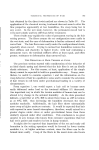
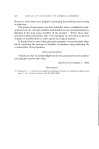
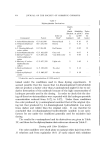
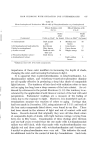
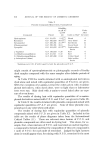
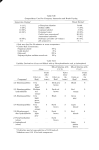
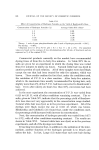
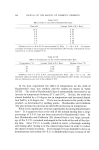
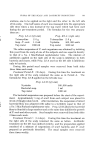
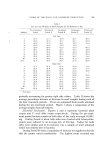
HAIR COLORING WiTH OXIDATION DYE INTERMEDIATES (315 Table V I Meta-Phenylenediamine Derivatives Alone and with p-Aminodiphenylamine Compound Patent Alone Solubility at pH 9.7 Color on Hair (g/100 (from 0.025 M ml) Solution) Mixed Solution with P.A.D.A. Fades After (in Color on Hair a hours) m-Phenylenediamine G.P. 255,858 42.8 Very light grey Blue black 12 Chloro-m-phenylene G.P. 255,858 diamine Nitro-m-phenylene G.P. 255,858 diamine m-Toluylenediamine G.P. 255,858 2,4-Diaminoanisol sulfate 4-Methoxy-O- methyl-m-phenyl- enediamine 1,3,5-Triamino- benzenetrihydro- chloride 2,4,0-Triamino toluene trihydro- chloride p-Aminodiphenyl- amine (alone) G.P. 228,245 G.P. 230,630 1.19 Very light red Grey black 22 grey brown 1.71 Bright yellow Golden brown 28 4.00 Very light Blue black 24 yellow brown 14.7 Light grey Black 18 brown 1.10 Medium grey Black 16 brown 8.63 No color Dark brown 12 13.4 No color Grey brown 20 Brown black 14 Solutions were 0.01 34r in both components. with p-phenylenediamine (P.P.D.) p-aminodiphenylamine (P.A.D.A.), or p-aminophenol (P.A.P.). The properties of eight m-phenylene diamine derivatives dyed alone and mixed with P.A.D.A. are given in Table VI. With the exception of nitro-m-phenylenediamine the colors given with m-phenylenediamine derivatives, when dyed alone, were so light that no fadeometer tests were run. Hair dyed with nitro-m- phenylenediamine faded after an exposure of two hours. The results of dyeing hair with equimolar quantities of m-phenylene- diamine derivatives mixed with P.P.D. or P.A.P. are given in Table VII. It is apparent that m-phenylenediamine, m-toluylenediamine, 2,4,-di- aminoanisol sulfate and 4-methoxy-6-methyl-m-phenylenediamine all were effective in giving a blue-black color when mixed with P.P.D. which was many times darker and showed a tenfold increase in light fastness compared with that of p-phenylenediamine alone. This illustrates the
Purchased for the exclusive use of nofirst nolast (unknown)
From: SCC Media Library & Resource Center (library.scconline.org)