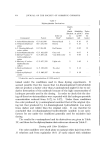
628 JOURNAL OF THE SOCIETY OF COSMETIC CHEMISTS (6) Austin, W. E., The chemistry of oxidation fur dyeing, J. Tech. Assoc. Fur Industry, 1, 140 (1930) 2, 63, 68, 69, 73 (1931) 3, 17 (1932). (7) Color (ndex, The Society of Dyers and Colourists, The American Association of Textile Chemists and Colorists, second edition, 3, 3759-3762 (1956). (8) Heiling6tter, R., Constitution, coloring power, and toxicity of hair dyes, Am. Per- fumer, 63,345-348 (1954). (9) 10) 11) 12) 13) 14) 15) (16) (17) (18) (19) (20) (21) (22) (23) (24) (25) (26) Wilmsmann, H., et al., U.S. Patent 3,128,232 (April 7, 1964). Lange, F. W., U.S. Patent 3,200,040 (Aug. 10, 1965). International Critical Tables, McGraw-Hill Book Company, New York, N.Y. (1928), 4, 137, 138, 139, 143, 144. Cook, M. K., Base for permanent hair dyes, Drug Cosmetic Ind., 82,316 (Sept. 1960). Lange, F. W., Pyridine derivatives a new class of oxidativc hair dyes, Am. Perfumer, 80, 33-37 (1965). Lange, F. W., U.S. Patent 3,231,471 (Jan. 25, 1966). Cook, M. K., Private communication (Oct. 14, 1966). Tschitschibabin, A. E., and Kirsanow, A. W., Diamino-pyridin, Ber., 60, 768 (1927). Bandrowski, E., Ueber die Oxidation des Paraphenylendiamins, Ber., 27, 480, 486 (1894). Erdmann, E., Oxidationsprodukte des p-Phenylendiamins, Ber., 37, 2906-2913 (1904). Ritter, J. J., and Schmitz, G. H., The constitution of Bandrowski's base, J. Am. Chem. Soc., 51, 1587-1589 (1929). Green, Arthur G., g)uinonoid addition as the mechanism of dyestuff formation, J. Chem. Soc., 103,933 (1913). Lauer, W. M., and Sunde, C. J.. The structure and mechanism of formation of the Bandrowski's base, J. Org. Chem., 3,261 (1938) 17,609 (1952). Austin, W. E., Fur dyes and their oxidation products, J. Soc. Dyers Colourists, 72• 574- 576 (1956). Heiduschka, A., and Goldstein, E., Ueber das Oxydationsprodukt des p-Phenylen- diamins dutch Wasserstoffsuperoxyd, Arch. Pharm., 254, 584-625 (1916). Cox, H. E., The chemical examination of furs in relation to dermatitis, Analyst, 59• 3-11 (1934). Goldemberg, R. L., Hair coloring and bleaching, Drug Cosmetic Ind., 89• 530 (1961). Cox, H. E., Hair dyes the functions and reactions of phenols, Analyst, 65• 395 (1940)

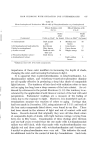
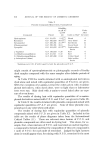
J. Soc. Cosmetic Chemists, 18,629-639 (Sept. 16, 1967) A Comparison of the Bacterial and Yeast Flora of the Human Scalp and Their Effect Upon Dandruff Production RAYMOND W. VANDERWYK, Ph.D. and KARIM E. HECHEMY, M.S.* Presented November $0, 1966, New York City Synopsis--A half-head experiment was carried out on ten subjects. Through the applica- tion of yeast-inhibiting or bacteria-inhibiting antibiotics to either side of the human scalp, the effect upon dandruff was determined. Samples of dandruff scales (scurf) were removed separately from each side with an Oster HairVac and the weights determined. During a 91-day experiment it was shown that a reduction of the yeast flora was more effective in con- trolling dandruff than was a reduction in the number of bacteria. INTRODUCTION Previous studies (1-8) have indicated that the microbial flora of the scalp is a mixed one, comprising at least 25 species of bacteria, 15 species of yeasts, and 31 species of molds. While our knowledge of the identity of scalp microorganisms has increased, a causal relationship of individual representatives or groups of microorganisms to the problem of dandruff has not been established. VanderWyk (9), using a quantitative gravimetric method for removing and measuring the amount of human dandruff production, showed * Massachusetts College of Pharmacy, Boston, Mass. 02115. Research from the Department of Microbiology, Division of Biological Sciences, Massa- chusetts College of Pharmacy, supported by a grant from John H. Breck. Inc., a division of American Cyanamid Co. 629
Purchased for the exclusive use of nofirst nolast (unknown)
From: SCC Media Library & Resource Center (library.scconline.org)