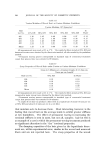
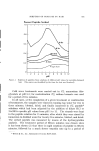
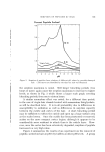
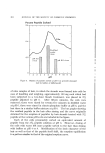
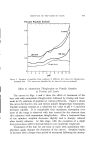
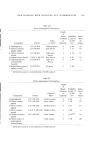
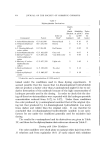
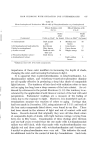
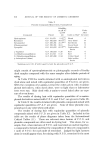
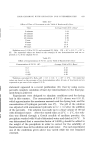
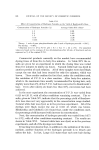
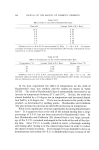
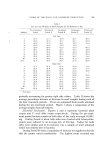
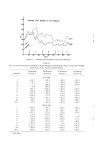
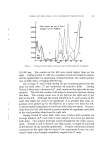
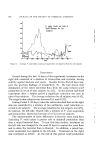
638 JOURNAL OF THE SOCIETY OF COSMETIC CHEMISTS counts were 60 per field on the right and 65 per field on the left side. A nystatin resistant organism was indicated. Confirmation of this was made when a culture of P. ovale was isolated from the scalp and subjected to sensitivity studies. Only one subject (10) showed any sig- nificant decrease in scurf production on the left side during Period A. The reduction was 26%. This same subject showed a reduction of 49.9,% on the right side which was treated with nystatin. SUMMARY AND CONCLUSIONS 1. A half-.head experiment was carried out on ten subjects in which the application of a mixture of tetracycline and nystatin to the right side of the human scalp resulted in a reduction of 56.4% in dandruff production after 66 days of treatment. 2. The left side of the scalp was treated with tetracycline for 26 days and then with nystatin [or 26 days. The effect of these separate treatments upon dandruff production was compared with the effect of the combined treatment on the right side. Tetracycline was used to control the bacterial flora, nystatin to control yeasts (including P. ovale) and a mixture to control the entire flora. 3. Treatment with a tetracycline-nystatin combination on the right side during the first 26 days resulted in a 30% reduction in dan- druff in six subjects. During the same period a 9.1% increase in dan- druff was seen on the left side when the bacterial flora was suppressed with tetracycline but the yeast flora was encouraged to flourish. 4. During an additional 26 day period, a tetracycline-nystatin combination treatment on the right side resulted in a 52.6% reduction in scurf production in eight subjects. During this same period when the left side was treated with nystatin instead of tetracycline scurf production was reduced by 16.8% from pre-treatment levels in seven subjects. 5. These results indicate that the presence of a yeast flora in the scalp, principally P. ovale, has a greater influence upon dandruff pro- duction than does a bacterial flora in the majority of individuals studied. Eight subjects showed scurf productions which were lower when the scalp was treated with nystatin than when treated with tetracycline. The final results also showed that for best control of dandruff the entire microbial flora should be suppressed. 6. There were variable results among individuals. Two subjects with low pre-treatment scurf values and no obvious dandruff problems

FLORA OF THE SCALP AND DANDRUFF PRODUCTION 639 did not respond with a significant reduction in scurf production. Another subject harbored a nystatin resistant P. ovale in his scalp. As a result scurf production on the left side increased by 89% after 79 days. 7. It was not possible under the conditions of the treatment to produce microbial-free scalps in any subject. 8. The results clearly demonstrated the beneficial effect of antimi- crobial agents in the control of dandruff. The use of agents having broad spectrum activity, particularly against yeasts is important. This work suggests further studies in the use of long-acting, substantive, penetrating creams and dressings. Such an approach, combined with periodic use of medicated shampoos, seems to offer the best solution to the dandruff problem. (Received November 30, 1966) REFERENCES (1) Roia, F. C., VanderWyk, R. W., and Beal, J. A., The human scalp as a habitat for yeasts, J. Soc. Cosmetic Chemists, 14, 81 (1963). (2) Beal, J. A., Isolation and identification of aerobic bacteria from the human scalp, Master of Science Thesis. Massachusetts College of Pharmacy, Boston (1962). (3) Epstein, J. M., Isolation and identification of fecal organisms from the human scalp. Ibid., (1963). (4) DiMenna, M. E., Non-pathogenic yeasts of the human skin and alimentary tract, J. Pathol. Bacteriol., 68, 98 (1954). (5) MacKee, G. M., and Lewis, G. M., Dandruff and seborrhea, I. Flora of "normal" and diseased scalps, J. Invest. Dermatol., 1, 131 (1938). (6) MacKee, G. M., Lewis, G. M., Pinkerton, E. M., and Hopper, M. E., Dandruff and seborrhea, II. Flora of the face and further studies on the flora of the scalp, Ibid., 2, 31 (1939). (7) Pachtman, E. A., Vicher, E. F., and Brunner, M. J., Ibid, 22,389 (1954). (8) Shaw, C. T., The human scalp as a habitat for yeasts, Master of Science Thesis. Massa- chusetts College of Pharmacy, Boston (1965). (9) VanderWyk, R. W., and Roia, F. C., The relationship between dandruff and the micro- bial flora of the human scalp, J. Soc. Cosmetic Chemists, 15,761 (1954).
Purchased for the exclusive use of nofirst nolast (unknown)
From: SCC Media Library & Resource Center (library.scconline.org)