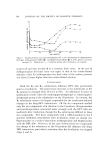
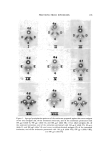
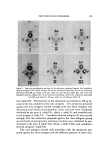
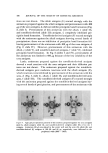
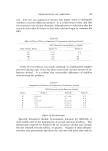
166 JOURNAL OF THE SOCIETY OF COSMETIC CHEMISTS of trifiuoperazine and fiuphenazine the initial value of PI was negative. The significance of this, if any, cannot be determined from the data presently available. Photosensitization reactions have been shown to increase permeabil- ity of a variety of cells, including red blood cells, lysozomes, and mast cells (4). In addition, the observed clinical symptoms are indicative of increased cell membrane permeability. Therefore, it appears reasonable to postulate that the initial increase in film pressure observed in the presence of a DPL fihn on irradiation of chlorpromazine and prochlor- perazine is a measure of a photoproduced cell membrane expansion and subsequent increased permeability. Such increases in film pressure should then be related to phototoxic activity, at least within a series of congeners. Thus, chlorpromazine and prochlorperazine, which showed an increased tendency to penetrate the DPL film on irradiation, would be expected to be phototoxic, while the other compounds would not be to any significant degree. Qualitatively, the literature supports this contention. The bulk of the reports dealing with photosensitization by phenothiazine drugs almost always implicate either chlorpromazine or prochlorperazine, and only rarely other derivatives. Ison and Blank recently ranked chlorpromazine and prochloroperazine based on phototoxicity toward mice (8). These workers determined the PDR50 (i.e., the minimum dose which produces a phototoxic reaction in 50% of a •oup of test animals) of these com- pounds to be 20 mg/kg and 46 mg/kg, respectively. No other pheno- thiazine derivatives were investigated in their study. These data cor- relate with our PI values as shown in Table I. In contrast, based on the available clinical reports, trifiupromazine, trifiuoperazine, and fluphenazine are essentially nonphotosensitizing (9, 10) and promazine has been reported as a photosensitizer in only one .early study (11). It appears that photoproduced changes in both surface activity o.t5 a drug and its ability to penetrate a lipid monomo]ecular film are measures of the photosensitization characteristics of the drug, at least in the case of the phenothiazines. Furthermore, measurements of these in vitro characteristics may be use15ul in predicting the photosensitizing properties of certain drugs. (Received June 19, 1969)

PHOTOSENSITIZED REACTIONS 167 REFERENCES (1) Blum, H. F., Photodynamic Action and Diseases Caused by Light, Reinhold Publish- ing Corp., New York, N.Y., 1941. (2) Storck, H., Photoallergy and photosensitivity, Arch. Dermatol., ½1, 469 (1965). (3) Harber, L. C., Harris, H., and Baer, R. L., Photoallergic contact dermatitis, Ibid., 94, 255 (1966). ,• A,,:•^ A.G., •* ....... J. * and Young, x, • • •e !ysosomes •a • coll mom- branes in photosensitization, Nalure, I09, 874 (1966), (•) Gaines, G. L., Jr., Insoluble Monola•ers at Liquid-Gas Inter[aces, Interscience Pub- lishcrs, New York, N.Y., 1966. (6) Zografi, G., and Auslander, D. E., Surface activity of chlorpromazine and chlorpromazine surfoxide in the presence of insoluble monomolecular films, ]. Pharm. Sci., 54, 1•1• (1965). (7) Willis, I., and Kligman, A.M., The mechanism of photoallergic contact dermatitis, ]. Invest. Dermatol., 51, •78 (1968). (8) Ison, A., and Blank, H., Testing drug phototoxicity in •nice, Ibid., 49• •08 (1967) . (9) Kirshbamn, B. A., and Beerman, H., Photosensitization due to drugs, •m. ]. Med. Sci., 248, 44• (1964). (10) Cahn, M. M., Levy, E. J., and Hamilton, W. L., Photosensitivity studies with vesprin, Monographs on Therapy, 2, 208 (1957), Squibb Inst. for Med. Res., New Brunswick, N.J. (11) Sams, W. M., Photosensitizing therapeutic agents, J. •m. Med. •ssoc., 174, 2043 (1960).
Purchased for the exclusive use of nofirst nolast (unknown)
From: SCC Media Library & Resource Center (library.scconline.org)