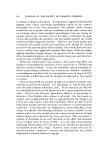
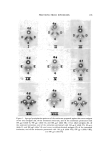
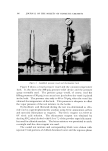
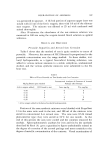
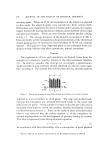
174 JOURNAL OF THE SOCIETY OF COSMETIC CHEMISTS Figure 2. Agar gel prccipitation patterns of the antiserum prcparcd against the alkali anti- gens versus the alkali antigens (E), of the untrcatcd antiserum, and of the antiscrum pre- treated with 400/•g d (slide I), 88/•g c (slide II), and 180/•g f (slide III) and versus the tono- fibrin-derived antigens (F), of the tintreated antiscrum, and of the antisorton pretreated with 400/•g d (slide IX'), 88/•g e (slide V), and 180/•g f (slide VI) sera in all cases were first pretreated with 10 td of normal human serum to telhOVe traces of antibodies developed against the serum proteins. In Fig. 4, the antisera 4, 5, and 6 were placed in the center wells and the antigens in duplicate in six wells surrounding the antisera. The urea antigens (D) reacted strongly with the antiserum prepared against the urea proteins. Several bands of precipitation developed and the formation of these bands was inhibited (Fig. 1, slide I) by pretreat- ment of the antiserum with the urea antigens, d. Pretreatment of this antiserum with 440 t•g of the alkali antigens, e, did not completely inhibit precipitin band formation (slide II), while pretreatment of the antiserum with the tonofibrin-derived antigens, f, completely inhibited band forma-

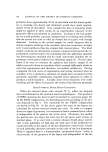
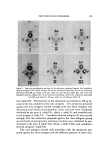
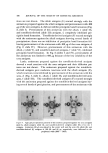
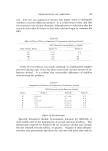
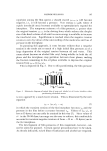
PROTEINS FROM EPIDERMIS 175 Figure 3. Agar gel precipitation patterns of the antiscrum prepared against the tonofibrin- derived antigens versus alkali antigens (E), of the untreated antiserum, and of the antiserum pretreated with 200 tzg d (slide I), 88 tzg e (slide II), and 180 tzg f (slide III) and versus the tonofibrin-derived antigens (F), of the untreated antiserum, and of the antiserum pretreated with 200 tzg d (sNide IV), 132 tzg e (slide V), and 180 tzg f (slide VI) tion (slide III). Pretreatment of the antiserum was limited to 440 t•g be- cause of the low solubility of the urea antigens. The antiserum prepared against the urea antigens reacted strongly with the alkali antigens (E) showing several bands of precipitation these reactions were completely inhibited by the urea, d (slide IV), alkali, e (slide V), and tonofibrin-de- rived antigens, f (slide VI). Tonofibrin-derived antigens (F) also reacted strongly with the antiserum prepared against the urea antigens giving several bands of precipitation and these reactions were inhibited by pre- treatment with urea, d (slide VII), alkali, e (slide VIII), and tonofibrin- derived antigens, f (slide IX). The urea antigens reacted only somewhat with the antiserum pre- pared against the alkali antigens and the diffusion patterns of these reac-
Purchased for the exclusive use of nofirst nolast (unknown)
From: SCC Media Library & Resource Center (library.scconline.org)