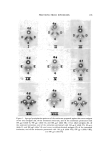
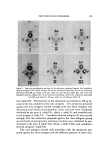
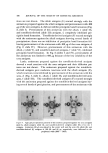
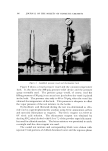
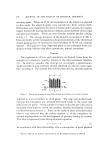
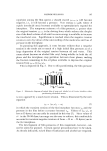
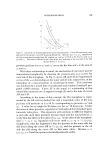
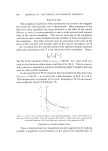
176 JOURNAL OF THE SOCIETY OF COSMETIC CHEMISTS tions are not shown. The alkali antigens (E) reacted strongly with the antiserum prepared against the alkali antigens and pretreatment with 400 tJ.g of the urea antigens, d, did not inhibit precipitin band formation (Fig. 2, slide I). Pretreatment of this antiserum with the alkali, e (slide II), and tonofibrin-derived (slide III) antigens, f, completely inhibited pre- cipitin band formation. Tonofibrin-derived antigens (F) reacted strongly with the antiserum against the alkali antigens showing several bands of precipitation there was no inhibition of precipitin band formation fol- lowing pretreatment of the antiserum with 400/•g of the urea antigens, d (Fig. 2, slide IV). However, pretreatment of this antiserum with the alkali, e (slide V), and tonofibrin-derived antigens, f (slide VI), inhibited precipitin band formation. In Fig. 2 (slides I and IV), pretreatment of the antiserum was limited to 400 vg because of the low solubility of the urea antigens. Lastly, antiserum prepared against the tonofibrin-derived antigens showed a weak reaction with the urea antigens and their diffusion pat- terns are not shown. The antiserum prepared against the tonofibrin- derived antigens gave moderate reactions with the alkali antigens (E), which reactions were inhibited by pretreatment of the antiserum with the urea, d (Fig. 3, slide I), alkali, e (slide II), and tonofibrin-derived anti- gens, f (slide III). The tonofibrin-derived antigens (F) reacted strongly with the antiserum prepared against the tonofibrin-derived antigens hav- ing several bands of precipitation, and pretreatment of the antiserum with Figure 4. Agar gel precipitation patterns of the antisera prepared against the urea antigens (slide I), alkali antigens (slide II), and tonotibrin-dcrived antigens (slide III) versus the 3 antigens. Antiseruln (20 •1) was placed in the center well and the urea (D), alkali (E), and tonofibrin-derived (F) antigens at 100, 88, and 86 •g. respectively, were delivered to the peripheral wells (DEF - DEF)

PROTEINS FRO•[ EI'IDERMIS 177 the urea, d (Fig. 3, slide IV), alkali, e (slide V), and tonofibrin-derived antigens, f (slide Vl), inhibited precipitin band formation. The antigenic relationships between the various epidermal proteins are indicated in Fig. 4. Antiserum prepared against the urea proteins gave a fairly uniform reaction with the three antigens and a faint inner precipitin band of identity appeared to be present (sNide i). The urea antigens showed two precipitin bands with the antiserum prepared against these antigens, one of which had a reaction of identity with the tonofibrin-derived, but not with the alkali antigens the other precipitin band nearest the antiserum well reacted strongly with the urea antigens. In addition to these precipitin bands, the alkali and tonofibrin-derived antigens also had a dense precipitin band of identity. The reaction of the antiserum prepared against the alkali antigens was nmch stronger with the alkali and tonofibrin-derived antigens than with the urea antigens (Fig. 4, slide II). The outer precipitin band appeared to have a reaction of identity even though the precipitin band with the urea antigens was very faint. An inner intense band of precipitation with the alkali and tonofibrin-derived antigens became quite weak initially with the urea antigens, but had a reaction of identity with a quite dense precipitin band with the urea antigens. It was not possible to determine whether the innermost continuous faint precipitin band had a reaction of identity although this appeared to be the case. In addition, the alkali antigens showed a very faint precipitin band nearest the well containing the antiserum prepared against the alkali antigens. Antiserum prepared against the tonofibrin-derived antigens reacted more strongly with the alkali and tonofibrin-derived antigens than with the urea antigens (Fig. 4, slide III). There were apparently two reac- tions of identity between the alkali and tonofibrin-derived antigens and two bands of precipitation with the urea antigens. DISCUSSION As indicated previously, specific absorption of the various antisera with the proteins extracted by the different procedures was carried out to determine possible relationships between the epidermal antigens. The results of these experiments are summarized in Table I, in which the anti- sera prepared against urea, alkali, and tonofibrin-derived proteins were each treated with the same three proteins. The treated antisera were then reacted in agar against the urea, alkali, and tonofibrin-derived anti- gens. For example, antiserum prepared against the urea proteins reacted
Purchased for the exclusive use of nofirst nolast (unknown)
From: SCC Media Library & Resource Center (library.scconline.org)