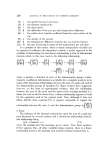
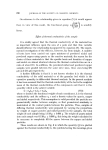
JOURNAL OF THE SOCIETY OF COSMETIC CHEMISTS thickeners, and, of the second type, the swelling clays of the smectite class. The present paper deals with systems having structure. The liquids studied are solutions of polar organic compounds in water which are con- sidered of special interest to cosmetic chemists and pharmacists. The disperse phase is a material called Laponite clay which is, from the structural point of view, a member of the smectite class of clay minerals, though it is entirely synthetic, manufactured from simple chemicals. The rheological properties of these systems are studied with variations in the concen- trations of clay, organic compound and added electrolyte. As Laponite clay is a relatively unknown new material, a short dis- cussion of its origin and properties is included. LAPON1TE CLAY The only commercially available natural clays which are useful for structure formation in liquids are sodium montmorillonite and hectorire. The known world resources of hectorire are much smaller than those of bentonire. In addition, the impurity concentrations in the hectorire deposits are much higher. Consequently, purified hectorire is at least thirty times more expensive than bentonire, but remains competitive because of its superior properties. The practical synthesis of a material similar to hectorire was therefore of commercial interest, and Laporte Industries have successfully carried out a research project resulting in a product of similar structure and composition to the ideal hectorire. The useful properties of this material, marketed under the trade-name 'Lapon- ire', are even better than those of purified natural hectorire, because the synthesis can be controlled to optimise both composition and crystal growth. Furthermore, the synthetic product is free from the usual im- purities normally present in any natural mineral. Table I lists the most important chemical and physical data available on Laponite clay, CP grade. Other derived grades with specially modified properties exist, but these are not discussed in the present paper. The material is available as a free-flowing, white powder. Like bentonire and hectorire, Laponite CP swells markedly in aqueous systems. This can be observed visually, and the separation of the primary crystal layers can be measured by X-ray analysis. The individual units have an inherent negative charge, as is shown in the structural formula. The positive ions balancing this are situated between the layers in the dry clay, and are dissociated when the clay is dispersed in water.

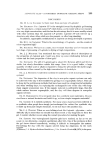
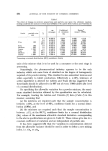
L.-IPONITE CLAY--A SYNTHETIC INORGANIC GELLING AGENT 239 Table I Chemical and physical data on Laponite CP (typical values) Composition % (on dry weight basis) SiO2 MgO Li 2 ø Na20 Fe203 CaO SO3 CO2 H20 (structural) Formula Cation exchange capacity, me/g Morphology 60.40 26.00 1,10 3.00 0.02 0.20 0.I0 0,29 6.90 [Sis Mgs. l Lio. 6 H4.6 024] 0.6- . Nao.6 0.79 plat•] -l•l•:•haped -- Size of average primary particle 40 x I 0 x I nm Moisture (at IOSøC) 8% -- pH of 2 • dispersion 8.8 True density, g cm-3 2.53 Apparent bulk density at 8 • moisture gcm- 3 1.0 Surface area by nitrogen adsorption, m2 g-• 354 Refractive index t 1.54 Dispersion can be achieved by simple mixing. When it is complete, all primary crystallites having only 1 nm thickness, combined with much greater length and •vidth, are thought to be separated. The large number of anisometric particles thus produced are able to form rigid open structures at low clay concentration. The interparticle bonds are not strong, and are readily broken down temporarily by external forces, hence thixotropic gels are obtained. Unlike many thickened systems, the structures formed from Laponite CP are insensitive to temperature variations. Like all colloidal dispersions containing charged particles, the clay dispersions are sensitive to changes in the liquid phase. The presence of electrolytes or polar organic compounds affects the state of dispersion and rheological properties. EXPERIMENTAL Materials used Laponite CP, as described above, was the gelling agent used in all ex- periments.
Purchased for the exclusive use of nofirst nolast (unknown)
From: SCC Media Library & Resource Center (library.scconline.org)