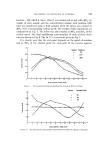
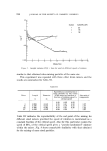
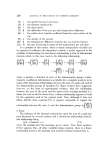
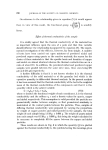
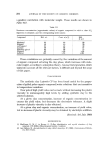
246 JOURNAL OF THE SOCIETY OF COSMETIC CHEMISTS isoPropanol/water The results are shown in Figs. 6 and 7. The properties are again similar, with yet a further increase o[ both ESS and OD values. ioo 50 [ I o i 2 3 4 5 o Clay concentrot,on, _',,, 0.5 1.0 Sodram concentrotion, me 2% clay 3O • 4O 50 • Figure 6 Effect of clay and electrolyte concentration on isopropanol/water (25/75) systems .50 - I 0 I 2 3 4 5 C lay' concentrahon, % I I 0.5 1,0 2% cloy Sodium concentrotion, me g-• -- io - 20 -30 • -- 50 0 -- 80 -- 70 Figure 7 Effect of clay and electrolyte concentration on isopropanol/xvater (40/60) systems

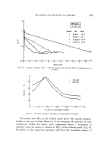
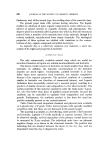
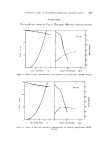
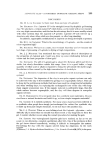
L•IPONITE CLAY--A SYNTHETIC INORGANIC GELLING AGENT 247 Acetone/water The results art shown in Fig. 8. The main difference between acetone Figure 8 150e•-•.. e • 50-- • I 0 i z 3 4 5 Clay concentration, % •"O•o ?% clay -- _ -- I I o 0-5 1.o Sodium concentration, me - 20 -- 50 0 -- 60 -- 70 Effect of clay and electrolyte concentration on acetone/water (40/60) systems I õOe-•=•••• • ß ß ioo 50- I I 2 3 4 5 Clay concenlratian, % '% clay o 0.5 i-o Sodium concentration, me -io -- 20 -- :•0 .-- -- 40 (3. -- 50 0 -- 60 -- 70 trigtt, re ,9 Effect of clay and electrolyte concentration on ethylene glycol/water (50/50) systems
Purchased for the exclusive use of nofirst nolast (unknown)
From: SCC Media Library & Resource Center (library.scconline.org)