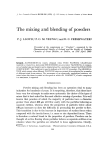
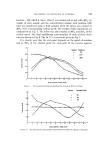
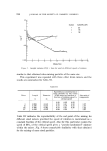
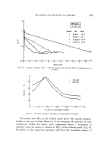
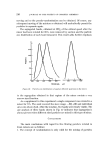
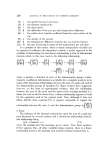
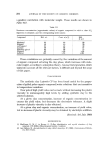
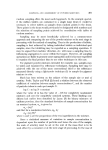
248 JOURNAL OF THE SOCIETY OF COSMETIC CHEMISTS and the alcohols is that the electrolyte tolerance of the former is higher at 40% concentration. In fact, acetone at 40% behaves similarly to the alcohols at 250/0 . Ethylene glycol/water Fig. 9 shows that very similar properties are obtained with 50% ethylene glycol to those given by acetone at 400/0 . Glycerol/water The results for the glycerol/water system shown on Fig. 10 differ from all previous ones in that the ESS values are much higher for all corres- ponding compositions. This cannot be accounted for by the higher vis- cosity of the medium. Most of the optical densities could not be measured owing to bubble inclusion, as mentioned before. According to visual estimation, all the dispersions having varying clay concentration were clear (i.e. the genuine OD would be less than 10) those having added electrolyte were cloudy from 0.4 me g-1 upwards. The electrolyte tolerance is higher than that of all previous systems investigated, though the concentration of the organic compound is the highest. This is presumably because the tests were done at lower than the maximum possible concentration, as was observed when 25% alcohol was used instead of the maximum possible (about 40%). 150•,• , 50 - 0 I 2 3 4 5 0 0.5 1.0 Cloy concentration, % Sodium concentration, me g-• 30 5O 0 60 Figure 10 Effect of clay and electrolyte concentration on glycerol/water (60/40) systems

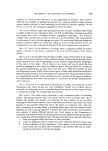
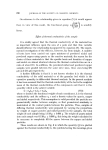
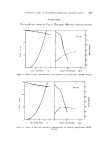
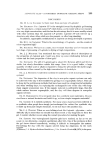
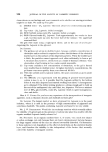
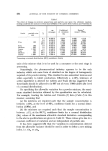
L.qPONI'TE CLAY--A SYNTHETIC INORGANIC GELLING AGENT 249 Sorbitol/water Pure sorbitol is a solid at room temperature, but it is most commonly marketed as a syrup of 70% concentration. Dilutions were made from this syrup, but the concentrations recorded are of the pure chemical. Fig. 11 shows the ESS values. The OD values could not be measured, owing to bubble inclusion, but the broken line indicates a visual estimate. 150,•,•......_. , I00 50-- I clay •--- Estimated visually -io -- :•0 -- 30 , -- 40 'o .-- -- 50 0 -- 60 I I I 0 • 2 3 4 5 0 0.5 1.0 Clay concentration, % Sodium cancentratian, meg -I Figure 11 Effect of clay and electrolyte concentration on sorbitol/water (56/44) systems All yield values are again higher than in the previous systems studied. The effect of electrolyte addition is not clearly indicated, but as the actual yield value is very high, even at the highest sodium chloride addition used, we can assume that this system has the highest electrolyte tolerance of all the studied organic solutions. Water For comparison, the behaviour of Laponite CP dispersed in distilled water is shown in Fig. 12. As expected, the yield values are the lowest for all clay concentrations, and the electrolyte tolerance is the highest. PLASTIC VISCOSITIES Although the main interest of this paper is structure formation in
Purchased for the exclusive use of nofirst nolast (unknown)
From: SCC Media Library & Resource Center (library.scconline.org)