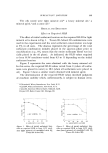
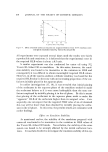
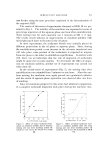
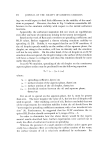
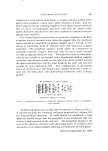
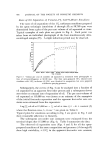
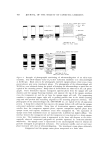
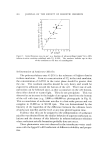
SURFACTANT LOCATION 373 amination of the above equation of S• indicates that placing of the sur- factant in the aqueous phase should generally result in a smaller initial value of ,5• than the same system in which the surfactant is placed in the oil phase. For example, our surface and interfacial tension measure- ments, using a No/iy tensiometer (ring method), gave an S• value of about 33 for castor oil when the 3% Tween 80-Arlacel 80 blend (at HLB 10) was placed in the oil phase. The S• was about --8 in the same sys- tem when the same surfactant blend was placed in the aqueous phase. If the large positive S• value corresponds to a poor stability, we would then expect more separation in the e•nulsions prepared by initially plac- ing the sur[actant in the castor oil. However, the results of Figs. 4 and 5 indicate just the opposite. IqI,B requirements are next examined on the basis of the spreading model. The spreading coefficient data given in the work of Ross et al. show an increase in S• with HLB values of the surfactant blend (7). These data were obtained by dissolving 1% surfactant blends (Tween 80/Span 80) in the aqueous phase. Placing the surfactant in the oil phase in the same system is expected, at least initially, to give a higher value of S•. Therefore, on the spreading model, if the S• value has to be between 0 and --5 to give stability, it follows that the required HLB for the system prepared with the surfactant initially in the oil phase should be lower than the same system emulsified by initially placing the surfac- rant in the aqueous phase. This is, of course, just the opposite of our ex- perimental findings. There are some possible explanations of the observed apparent dis- crepancy between our results and the theory based on spreading. First ot• all, although placing of all surfactants in the oil phase will initially give a high S• value, this value will rapidly decrease after emulsification because a small amount of the surfactants migrating to the aqueous phase will reduce the surface tension of that phase greatly. For this reason, in practice, the difference in S• due to the surfactant location may be in- significant. Secondly, there are certainly a great number of factors such as droplet size distribution, viscosity of the external phase, nature of interfacial film, etc., which can influence emulsion stability (21). Whereas spreading may be one of the factors, conceivably it is not a critical factor in the sys- tems studied here. Earlier work (17) showed that initial placing of the emulsifiers in the oil phase encouraged formation of double emulsions. It is quite possible that such an effect or combination of this effect and

374 JOURNAL OF THE SOCIETY OF COSMETIC CHEMISTS others overshadowed the effect ot• spreading and produced the apparent contradiction. Emulsion stability is, of course, a very complex function of many variables. Although in this series of experiments better stability was generally found when the surfactants were initially placed in the oil phase, the limited data presented here do not permit generalization of the results with respect to emulsion stability. CONCLUSIONS The experimental data indicated that determination of the "required HLB" of an oil to form an O/W emulsion using the emulsification tech- nique described could vary as much as three HLB units depending on where the surfactants were initially placed. In the systems studied, plac- ing of the suffactant blend in the oil phase always resulted in a higher value ot• required HLB than the same system measured by initially plac- ing the surfactant blend in the aqueous phase. This effect is consistent with the earlier finding that placing the surfactant in the aqueous phase tended to make the surfactant behave as though it were more hydrophilic on the HLB scale than placing the same surfactant in the oil phase of the same system. The experimental data on emulsion stability showed that placing the suffactants in the oil phase resulted in a better stability than the same system prepared by initially placing the suffactants in the aqueous phase. This result did not support the theory based on spreading advanced by Ross, Becher, and coworkers. Apparently the differences in the spread- ing due to the suffactant locations were not as important as other factors controlling the emulsion stability of the systems studied. Although the limited data presented here do not permit generaliza- tion beyond the scope of the experiments, it is quite clear that suffactant location is an important factor controlling stability as well as physical properties of the emulsions. In manufacturing practical emulsions, the amounts of the suffactants initially present in the aqueous and oil phases can be varied therefore, the surfactant location should be regarded as an important preparative variable along with others such as emulsification temperature, rate of shear, cooling rate, etc. ACKNOWLEDGMENT The author gratefully acknowledges the experimental assistance of John C. Lambrechts and Tony Lew of Max Factor •c Co. (Received September 15, 1969)
Purchased for the exclusive use of nofirst nolast (unknown)
From: SCC Media Library & Resource Center (library.scconline.org)