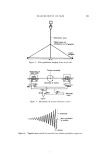
394 JOURNAL OF THE SOCIETY OF COSMETIC CHEMISTS ultracentrifuge (1-6). A recent review (7) considers in detail the prior uses of centrifugation (8-11) and other methods [or studies on emulsion deterioration. Methods of measuring the stability of emulsions in terms of changes in interfacial area or drop volume may be very insensitive to small but important changes occurring in the emulsion and may be useful only in unstable emulsions (3, 4). Emulsion stability frequently has been de- termined by measuring the formation ot5 cream and the separate oil phase as a function of time, but has been largely restricted to normal gravitational situations (12-17). The enormous time lags involved and the uncertainties of complete phase separation are definite disadvantages o15 such methods, and, in general, they are only applicable to poor and unstable emulsions. Garrett (1), Void and Groot (3, 5, 6), and Rehfeld (2) have demon- strated that the analytical ultracentri15uge is an excellent tool 15or the evaluation of emulsion stability. The determination of rates ot• fioccula- tion, flotation, or creaming o15 a dispersed oil phase can be correlated with the Svedberg relations applied to the sector-shaped cell o15 the analytical ultracentrifuge (18, 19). The clearing rate of dilute emulsions with low oil/water ratios ad- heres to the Svedberg equation and is valid for the prediction of such rates at stresses approaching that of normal gravity (1). This rate does not necessarily permit classification as a "good" or "bad" emulsion, how- ever. It is most probable that the flotation of the smallest particles is ß what is measured in both emulsion types. Such definitions of emulsions are peculiarly arbitrary and frequently operationally defined. A consistent model for these emulsion phenomena in the ultracentri- fuge may be the more ready flotation of large oil particles so that the cream is a grading of large to small oil particles from top to bottom in low oil/water ratios (1). This may not occur in the case of high oil/water ratios (3) -where the phenomenon o15 "sweep-out," i.e., large particles forcing the smaller ones upward without slippage, may occur (1). Higher centrifugal speeds 15or a given oil/water ratio may also pro- mote this "sweep-out" phenomenon and the cream may not have any stratification (3). The continuous phase has to drain from the packed globules which will be de15ormed by the centrifugal stress (1). It has been postulated (20) that the more an interface curves away 15rom a drop, the longer the lifetime of a drop. It is consistent with this premise that the more readily de15ormable large drops should coalesce first.

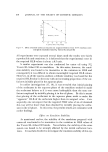
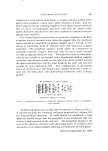
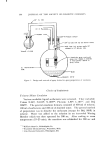
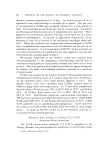
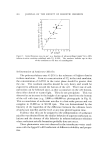
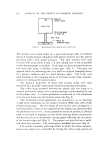
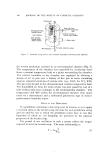
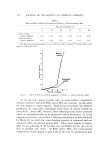
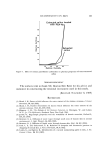
EMULSION STABILITY 395 Vold and Groot (6) have hypothesized that the rate of oil separation is a measure of the rate of coalescence between the deformed drops in the cream and the bulk oil phase. They state that, in general, the greater coalescence occurs just below the bulk oil-emulsion interface since water separating the dispersed oil is thinnest there. This work considers the preparation, characterization, and ultra- centrifugal analysis of stable emulsions with high oil/water ratios and the evaluation of their creaming and oil separation. The ultracentrifuga- tion of emulsions will be tested for adherence to the Svedberg equation. EXPERIMENTAL Preparation of Emulsions A preparative method was desired to obtain reproducible fine e_mul- sions with the narrowest particle size distribution. Stable emulsions of 1:1 toluene-in-water were difficult to prepare with the Waring Blendor* without high concentrations (5-15%) of all classes of surfactants. These were necessary to prevent immediate separation of an oil phase. Also, the high temperatures (40øC) produced yielded an appreciable loss of toluene when blending was continued for more than 5 min. These emulsions were unsuitable for the study of coalescence rates in the analytical ultracentrifuge as they required as long as 3 days at 60,000 rpm before oil separation could be seen. The surfactants precipitated at the particle interfaces in the tightly packed creams formed by ultracentrifugation. This artificially stable gel of oil trapped in a solid matrix was observed on microscopic examination. The optimum method of preparation was a modification of the method of Nawab and Mason (21) and Wachtel and La Met (22). A typical procedure was to prepare analytically a solution of surfactant in toluene and to filter through a 0.45-• Millipore filter. The toluene surfactant solution (250 ml) was sprayed on the large surface of 250 ml of filtered water in a 5-1. round-bottom flask. The flask was equipped with a magnetic stirrer and the sprayer operated by nitrogen pressure (10 cm of Hg above atmospheric pressure) using an insecticide spray nozzle. The contents of the flask were stirred by a magnet (Fig. 1). The resultant emulsion was prepared in 3,000 sec and then filtered through a 3-/• Millipore filter to remove large particles. * E. H. Sargent and Co., Kensington, Md.
Purchased for the exclusive use of nofirst nolast (unknown)
From: SCC Media Library & Resource Center (library.scconline.org)