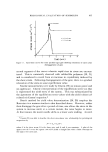
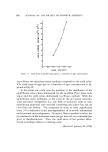
]. Soc. Cosmet. Chem., 21,661-665 (Sept. 17, 1970) Effect of Valve Body Orifice Size on Propellant/Concentrate Ratio LLOYD T. FLANNER, B.S.* Presented January 13, 1970, Seminar, St. Louis, Mo. Synopsis--The effect of the size and ratio of VALVE BODY ORIFICE to VAPOR TAP ORI- FICE on fractionation of propellant and concentrate in cosmetic AEROSOL FORMULA- TIONS was studied. Fractionation of the propellant blends occurred after 75% of the product was consumed. Changes in the ratio of propellant to concentrate were also observed at this point. PROPELLANT FRACTIONATION was least where the ratio of valve body orifice to vapor tap orifice was greatest. Similarly, the alcohol content in the total product increased the most with the smallest valve body orifice and least with the largest valve body orifice. It is recommended that the discharge rate for cosmetic aerosols be reduced by re- stricting the actuator orifice rather than the valve body orifice. INTRODUCTION It is desirable to reduce the discharge rate of aerosol preparations for personal use to avoid excessive wetting. Such wetting is particularly undesirable with deodorant sprays and hair sprays. Previous studies showed that fractionation of propellant and a change in the ratio of pro- pellant to concentrate does occur when vapor tap valves are used (1). This effect increases as the size of the vapor tap orifice increases. These results raised questions of how the size of the valve body orifice and the ratio of valve body orifice to vapor tap orifice would affect fractionation and the propellant/concentrate ratio. Therefore, a series of tests was conducted on typical deodorant and hair spray formulations to determine this effect. * Technical Service Department, Allied Chemical Corp., Morristown, N. J. 07960. 661

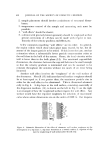
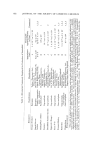
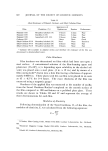
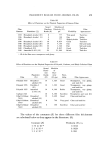
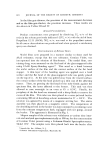
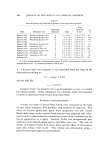
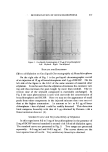
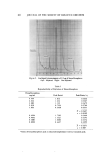
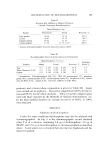
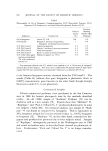
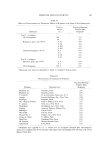
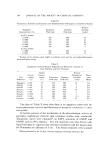
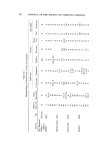
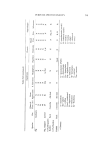
662 JOURNAL OF THE SOCIETY OF COSMETIC CHEMISTS EXPERIMENTAL AND RESULTS Deodorant Sprays The three propellant/alcohol systems studied were: System I, 55%* anhydrons ethyl alcohol and 45% Propellant* 12/114 (50:50). System II, 75% anhydrous ethyl alcohol and 25% Propellant 12. System III, 62% anhydrous ethyl alcohol and 38% Propellant 12. Three different valves were used. Each valve had a nylon body with a stem orifice of 0.018 in. and a vapor tap orifice of 0.020 in. The size of the body orifice was varied. The three valves had body orifices of 0.016, 0.020, and 0.025 in., respectively. This yielded body orifice-to- vapor tap orifice ratios of 0.8: 1, 1: 1, and 1.25:1, respectively. All containers were filled to 85% liquid full, by volume, providing the recommended nominal 15% head space. Each container was dis- charged, each day, in two 4-second sprays, separated by a 30-second in- terval, to simulate the application of a personal deodorant. The compo- sition of the liquid phase was analyzed after 25, 50, and 75% of the con- tents were discharged. Procedures similar to those previously described were used (1). The most significant changes occurred after 75% of the prodnct was discharged. These results are shown in Table I for System I. All percentages are by weight, unless otherwise noted. Genetron© ttuorocarbon Propellants 12 and 114, Allied Chemical Corp., Morristown, N.J. Table I Composition of Liquid Phase after Discharging 75% of Product (System I•--Propellant 12/114/Ethyl Alcohol) Valve: Stem: 0.018 in. Vapor tap: 0.020 in. Body orifice: As indicated Body orifice, in. 0. 016 0. 020 0. 025 Wt % Liquid Component Propellant 12 4.5 7.9 11.7 Propellant 114 16.4 18.4 21.0 Ethyl alcohol 79.1 73.7 67.3 Propellant ratio Propellant 12 22 30 37 Propellant 114 78 70 63 "55 %, by wt, anhydrous ethyl alcohol 45 %, by wt, Propellant 12/114 (50' 50).
Purchased for the exclusive use of nofirst nolast (unknown)
From: SCC Media Library & Resource Center (library.scconline.org)