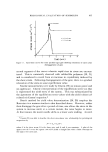
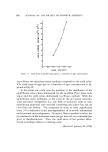
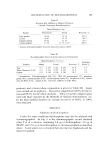
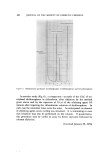
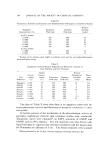
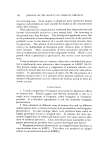
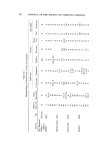
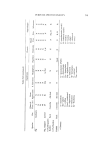
INGREDIENT RELEASE FROM AEROSOL FILMS 681 From the results obtained in this study, it may be concluded that the modulus of elasticity and flexibility of the fihns are a function of both type and concentration of plasticizer. Through choice of plasticizer, the selected physical properties of the film may be varied. From the data presented on the release profiles, it can he seen that Polymid 1155 produced a time release film using Gentian Violet as the model substance. The other films inhibited the release of Gentian Violet and may be useful for producing a prolonged release of substance. Further studies are in- dicated to determine the mechanism of the reaction which is believed to be related to the tendency toward complexation of the substance with the film. This would seem to indicate that the release rate is related to the thermodynamic activity of the substance. (R•ceived December 3, 1969) REFERENCES (1) St. Laurent, G., Mintzer, H., and Weissman, F. T., Pharmaceutical aerosols, Drug Cosmet. Ind., 96, 627 (1965). (2) Bart, M., Percutaneous absorptions, ]. Pharm. Sci., 51, 395-407 (1962). (3) Marcus, E., Kim, H. K., and Autian, J., Binding of drugs by plastics. I. Interaction of bacteriostatic agents with plastic syringes, ]. Amer. Pharm. Ass., Sci. Ed., 48, 457 (1959). (4) Willis, C. R., Jr., and Banker, G. S., Polymer-drug interacted systems in the physio- chemical design of pharmaceutical dosage forms. I. Drug salts with PVM/MA and with a PVM/MA hemi-ester, ]. Pharm. Sci., 57, 1598 (1968). (5) DeLuca, P., and Kostenbuader, H. B., Interaction of preservatives with macromolecules. IX,'. Binding of quaternary ammonium compounds by nonionic agents, ]. Amer. Pharm. Ass., Sci. Ed., 49, 430 (1960). (6) Hurwitz, A. R., DeLuca, P., and Kostenbuader, H. B., Binding of organic electrolytes by nonionic surface-active agent, ]. Pharm. Sci., 52, 893 (1963). (7) Noyes, A., and Whitney, W., The rate of solution of solid substances in their own solutions, J. Amer. Chem. Soc., 19, 930 (1897). (8) Cass, R. A., The sward rocker for measuring the modulus of elasticity of paint films, ]. Paint Technol., 38, 281-4 (1966).

]. Soc. Cosmet. Chem., 21,683-693 (Sept. 17, 1970) Determination of Hexachlorophene by Gas-Liquid Chromatography of Its Trimethylsilyl Derivative B. L. KABACOFF, B.S., G. MOHR, and C. M. FAIRCHILD, B.S. * Presented December 2, 1969, New York City Synopsis--HEXACHI,OROPHENE i5 silylated by reacting it with N,O-bis(trimethylsilyl)- acetamidc. The resulting trimethylsilylhexachlorophenc in GAS-LIQUID CHROMATOG- RAPHY has the same retention time on an SE-30 column as the parent compound, the Kovats retention index being 2804. SILYLATION eliminates the extensive tailing obtained with the parent compound. Quantitation may be obtained by comparing the peak height with that of an internal standard, dicyclohexylphthalate. Methods of isolation from possible interfering substances are presented. DICHLOROPHENE may be silylated and chromatographed in the same way. INTRODUCTION In 1968, the Methods of Analysis Subcommittee of the Society of Cosmetic Chemists of Great Britain reviewed the existing analytical methods for hexachlorophene (1) and concluded that the colorimetric and titrimetric methods were not sufficiently specific. As a result of their collaborative study, they concluded that the method of Elvidge and Peutrell (2) is sufficiently accurate and specific for some toilet preparations such as soaps, talcs, and alcoholic solutions. In this method the difference between the ultraviolet absorption at 312 nm of solutions of hexachlorophene at pH 1.2 and 8.0 is measured. Substances not * Revlon Rescatch Center, 945 Zerega Avenue, Bronx, N.Y. 10473. 683
Purchased for the exclusive use of nofirst nolast (unknown)
From: SCC Media Library & Resource Center (library.scconline.org)