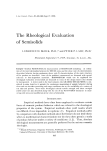
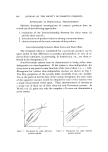
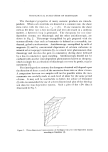
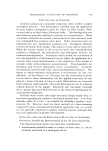
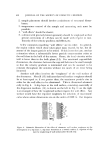
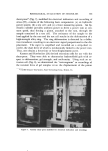
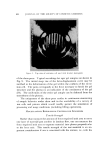
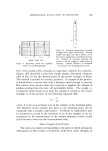
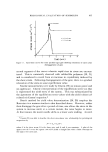
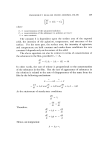
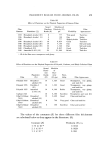
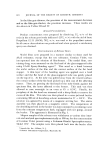
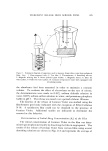
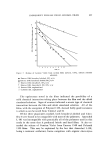
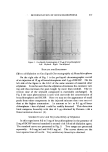
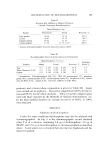
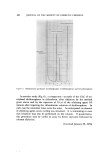
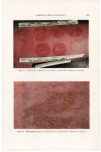
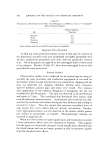
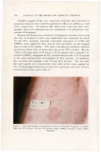
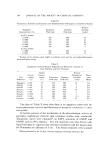
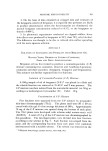
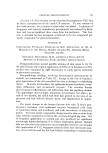
RHEOLOGICAL EVALUATION OF SEMISOLIDS 653 shear-press* (Fig. 7), modified for electrical indication and recording of stress (23), consists of the following basic components: (a) an hydraulic power system (b) a test cell and (c) a force measuring system. An hy- draulic cylinder provides uniform power to. drive a power ram at con- stant speed, thus forcing a piston, attached to the ram, through the sample contained in a test cell. The resistance of the sample to the load applied by the ram and the test cell results in the deformation of a high-strength alloy ring. The ring deformation is detected by a deflec- tion transducer, resulting in an electronic signal proportional to the dis- placement. The sig•3al is amplified and recorded on a strip-chart re- corder, the chart drive of which is mechanically linked to the power ram. Thus, one obtains a force-time or force-displacement curve. Kramer and Hawbecker (24) devised extrusion cells for use with the shear-press. They were able to characterize hydrocolloid gels with re- spect to deformation, gel strength, and uniformity. Using such an ex- trusion cell (Fig. 8), we determined the "texturegrams" or recordings of the resistant force of gel samples versus the displacement of the piston * T-2100 Texture Test System, Food Technology Corp., Reston, Va. Figure 7. Kramer shear-press modified for electrical indication and recording

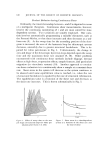
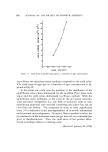
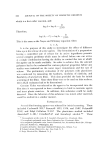
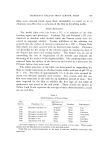
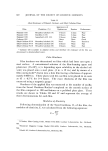
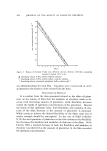
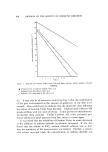
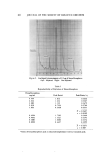
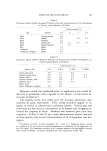
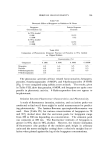
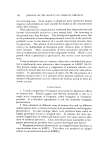
654 JOURNAL OF THE SOCIETY OF COSMETIC CHEMISTS Figure 8. Top view of extrusion cell used with Kramer shear-press of the shear-press. Typical recordings for agar gel samples are shown in Fig. 9. The initial steep rise of the force-displacement curve may be ascribed to the deformation of the gel within the confines of the extru- sion cell. The peak corresponds to the force necessary to break the gel structure and the plateau is an indication of the consistency of the gel (24). The uniformity of the entire gel sample can be deduced from the smoothness of the plateau. The uniqueness of the shear-press resides in continuous monitoring of sample behavior under shear and in the availability of a variety of test cells and pistons which would readily permit the simulation of processing and usage conditions (including filling operations). MISCELLANEOUS RHEOLOGICAL CRITERIA FOR SEMISOLIDS Tensile Strength Rather than measure the amount of force required/unit area to move one layer of material past another in laminar flow, one can measure the force required/unit area to separate material into planes perpendicular to the force axis. This tensile strength of the test material is an im- portant consideration if one is concerned with the texture, i.e., with thc
Purchased for the exclusive use of nofirst nolast (unknown)
From: SCC Media Library & Resource Center (library.scconline.org)