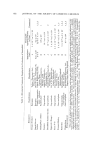
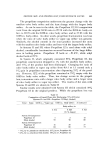
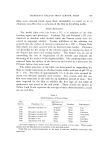
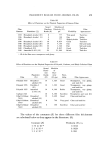
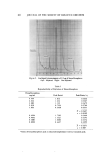
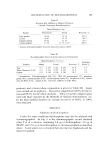
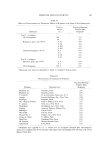
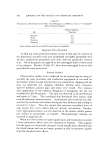
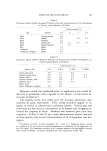
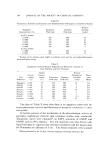
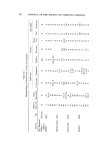
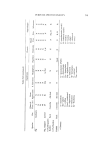
PERFUME PHOTOTOXICITY 701 Table II Effects of Concentration on Phototoxic Effects of Bergamot and Some of Its Components • Concen- Fraction Showing tration Positive Skin Substance (•) Response Test 1 6 subjects Oil of bergamot Bergapten, pure, mp 187øC Limettin-bergapten (96: 4) Test 2 6 subjects Limettin, pure, mp 147øC Oil of bergamot 100 5/6 20 3/5 o. 05 4/4 o. 02 4/4 o. 002 1/2 o.ool 0/2 0.5 4/4 0.2 1/4 O. 02 1/2 O. O1 0/2 1.0 0/6 0.1 0/6 100.0 6,/6 Materials were tested as described in Table I ("stripped" human skin). Table III Phototoxicity of Commercial Perfumes • Perfume Manufac turcr Fraction Showing Positive Skin Response Shalimar #1 Guerlain, Paris 3/9 Shalimar/•2 Guerlain, Paris 0,/4 L' interdit H. de Givenchy, Montvale, N.J. 0/6 Arpege Lanvin Perfumes, Inc., New York 0/13 Replique Raphael, Paris 1/13 No. 3 Park & Tilford Park & Tilford, New York 1/6 L' aimant Coty, Inc., New York 0/5 Houbigant Houbigant, Inc., New York 0/5 Ondine Suzanne Thierry, Miami, Fla. 0/4 Bellodgia Caron, Paris 0/2 Ma Griffe Carven, Paris 0/2 Chanel No. 5 Chanel, Inc., New York 0/6 Crepe de Chine F. Millot, Paris 0/2 Miss Dior Christian Dior, Paris 0/2 M. Rochas Marcel Rochas, Paris 0/2 Cabochard Gres, Paris 0/2 a Perfumes were applied to a 5 X 12-cm area of "stripped" forearm skin (20 subjects). Areas were irradiated for 40-60 minutes with Inspectolite (principally 360-370 nm) at 8-10 cm distance from skin.

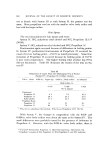
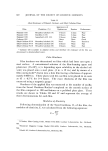
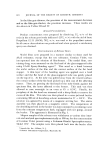
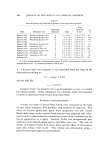
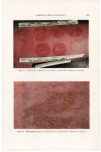
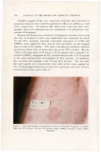
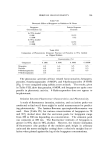
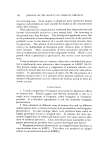
702 JOURNAL OF THE SOCIETY OF COSMETIC CHEMISTS Table IV Phototoxicity Test Results with 100% Oil of Bergamot on Different Areas of "Unstripped" Skins of Human Subjects Positive Response Site Fraction Scrotum 4/6 Neck 4/6 Forearm 1/4 Forearm a 0/2 • Agent applied and site occluded 24 hours prior to irradiation. Regional Shin Variation To find out if the penetrant barrier action of skin may be a factor in the phototoxic reaction, tests were performed on highly permeable scro- tal skin, moderately permeable neck skin, and less permeable forearm skin. Oil of bergamot was applied to the unstripped skins of these areas of six subjects. Results (Table IV) show that unstripped forearm skin provided the most protection. Animal Studies Phototoxicity studies were conducted on six animal species using es- sentially the same procedure and irradiation equipment as was used for the human studies except that the hair was removed by clipping and the skin was generally not stripped. Rabbits, hairless mice, hamsters, squirrel monkeys, guinea pigs, and swine were tested. Five minutes after application of test material (bergamot or bergapten), the site was irradiated for 20-,q0 minutes. The skin was observed at 24 and 48 hours and again at 7 days. The irradiated skin fiuoresced after topical (and even intradermal) administration. A phototoxic skin reaction was char- acterized 1)y erythema and edema during the first 48 hours and scaling or necrosis by 7 days. Thus the animal skin reactions resembled those of man except that severe effects did not include vesiculation. Further- more, hyperpigmentation was not observed in the mouse, rabbit, guinea pig (albino or pi•mented), or hamster. Histopathologic findings are reported in Appendix II. When the interval between agent application and irradiation exceeded 1 hour, phototoxic effects were not obtained on animals. This suggests •hat the agent was chemically changed, or had already been absorbed into the blood stream and was no longer present in skin in amounts capable of producing phototoxic effects.
Purchased for the exclusive use of nofirst nolast (unknown)
From: SCC Media Library & Resource Center (library.scconline.org)