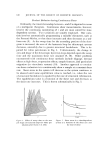
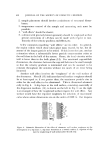
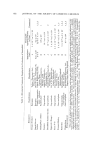
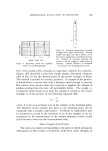
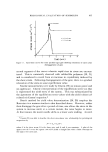
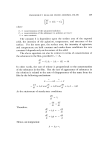
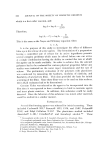
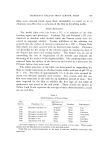
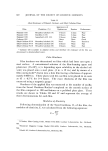
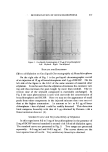
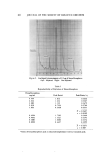
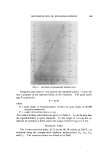
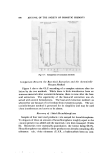
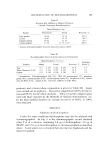
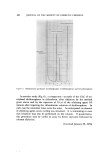
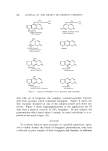
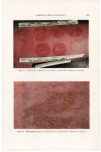
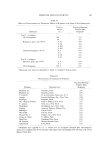
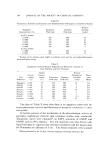
PERFUME PHOTOTOXICITY 707 and the resulting curves showed one principal and three secondary peaks. In both cases, the peak heights and locations were very similar so that this analysis failed to provide a clue to the difference in phototoxic activity of these two compounds. DISCUSSION A satisfactory resolution of this as well as most other biologic prob- lems is dependent upon the availability of appropriate tools. When working with a mixture, bergamot included, it is essential to know the composition with some degree of precision. Thus, the first barrier to overcome in the resolution of bergamot phototoxicity was the lack of simple techniques for chemical analysis and preparation of components. Another more serious problem was the lack of readily available radiation sources whose quantitative output was known. When all the data on man and animals are considered, it is apparent that bergapten is the only significant phototoxic component of bergamot. Since this is the case, the photobiologic effects of bergamot would more appropriately be termed bergapten phototoxicity rather than the more flamboyant but less descriptive "berloque dermatitis." The fact that the more permeable skins of animals, such as rabbit and mouse, the stripped skin of humans, and the more permeable scrotal and neck skins are among the most susceptible to bergapten phototoxicity in- dicates that individuals who develop the syndrome have a poorly de- veloped skin barrier. This has been suggested by others (10, 14). Since the production of phototoxic effects is dependent upon the amount of active ingredient reaching target tissue, these data permit one to establish a safe human concentration of bergapten and bergamot oil on skin. A human safety factor is provided by utilizing results obtained on stripped skin. Thus, since bergamot contains 0.33% bergapten and the ap- parent "no-effect" level on stripped skin for bergapten lies between 0.002 and 0.001%, the safe concentration of bergamot oil on man is pro- jected to be between 0.3 and 0.6%. This is comparable to, although somewhat lower than, the 2% concentration given in regulations issued under the Hazardous Substances Act (15). It is apparent from this that unless bergamot is chemically treated to remove bergapten, it is likely to be phototoxic in some individuals if used in practical amounts in per- fumes. The results obtained on animals show that the rabbit and hairless mouse are more sensitive to bergapten than man and are therefore useful

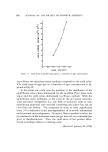
708 JOURNAL OF THE SOCIETY OF COSMETIC CHEMISTS for screening tests. Swine appear to duplicate more closely the human response and probably are more suitable for studies at the concentrations which affect humans. When photoactive compounds are irradiated they absorb photons and become electronically excited to a new energy level. On returning to the ground state, they fluoresce. The biologically significant event, that is, the production o[ tissue-damaging chemical reactivity o[ the molecule, probably occurs in the fraction o[ a second intervening between these two processes. The amount o[ this reactivity appears from our observa- tions to be independent of absorption peak, emission peak, or fluores- cence intensity. Thus, measurement of these parameters provided no clue as to phototoxic potential of the compounds studied. While a com- pound which is phototoxic is photoactive, the reverse is not necessarily true. Using irradiation time as a criterion, others have concluded that psora- len is significantly more phototoxic than bergapten or 8-MOP (16-19). The present studies, based on a comparison o[ minimum effective con- centration, showed that the three compounds had about the same photo- toxicity. In agreement with reports o[ others (18, 20), the presence o[ a methoxy group in the 5 or 8 position o[ the psoralen molecule was as- sociated with phototoxic activity, whereas the hydroxy group in these po- sitions was not. CONCLUSIONS 1. Various components ot5 bergamot were tested [or phototoxic effects on human skin. Results suggest that Berlock dermatitis is due to a single active component o[ bergamot, either bergapten or 5-methoxy- psoralen. It is there[ore appropriate to call this syndrome bergapten phototoxicity. 2. Data obtained on different areas o[ human skin and on different animal species show a relation between skin permeability and bergapten phototoxicity. In man, biologic effects were produced more easily on highly permeable scrotal or stripped skin. In animals, the more per- meable clipped skins ot5 rabbits and hairless mice were more reactive than those o[ monkeys and swine. Thus, individuals most susceptible to ber- gapten phototoxicity probably have a poorly developed skin barrier. 3. Bergapten produced phototoxicity in stripped human lorearms at concentrations down to 0.002%. This effect was produced in clipped rabbits at concentrations down to 0.0008%.
Purchased for the exclusive use of nofirst nolast (unknown)
From: SCC Media Library & Resource Center (library.scconline.org)