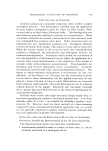
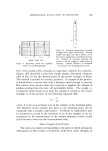
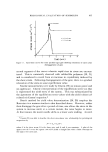
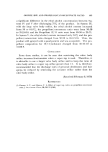
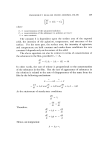
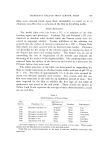
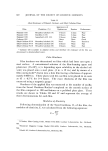
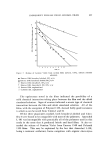
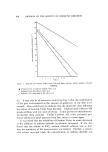
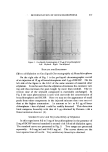
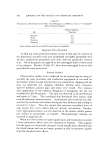
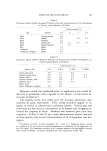
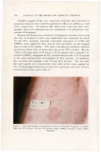
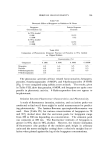
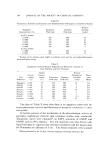
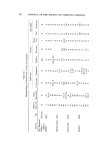
INGREDIENT RELEASE FROM AEROSOL FILMS 677 c 50 0 1 2 3 4 5 6 7 8 9 10 TIME, hr trigure ]. Release of Gentian Violet from various films (solvent, 0.45% sodium chloride solution) . ß Emerez 1540, hexadecyl alcohol, 10% w/w I Emerez 1540, hexadecyl alcohol, 30% w/w [] Emerez 1540, Citroflex-4, 10% w/w ß Emcrez 1540, Amcrchol-L 101, 10% w/w ¸ Emerez 1536, unplasticized • Carboset 525, unplasticized The opalescence noted in the films indicated the possibility of a mild chemical interaction taking place between the film and the alkali simulated solution. Signs of erosion indicated a severe type of chemical interaction between the film and alkali simulated solution. All of the fihns, with the exception of Polymid 1155, showed fairly good resistance to alkali as can be noted from Tables I and II. Of the three plasticizers studied, both hexadecyl alcohol and Citro- fiex-4 were found to be compatible with most of the polymers. Amerchol L-101 was incompatible with practically all ot• the polymers used in this study in the sense that it produced brittle and hard films. It also re- tarded the release of Gentian Violet from Emerez 1540 and Polymid 1155 films. This may be explained by the fact that Amerchol L-101, being a nonionic surfactant, forms complexes with organic electrolytes

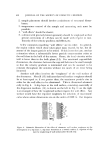
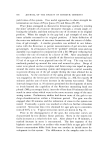
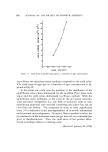
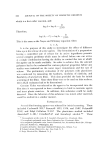
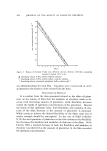
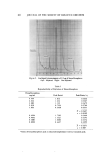
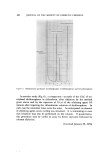
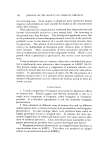
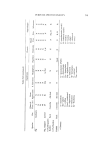
678 JOURNAL OF THE SOCIETY OF COSMETIC CHEMISTS 50 46 42 38 34 30 1 2 3 4 5 6 7 8 9 10 TIME, hr Figure 4. Release of Gentian Violet from Polymid films solvent, 0.45% sodium chloride solution). • Polymid 1155, hcxadecyl alcohol, 10% w/w [] Polymid 1155, Citroflex-4, 10% w/w _.X Polymid 1155, Amerchol-L 101, 10% w/w (6). It may also be of interest to note from Fig. 3 that the nonlinearity of the plot is eliminated as the amount of plasticizer in the film is in- creased. This would seem to indicate that the plasticizer does influence the release of Gentian Violet from this film. Unplasticized Carboset 525 produced films with low rates of release. It also produced unsatisfactory, stream-like spray patterns. Unlike Carboset 525, other polymers pro- duced satisfactory spray patterns from fine, misty to co.arse types. It was noted that the solubility of Gentian Violet in water decreased as the addition of sodium chloride in solution increased. It was also [ound that the release in 0.9% sodium chloride solution was so' slow that the sensitivity of the measurement was limited. Further, a reason- able release occurred when the concentration of sodium chloride was
Purchased for the exclusive use of nofirst nolast (unknown)
From: SCC Media Library & Resource Center (library.scconline.org)