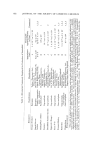
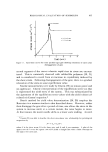
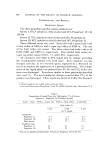
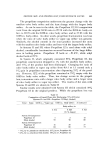
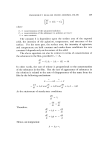
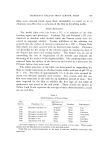
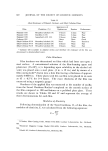
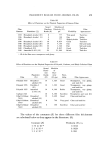
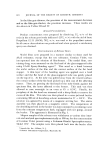
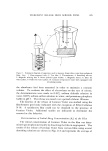
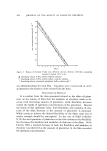
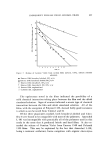
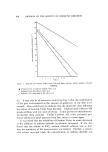
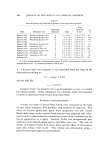
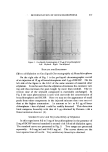
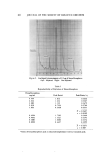
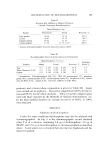
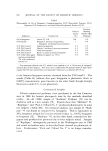
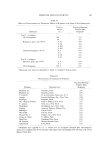
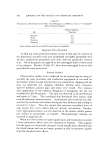
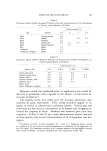
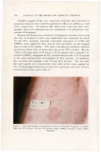
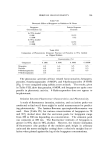
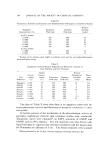
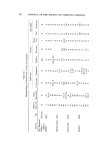
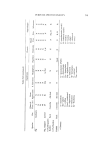
664 JOURNAL OF THE SOCIETY OF COSMETIC CHEMISTS not as drastic with System III as with System II, the pattern was the same. More propellant was lost with the smaller valve body orifice and less with the larger orifice. Hair Sprays The two formulations for hair sprays used were: • Systbm IV, 50.% •anhydrous ethyl alcohol and 50% Propellant 12/11 System V, 50% anhydrous ethyl alcohol and 50% Propellant Fractionation aga'in occurred because of differences in boiling points. In' Syõtem 'IV, pre'fe'•eii'tial' fractionation of Propellant 12 occurred be- causb of its low boiling point','--21.6øC as noted previously. Some frac- tionation of Propellant II occurred because its boiling point of 74.7øC is near room temperature. The higher boiling ethyl alcohol (bp 78øC) did not fractionate. Table III illustrates the results of the tests on Sys- tem'IV. Table III Composition of Liquid Phase after Discharging 75% of Product (System IVa--Propellant 12/11/Ethyl Alcohol) Valve: Stem: 0.018 in. Vapor tap: 0.020 in. Body orifice: As indicated Component Propellant 12 Propellant 11 Ethyl alcohol Propellant Ratio Propellant 12 Propellant 11 Body orifice, in. 0.016 0.020 0.025 Wt % Liquid 4.5 7.0 10.2 28.3 26.5 25.0 67.2 66.5 64.8 14 21 29 86 79 71 "50%, by wt, anhydrous ethyl alcohol 50%, by wt, Propellant 12/11 (50: 50). With System V, the changes in composition with the 0.016- and 0.020-in. valve body orifices were about the same as for System IV. The small differences were probably caused by the presence of isobutane in Propellant A. However, with the 0.025-in. valve body orifice, there is * ( enetron© fluorocarbon Propcllant 11, Allied Chemical Corp., Morristown, N.J. t Propellant A consists of 45% Propellan! 12, 45% Propellant 11, and 10% isobutane.

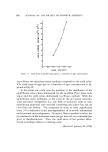
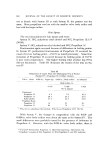
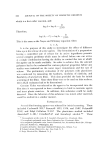
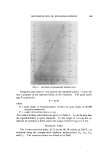
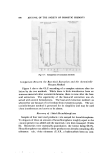
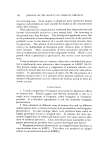
ORIFICE SIZE AND PROPELLANT/CONCENTRATE RATIO 665 a significant difference in the ethyl alcohol concentration between Sys- tems IV and V after discharging 75% of the product. In System IV, with the large valve body orifice, the ethyl alcohol content increased from 50 to 64.8%, the propellant/concentrate ratio went from 50:50 to 35.2:64.8, and the Propellant 12/11 ratio went from 50:50 to 29:71. In System V, the ethyl alcohol co.ntent increased only 3.6% and the pro- pellant/concentrate ratio changed from 50:50 to 46.4:53.6. Thus, the product still sprayed with a good pattern and was acceptable. The pro- pellant composition for 12/11/isobutane changed from 45:45' 10 to 31:60:9. CONCLUSION From these studies, it can be seen that restricting the valve body orifice increases fractionation when a vapor tap is used. Therefore, it is advisable to use a larger valve body orifice and to keep the ratio of valve body orifice to vapor tap orifice greater than 1:1. It is, therefore, recommended that the discharge rates of personal deodorants and hair sprays be reduced by restricting the actuator orifice rather than the valve body orifice. (Received February 6, 1970) REFERENCES (1) Flanner, L. T., and Matera, T. ]., Effect of vapor tap valves on propellant/conccntrate ratio, ]. Soc. Cosmet. Chem., 20, 365-72 (1969).
Purchased for the exclusive use of nofirst nolast (unknown)
From: SCC Media Library & Resource Center (library.scconline.org)