110 JOURNAL OF THE SOCIETY OF COSMETIC CHEMISTS tionally important glands of epidermal origin, including sebaceous, sweat, cerumen, mammary, and scent glands such as the preputial glands of the musk deer familiar to the perruiner. As Grobstein (3) has pointed out, one of the most important processes in embryonic development is the interaction or intercommunication be- tween cells and tissues of dil•erent ontogenetic origins and properties brought into association by so-called "morphogenetic movements." These "heterotypic" interactions are responsible for the emergence of a wide range ot• new types of differentiated cells and tissues. It is now gen- erally believed that the differentiae of the skin all result from heterotypic interactions between the epithelial and mesenchymal precursors of epi- dermis and dermis in embryonic development. However, at present we know little about the nature and modus operahall of the postulated medi- ators of these interactions apart from the fact that they are capable of diffusing across cell-impermeable Millipore filter membranes in tissue culture systems (4). In adult subjects we usually pay little attention to the connective tis- sue or derreal substrates upon which the various types of superficial epi- dermis rest and which closely and intimately invest all epidermal ap- pendages. Of course, the dermis is given credit for: (a) mediating essential metabolic exchanges between the avascular epidermis and the fine plexus of blood vessels in the underlying connective tissue, and (b) providing essential mechanical support for the lowermost layer of epi- dermal cells which are so firmly bonded to it. However, throughout the epidermal system wherever there is a continuous loss of cells which is con- stantly being made good by the proliferative activity of an underlying germinal layer of Malpighian cells, it is evident that "instructions" of some kind must indicate to the newly-formed cells which particular path- way of cytodifferentiation or specialization, at both the biochemical and structural levels, they must follow so as faithfully to maintain the type of epidermal structure of which they are part. Think how disastrous it would be if new cells in our corneal epidermis suddenly began to become opaque and loosely united to one another at the surface, like the cells on the surface of our bodies, or if the epidermis on the soles of our feet sud- denly became delicate like that of our lips or conjunctiva! There are two obvious, not necessarily mutually exclusive, possible explanations for the conservation of epidermal specificities throughout adult life (2): (a) There are intrinsic differences, of developmental ori- gin, between the basal layer or germinal cells of the different kinds of epidermis which enable them to "breed true" of their own accord,

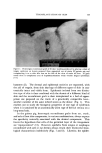
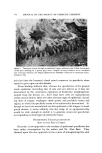
TRANSPLANTATION OF SKIN 111 parting to their progeny the necessary instructions how to differentiate and (b) germinal cells in the basal layer of all types of epidermal epithelia in the body are equipotential, their differentiative behavior being de- termined by interaction with the particular type of dermis that forIns their substrate, i.e., the source of the specificity expressed by the epider- mis at a particular site is determined by the dermis. The purpose of this contribution is to review various types of grafting experiments which have been conducted to discriminate between these possibilities, and to analyze the basis of a genetic defect which is expressed in an epidermal component in mammals. STUDIES ON "FITTED" SPLIT-THICKNESS CJRAFTS OF DIFFERENT TYPES OF SKIN TRANSPLANTED HETEROTOPICALLY In various laboratory rodents, notably in guinea pigs, hamsters, mice, and rabbits, experiments have been carried out in which relatively thin grafts of skin having regionally distinctive properties have been trans- planted as good "fits" to anatomically unnatural recipient areas prepared in the skin of the trunk or elsewhere on genetically compatible hosts (5, 6). Provided that certain purely technical requirements are met, such grafts heal-in well and maintain their original specificity of epidermal type in- definitely. For example, the skin of the sole of a guinea pig's foot is much like that of man. When transplanted to a site on the side of a guinea pig's chest, where it is protected by hairs, its epidermis maintains its high rate of proliferation and continues to produce a thick, tough and now functionally useless cuticle. Likewise, if a sheet of the highly vascular semitransparent "skin" that constitutes the wall of a Syrian hamster's cheek pouch is transplanted to its trunk, the graft faithfully conserves its original properties in its new environment. These findings certainly tell us that all the information required to determine the pattern of stratig- raphy, etc., of the epidermis is included within the transposed pieces of skin. A shortcoining of this type of experiment is that the so-called "split-thickness" grafts employed necessarily include some connective tis- sue or dermis. Unfortunately, although it is possible to separate shavings of skin into their epidermal and dermal moieties with the aid of enzymes, notably trypsin, grafts of pure epidermis, transplanted to wound beds prepared by excision of the entire thickness of the skin, fail to prevent contracture of the grafted site (7, 8). Therefore, they are lost nonspecifi- cally before they can tell us much about their capacity to maintain their specific microanatomical structure as their component cells proliferate and differentiate.
Purchased for the exclusive use of nofirst nolast (unknown)
From: SCC Media Library & Resource Center (library.scconline.org)