112 JOURNAL OF THE SOCIETY OF COSMETIC CHEMISTS STUDIES ON SPLIT-THICKNESS SKIN GRAFTS TRANSPLANTED HETEROTOPICALLY IN OPEN STYLE TO EXTENSIVE, FULL-THICKNESS BEDS ON RABBITS' CHESTS Because of their size it is possible to prepare relatively large, full- thickness wounds on the sides of rabbits' chests, up to about 5 X 8 cm, in which there is no residual trunk skin dermis (6). Maintained under appropriate dressings, highly vascular granulation tissue develops over these wounds which take about 20 to 25 days to contract to narrow re- sidual scars (7). If small, thin, split-thickness grafts of various types of skin are trans planted to the centers of such large wounds, epithelium, unaccompanie{l by connective tissue, grows out from their margins over the favorabh' milieu afforded by the granulation tissue which forms an ad hoc mesen- chymal substrate. This enables one to compare, both macroscopically and microscopically, the types of epidermis that migrate out from qualita- tively different kinds of skin over the common, anatomically unnatural substitute for dermis afforded by granulation tissue. This approach has yielded highly suggestive evidence that the germinal layers of tongue, cornea, ear skin, and vaginal epidermis must differ intrinsically with re- spect to the properties of the epidermis they can generate (9, 10). For example, on such wounds newly formed corneEl epidermis maintains its transparency, that of tongue produces a thick, tough compact cuticle at the surface and the overall "staining" and other properties of its more proximal cells are like those o.f normal tongue epidermis. Epithelial out- growth from ear skin produces a waxy-looking, flaking cuticle. There are other differences, of course, at the microscopic level which we i•eedn't go into. Unfortunately, as already mentioned, wound contracture, which cannot easily be overcome, restricts the duration of this type of experi- ment to about three weeks. This period is not long enough to. rule out the possibility that the observed conservation of original specificity on the part of the various types of outgrowing epidermal epithelia is due to the continued presence of inductive stimuli of dermal origin which have not yet "diluted out" completely as the cells with which they are asso- ciated divide, migrate, and differentiate. STUDIES ON DERMo-EPIDERMAL RECOMBINANT GRAFTS What has proved to be the most informative and definitive means of analyzing the basis of epidermal specificities in adult skin entails the production of "heterotypic recombinant" skin ,grafts in guinea pigs and

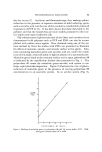
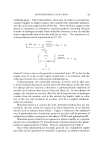
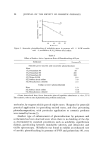
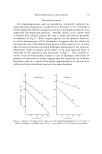
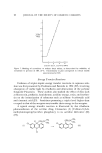
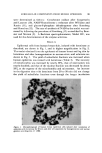
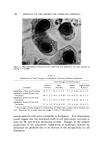
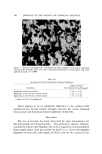
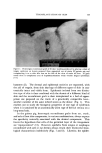
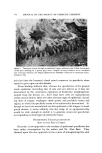
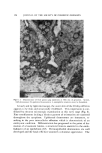
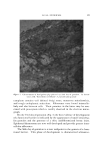
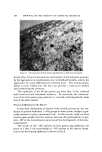
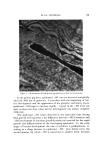
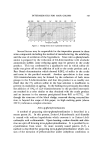
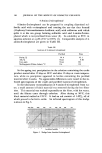
TRANSPLANTATION OF SKIN 113 - ...:. •:..:.,.. ,...•/. •.,,.... ,..•.. .,:..• ..:..,..• ..•: ,:•...:,....:. . .. Figure 1. Heterotypic recombinant graft of 25 days' standing produced by placing a sheet of tongue epidermis on dermis prepared from pigmented ear of s•rain •2 guinea pig and transplan,ting it to a white skin ar• on the side of the chest of strain •2 host. At graft cen,ter there is conspicuous area of hyperkeratini•tion which overlies lingual epithelium (x •) hamsters (2). The dermal and epidermal moieties are separated, with the aid of trypsin, from thin shavings of different types of skin in ana- tomically intact and viable form. Epidermis isolated from one distinc- tive type of skin is then combined with the dermis of a different kind of skin and the recombinant graft is then transplanted to a bed of appro- priate size prepared on the trunk of a genetically compatible host-- another member of the same inbred strain as the donor (Fig. 1). This enables one to study the histogenic properties of one type of epidermis when it is sustained by an anatomically alien type of dermal stroma on a long-term basis. In the guinea pig, heterotypic recombinant grafts from ear, trunk, and sole of foot skin components, in various combinations, always express the specificity naturally associated with the derreal component. This favors the hypothesis that cells of the germinal layer of the integument are "equipotential" (11). However, epithelia from tongue or esophagus recombined with sole or ear dermis always retain their distinctive histo- logical characteristics indefinitely (Figs. 1 and 2). Likewise, the epider-
Purchased for the exclusive use of nofirst nolast (unknown)
From: SCC Media Library & Resource Center (library.scconline.org)